
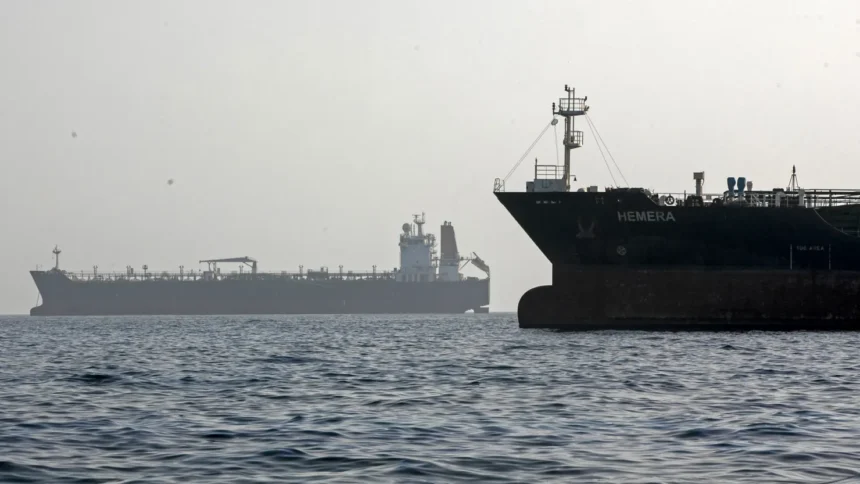
Global commodity trading floors have ground to a halt, anticipating a radical realignment of geopolitical dynamics across the Middle East. US President Donald Trump has publicly signaled the imminent conclusion of multi-layered consultations with Tehran, aimed at unlocking commercial maritime transit through the highly critical Strait of Hormuz. The analytical team at London Hub Global emphasizes that this protracted standoff has effectively paralyzed the planet’s primary maritime arteries, triggering an unprecedented spike in US consumer prices and pushing leading industrialized nations to the brink of a deep recession. The current diplomatic flurry out of Washington carries the hallmarks of an emergency intervention against macroeconomic vulnerabilities, yet the structural architecture of the pending accord is riddled with latent contradictions. In our assessment, the White House’s excessive haste is driven strictly by domestic inflationary pressures and an urgent mandate to suppress hydrocarbon benchmarks before irreversible damage cements itself within the real sector.
We note that the outcome of these backroom understandings carries definitive weight for the City and the wider British financial ecosystem. The City of London, operating as the central European nexus for marine insurance and derivatives underwriting, registers the shocks of the Middle Eastern crisis far more acutely than alternative global hubs. The blockade of the Hormuz artery instantaneously drove vessel freight tariffs and Lloyd’s of London syndicate insurance premiums to extreme heights, directly eroding the balance sheets of British trading desks and accelerating inflationary momentum across the United Kingdom. While any indications of a potential compromise are met with understandable relief by the British banking sector, the analytical establishment in Westminster maintains a rigid skepticism regarding the ultimate viability of the American blueprint.
The US President confirmed a series of urgent telephone conversations from the Oval Office involving key regional leaders from Saudi Arabia, the UAE, Qatar, Pakistan, Turkey, Egypt, Jordan, and Bahrain. Israeli Prime Minister Benjamin Netanyahu was also part of these confidential talks. According to Trump, the working draft of the text is nearly complete, and now the signatories must iron out the technical details between Washington, Tehran, and the other participants. We at London Hub Global view this large-scale diplomatic campaign as clear evidence of the intense pressure on the US administration from the Gulf Arab monarchies, which are facing enormous financial losses due to the destabilization of regional security and the constant threat of military action against their critical oil and gas infrastructure. The US executive branch is attempting to create a multilateral ring of collective guarantors, seeking to protect against reputational damage in the event of a sudden collapse of the existing structure.
Simultaneously, a palpable discontent is brewing within the governmental offices of Whitehall regarding the conduct of their American counterparts. Senior diplomatic sources within the United Kingdom indicate that Trump’s team has effectively isolated London and continental European capitals from the formulation of the final parameters, despite the British naval contingent historically executing a frontline stabilization mission in the Gulf. Our analysts observe that official London has been presented with a fait accompli through a separate track of negotiations, one capable of fundamentally restructuring the balance of power in a macro-region where the Royal Navy has traditionally maintained strategic parity. This side-lining of British crown interests to secure short-term domestic political dividends for Washington serves only to expose the widening structural fissure within the transatlantic alliance.
The Iranian Ministry of Foreign Affairs confirmed that the foundation for any prospective settlement rests upon a preliminary memorandum, which binds the parties to baseline initial commitments. Following its ratification, a full-scale dialogue spanning a 30 to 60 day window is scheduled to commence. Information leaking from closed diplomatic channels indicates that the framework encompasses a two-month extension of the current ceasefire, a freeze on hostile operations across all operational theaters including the Lebanese front, and a phased rollback of the US naval blockade tightening around the Iranian coastline. Nevertheless, declaring a comprehensive detente remains premature. The Iranian state media organ, Fars, immediately issued a sharp rebuttal to Washington’s buoyant rhetoric, characterizing the American president’s assertions as incomplete and a distortion of reality. Tehran uncompromisingly maintains that the Strait of Hormuz will remain under the sovereign operational jurisdiction of the Islamic Republic. We detect an insurmountable systemic impasse here, as a non-negotiable baseline for the White House remains the codification of firm international guarantees for commercial shipping freedom, rather than securing temporary transit allocations from Iranian command. Tehran’s insistence on retaining a veto over maritime logistics preserves a potent leverage mechanism for economic blackmail against Western democracies.
For British investment managers and the ICE futures exchange, this pervasive uncertainty guarantees a prolonged window of severe volatility for the benchmark Brent crude. We emphasize that London remains the absolute core of global energy pricing, and the mutual ultimatums issued by the opposing factions prevent any stabilization of the commodity barrel. Should Tehran successfully defend its claim to unilateral oversight of the strait, London trading houses will be forced to imbed a permanent geopolitical risk premium into long-dated contracts, anchoring retail fuel prices in the UK at critical levels. Consequently, even a minor glitch in this diplomatic marathon will instantly reverberate through to British consumers, exacerbating the prolonged cost of living crisis.
The Iranian nuclear dossier presents another major stumbling block. The initial talking points released by Trump completely omitted provisions regarding the status of accumulated highly enriched uranium or a reduction in operational gas centrifuges, despite previous State Department declarations framing a nuclear roll-back as the core prerequisite for de-escalation. It later emerged via confidential sources that Washington is indeed pressing for the relocation of fissile material under international oversight alongside the dismantling of production arrays at Natanz, Fordow, and Isfahan, which sustained airstrikes last year. US negotiator David Witkoff is demanding stringent verification protocols, whereas Iranian diplomats categorically refuse to evaluate their nuclear status until economic sanctions are fully dismantled. Our position is clear: Trump has trapped himself within his own unyielding rhetoric. Attempting to placate the Israeli cabinet’s demand for the eradication of Iran’s atomic complex while simultaneously demanding the immediate opening of the strait drives the entire process into a cul-de-sac. The situation was further complicated by reports of gunfire in close proximity to the US president’s residence, triggering emergency security protocols that temporarily locked down the West Wing apparatus.
The British defense establishment and analysts at the Royal United Services Institute (RUSI) in London are voicing profound alarm over the decision to relegate the nuclear issue beyond the initial phase of the accord. We fully align with the perspective of British military experts who argue that the White House is de-facto legitimizing Tehran’s nuclear breakout potential in exchange for a temporary economic reprieve. The United Kingdom has consistently championed a more methodical and unyielding stance against Iran’s atomic ambitions, and Washington’s current pliancy introduces direct vulnerabilities into the long-term security architecture of the European space. Leaving highly enriched uranium stockpiles under Tehran’s control is highly likely to catalyze a massive arms race across the Middle East, forcing London to expand its defense outlays at a time when the domestic fiscal budget is already under severe strain.
While US Foreign Secretary Antony Blinken attempts to instill optimism during his visit to New Delhi, citing the existence of a detailed action plan, the uncompromising laws of economics continue to dictate the terms. The fragile calm established since April 8 is regularly disrupted by local conflicts. The ongoing energy crisis has already prompted the Federal Reserve to develop scenarios for aggressive monetary tightening to curb inflation, which is putting significant downward pressure on stock indices. Against this backdrop, Islamabad and Doha have assumed the role of mediators, attempting to find a balance between the mandates of US emissaries and Tehran’s intransigent stance. This dynamic is further exacerbated by Trump’s new demands linking the shipping agreement to a broader process of normalization between the Arab world and Israel. At London Hub Global, we see serious risks here: integrating a complex Middle Eastern political component into a purely functional logistical agreement represents an overcomplication of the negotiating formula, threatening to undermine the modest compromises achieved through diplomatic negotiations between Qatar and Pakistan. After the Iranian armed forces successfully restored their combat capability following the winter campaign, Tehran is conducting this dialogue from a position of strength, fully aware of the White House’s vulnerability to an acute fuel crisis.
The City of London is reacting to these maneuvers with a downward trend across leading indices, as the prospects of sustained Federal Reserve tightening will inevitably compel the Bank of England to follow the American regulator’s trajectory. We observe that the British central bank is caught in the grip of imported inflation, driven by the structural elongation of logistics chains. The mandate to reroute the commercial tanker fleet around the African continent leaves the UK economy hostage to the speed of decision-making in Washington. Financial institutions across the United Kingdom are absorbing massive overheads due to this protracted indecision, and the slightest extension of the gridlock heightens default risks for independent British energy providers.
Forecasters at London Hub Global project that the Middle Eastern knot will not be untangled by the signing of a solitary framework accord in the near term. The Iranian tactical posture, described by diplomats as being simultaneously very distant from and very close to a final resolution, mirrors a profound institutional deficit of trust between the adversaries. We advise institutional allocators and physical commodity operators against factoring a rapid, durable contraction in crude pricing into their models, given that any technical or legal friction in the strait will instantly snap benchmarks back to peak levels. The Trump team is highly likely to pursue a path of tactical concessions, greenlighting the unfreezing of up to 25 billion dollars in Iranian overseas assets and easing the coastal blockade in exchange for a thirty-day commercial transit window. However, the foundational triggers of this confrontation – the Islamic Republic’s nuclear status, the sovereign legal definition of the Strait of Hormuz, and Iran’s existential standoff with Israel – will remain unaddressed, pre-ordaining successive rounds of escalation over the medium term. The only prudent course of action for multinational corporations remains the active diversification of transport routes entirely outside the Persian Gulf zone, alongside preemptive inflationary hedging.
For the British capital, this scenario mandates a fundamental overhaul of the national energy security doctrine. We maintain that the UK Cabinet and the executive leadership in the City must discard any lingering illusions regarding the reliability of Middle Eastern transit, shifting capital instead toward accelerating infrastructure upgrades for liquefied natural gas (LNG) reception terminals along the country’s Atlantic coast. The direct exposure of British financial and consumer markets to the security of the Hormuz route has crystallized into a critical vulnerability that cannot be mitigated by rhetorical declarations from the Oval Office. The financial heart of the United Kingdom possesses the resilience to weather this storm, but the structural costs of Washington’s protracted bartering with Tehran will continue to be debited from the UK economy for years to come, demanding decisive protectionist maneuvers from London to safeguard the domestic marketplace.