
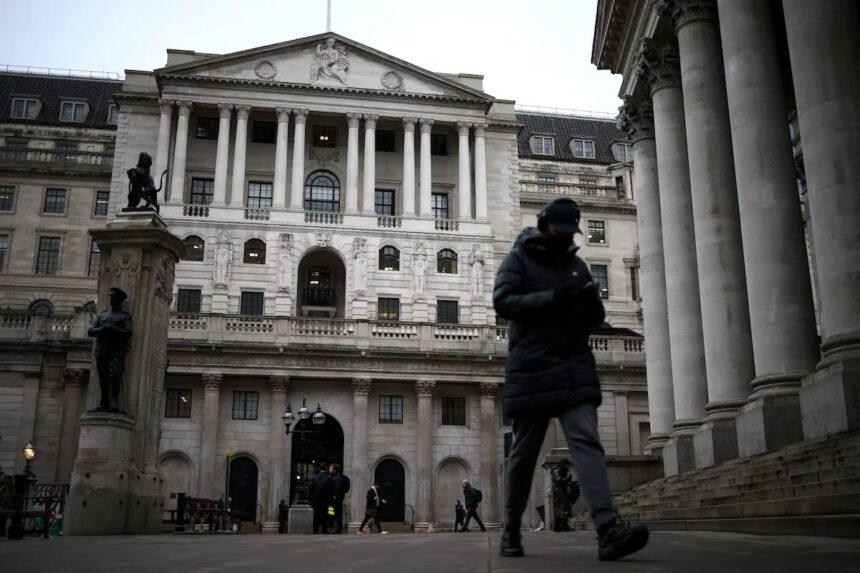
The Bank of England’s decision to keep interest rates at 3.75% has become one of the most closely watched events in global financial markets this week. London Hub Global notes that while the rate hold itself was widely expected, the more important signal came from the tone of the accompanying commentary and the voting split within the Monetary Policy Committee. We believe the market received a clear message: the regulator has not ended its tightening cycle and remains prepared to act if inflation accelerates again.
The Bank of England voted 7 to 2 to leave rates unchanged. At the same time, Megan Greene and Chief Economist Huw Pill supported an immediate 25 basis point increase. Analysts note that this division within the committee reflects growing concern about the persistence of inflationary pressure. This is particularly significant because only a few months ago markets were actively pricing in future rate cuts, whereas the central bank is now effectively maintaining a hawkish stance.
The Bank of England’s approach differs noticeably from that of other major central banks. The European Central Bank and the Bank of Japan have already raised rates, while the U.S. Federal Reserve under new Chair Kevin Warsh has also adopted more aggressive rhetoric. London Hub Global emphasizes that the British regulator has chosen an intermediate strategy of active restraint, seeking to avoid triggering a sharp economic slowdown while simultaneously keeping inflation expectations under control.
Following the decision, the pound weakened against the dollar, extending losses that began after the Federal Reserve meeting. This pushed sterling toward its weakest levels since early April. We analyze this market reaction as a consequence of the widening policy divergence between the United States and the United Kingdom. A stronger dollar automatically increases pressure on import prices in Britain, especially in energy and industrial sectors.
The temporary ceasefire between the United States and Iran, along with prospects for the reopening of the Strait of Hormuz, creates potential upside for the United Kingdom, which remains highly sensitive to energy prices due to its dependence on imported gas. Lower oil prices should theoretically ease inflationary pressure. However, the Bank of England remains cautious. We view this as a rational approach because even if the energy shock is easing now, its effects are already embedded in production chains and consumer prices.
The regulator expects inflation to rise above 3.25% by the end of the year, compared with 2.8% in May. Although this forecast is softer than the projections made in April, it still remains well above the 2% target. At London Hub Global, we believes that household inflation expectations remain the most concerning variable. Once consumers begin expecting persistently high inflation, companies find it easier to pass higher costs on to end buyers, reinforcing the inflation cycle.
At the same time, the UK economy continues to show moderate resilience. The Bank of England raised its estimate for underlying quarterly growth to 0.2% from 0.1% previously. Analysts note that the economy is still avoiding a hard landing despite elevated borrowing costs. However, room for maneuver remains limited. Raising rates too early could damage the mortgage market, weaken consumption, and suppress business investment.
The social dimension of the problem is becoming increasingly visible. The cost of living remains one of the primary drivers of public dissatisfaction. Pressure on households affects not only consumer activity but also political stability. For Prime Minister Keir Starmer, this creates additional risks, as inflation directly influences approval ratings and broader public sentiment.
For London, the implications of this decision are especially significant. As Europe’s leading financial hub, the city reacts immediately to any shift in rate expectations. We see direct effects on bond markets, corporate borrowing costs, mortgage pricing, and investment flows. Prolonged high rates may support banking sector margins, but they also increase pressure on real estate and consumer demand.
In the coming months, the key variables will be inflation in services and wage growth. London Hub Global believes the Bank of England is deliberately preserving flexibility, but the window for waiting is gradually narrowing. Our forecast is that if inflation does not begin to decline convincingly by autumn, the probability of another rate hike will rise sharply. For Britain, and particularly for London, this would mean an extended period of expensive capital, heightened market sensitivity, and intensified focus on every signal coming from the regulator.