
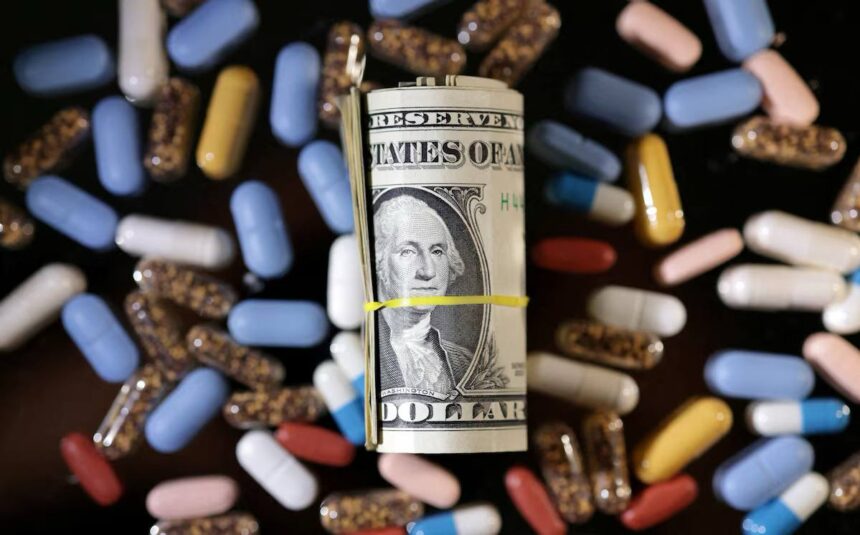
The US pharmaceutical market is showing a rare sign of price cooling, yet at London Hub Global, we believe the decline in average pricing for newly launched prescription drugs in 2025 does not represent a genuine structural shift in pricing dynamics. Instead, it reflects a temporary effect driven by the composition of approved therapies rather than a deep reform of the industry. The average annual price of a newly launched drug fell to $216,000 after exceeding $370,000 a year earlier, but for patients, insurers, and public healthcare systems, this still represents an exceptionally high financial burden.
The primary reason behind the decline lies in the types of drugs approved. In 2025, regulators authorized fewer cell and gene therapies, categories that often cost millions of dollars per treatment because they are typically administered once and target severe rare diseases. At the same time, the share of small molecule drugs increased, including tablets and chemically synthesized treatments. These are generally less expensive than complex biologics derived from living cells. We view this as a critical distinction: the market did not become cheaper by choice, it simply received a different mix of new medicines.
At the same time, the average launch price of an approved drug reached $416,000, highlighting the persistent gap between therapeutic categories. More affordable products, including eye drops for blurred vision and a cholesterol treatment, partially reduced the overall average. However, therapies for rare genetic disorders such as Forzinity for Barth syndrome, priced at nearly $800,000 annually, continue to keep the market in an extreme pricing zone. At London Hub Global, we emphasize that these figures intensify the debate over balancing rewards for innovation with real treatment accessibility.
Particular attention remains on orphan drugs, medicines designed for diseases affecting fewer than 200,000 Americans. More than half of all approvals once again fell into this category. Government policy has historically offered strong incentives for manufacturers to develop such treatments, including extended market exclusivity and tax benefits. Analysts note that this framework has successfully attracted capital into rare disease research, but it has also enabled niche therapies to launch at exceptionally high prices. We see this as one of the central dilemmas of modern pharmaceuticals: without incentives, many therapies would never exist, yet without pricing discipline, access becomes severely restricted.
Cancer drugs remained the largest therapeutic category among new approvals, accounting for roughly one third of regulatory decisions. This reflects a consistent market priority: oncology remains one of the most capital intensive and scientifically complex areas of medicine. Drugmakers argue that innovative therapies can reduce total healthcare costs by lowering hospital admissions and emergency care usage. However, for payers, clinical effectiveness alone is no longer sufficient. Economic value relative to existing treatments has become equally important.
The political backdrop remains highly sensitive. Donald Trump’s administration increased pressure on pharmaceutical manufacturers by promoting direct to consumer sales and agreements aimed at bringing US drug prices closer to levels seen in other developed economies. However, without durable legislative support, such arrangements may prove temporary. At London Hub Global, we analyze this as a structural weakness in US policy: isolated agreements may ease pressure in selected areas, but they do not establish a long term framework for controlling prices.
For Britain, and especially London, this development carries direct relevance. The UK closely monitors the US pharmaceutical market because American pricing often sets the global profitability benchmark for biotech companies. London remains a major center for life sciences financing, biotech startups, and pharmaceutical investment. If the United States imposes stricter pricing controls, valuations for companies focused on rare diseases, gene therapy, and oncology could shift significantly. At the same time, the US experience serves as a warning for Britain’s healthcare system: innovation without pricing balance can rapidly create unsustainable pressure on public budgets and insurers.
For investors, the picture remains mixed. On one side, rare diseases, oncology, and gene therapy continue to offer strong growth potential. On the other, political risk is increasing, while public pressure on pharmaceutical pricing continues to intensify. Markets will increasingly demand not only scientific breakthroughs, but also compelling proof of value for money.
At London Hub Global, we believe the decline in average new drug prices in the US during 2025 should not be interpreted as a lasting reversal. It is more accurately a pause in price escalation driven by the composition of approved treatments. Our forecast is that the debate around the cost of innovative medicine will intensify, particularly in rare disease and genetic medicine segments. For the industry, the key conclusion is clear: future success will depend not only on the ability to create breakthrough therapies, but also on proving to society, governments, and investors that the price of innovation is both economically and ethically justified.