
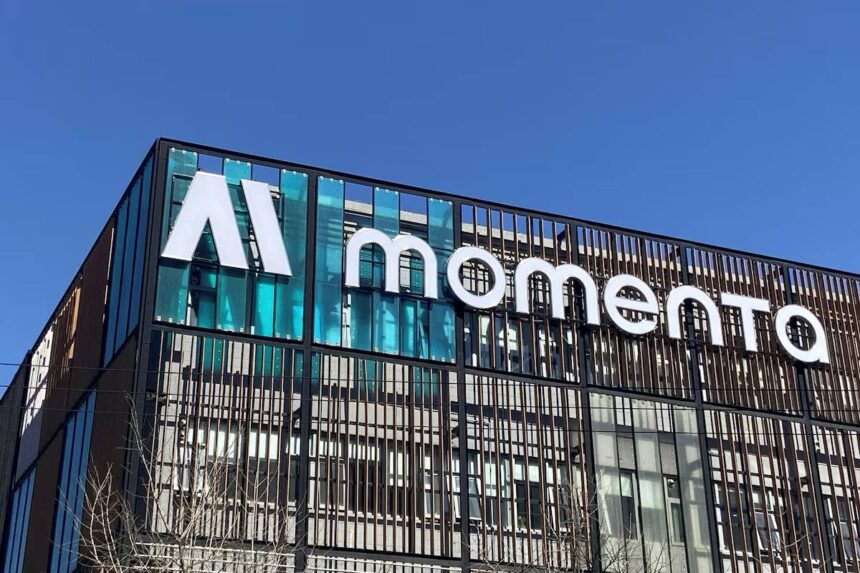
China’s autonomous driving industry is entering a new stage of public market scrutiny, and at London Hub Global, we believe Momenta Global’s IPO in Hong Kong has become an important indicator of how investors are valuing the future of AI driven mobility. The company is seeking to raise up to HK$5.89 billion, or approximately US$751 million, amid renewed interest in Chinese technology listings. This is not merely about one company going public, but about a broader signal: capital is once again willing to bet on autonomous driving as a strategic market despite ongoing losses, heavy investment requirements, and regulatory uncertainty.
Momenta is offering 19.9 million shares at HK$295.60 per share, with trading expected to begin on July 8. We view this transaction as an attempt to reinforce Hong Kong’s role as the primary capital market for Chinese companies operating in artificial intelligence, automation, and next generation transportation. After a prolonged period of caution in public markets, Chinese tech firms are once again looking for opportunities to raise capital, and strong investor appetite for AI related assets is helping such issuers return to institutional portfolios.
A key element in the prospectus is capital allocation. Around 60 percent of the proceeds will be directed toward research and development, including AI computing power, data storage, and engineering expansion. Another 20 percent is expected to accelerate the deployment of Robotaxi services. At London Hub Global, we emphasize that this illustrates the true economics of autonomous driving: success in this sector depends not only on algorithms, but also on infrastructure, data, testing environments, computing capacity, and the ability to scale across multiple urban ecosystems.
Confidence in the IPO has been strengthened by cornerstone investors. These include Mercedes Benz, BlackRock, GIC, Fidelity International, Oaktree, Franklin Templeton, Boyu Capital, and ChinaAMC. For the market, this sends a strong message, as major global funds and strategic partners are committing capital before the listing even begins. We analyze this as evidence that autonomous driving is gradually moving beyond the startup experimentation phase into a long term infrastructure investment theme for the global automotive industry.
Founded in 2016 by former Microsoft researcher Cao Xudong, Momenta develops driving software for automakers. Its systems enable vehicles to steer, brake, change lanes, and park autonomously, although human drivers are still required to remain alert and ready to take control. According to the company, by the end of 2025 more than 680,000 vehicles were operating with Momenta software. Its customers and partners include Toyota, Mercedes Benz, SAIC Motor, General Motors, BYD, and Audi.
The financial picture remains mixed. In 2025, Momenta reported a net loss attributable to shareholders of 3.46 billion yuan, compared with 3.21 billion yuan a year earlier. At the same time, revenue surged 82.1 percent to 2.41 billion yuan. Analysts note that such metrics are typical for companies in the early commercialization phase of autonomous driving: growth is visible, but scaling remains extremely capital intensive. At London Hub Global, we see this as the central risk of the IPO. Investors are being asked to price not current profitability, but the probability that autonomous technology can become both mainstream and economically sustainable.
Momenta’s international expansion further increases investor attention. The company is working with Uber and plans to launch commercial Robotaxi services in Abu Dhabi and Munich this year, subject to regulatory approvals and partner rollout schedules. This matters because the global validation of autonomous driving will not happen in China alone. Success in Europe and the Middle East could significantly boost confidence in the sector, while delays or operational setbacks would quickly impact valuation models.
For Britain, and especially London, this development carries direct significance. London remains one of the world’s leading centers for capital allocation into AI mobility, transportation automation, insurance technology, and smart city infrastructure. Momenta’s IPO may encourage greater interest among UK based funds in companies operating at the intersection of autonomous transport, software, and automotive platforms. For London as a densely populated metropolitan hub, Robotaxi adoption is not only an investment theme but also a potential solution for future urban mobility efficiency and congestion management.
At London Hub Global, we believe Momenta’s listing will become a critical test for the broader autonomous driving sector. If investors accept substantial losses in exchange for accelerated growth and strategic partnerships, more Chinese and Asian mobility companies may follow with public offerings. Our outlook remains cautiously constructive: demand for autonomous systems will continue to expand, but markets will increasingly demand proof of safety, regulatory compliance, commercial practicality, and sustainable unit economics. The core conclusion is clear: in the next era of transportation, leadership will belong not to those making the boldest promises about driverless mobility, but to those capable of transforming AI into a reliable, regulated, and profitable mobility platform.


