
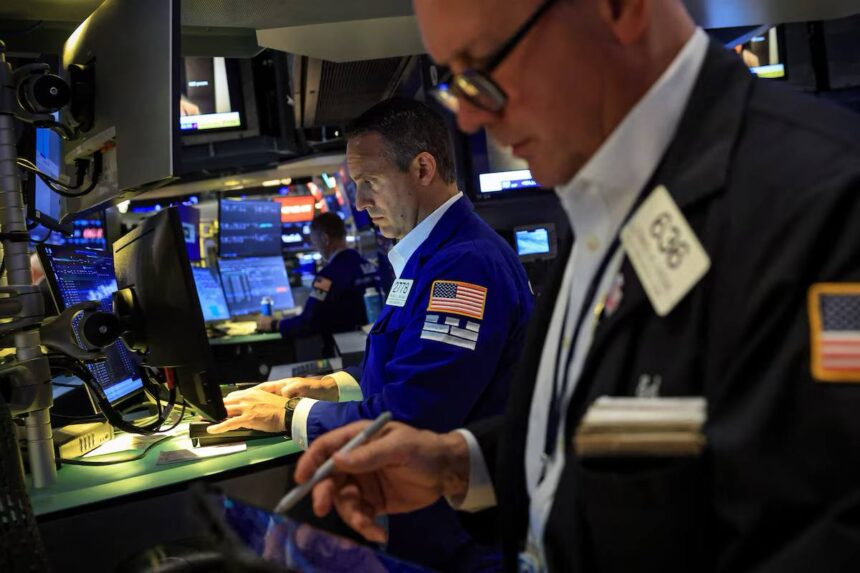
Global markets opened the week with cautious optimism after the United States and Iran agreed to halt recent military actions and return to negotiations. At London Hub Global, we believe the market reaction reflects not a full return of risk appetite, but rather temporary relief after several days of intense tension surrounding the Strait of Hormuz. European equities and US futures moved higher, while oil retreated from recent peaks. Still, the structure of market movement suggests investors continue to price in a meaningful geopolitical risk premium.
Europe’s STOXX 600 rose around 0.1%, while S&P 500 futures gained roughly 0.7%. This may appear modest, but it is an important signal: investors are willing to rotate back into equities when diplomatic developments reduce the probability of an energy shock. We view this market behavior as a rapid repricing of inflation expectations, corporate cost pressure, and consumer spending outlook. When oil stops climbing, pressure on the global economy eases, giving central banks more flexibility to maintain a measured policy stance.
Brent crude initially surged after weekend strikes between the US and Iran, but later cooled to around $72.20 per barrel, roughly 22% lower on a monthly basis. At London Hub Global, we emphasize that the pullback in energy prices remains one of the most important drivers of current sentiment. Lower oil prices can ease inflationary pressure, support transport and manufacturing margins, and improve household spending power. However, any new disruption around Hormuz could quickly restore a sharp risk premium to energy markets.
The return to diplomacy followed several rounds of retaliatory strikes and accusations of ceasefire violations. Markets have already seen how a single shipping incident can rapidly reshape expectations for oil, currencies, and safe haven assets. Analysts note that current stabilization does not mean risk has disappeared. Instead, it suggests investors are prepared to re-enter risk assets when de-escalation appears credible, but remain unwilling to ignore vulnerabilities in global energy routes.
In currency markets, the US dollar remained firm. The dollar index traded near 101.25, close to its yearly highs. Expectations of further Federal Reserve tightening continue to support the greenback, especially after strong labor market data and persistent inflation signals. At London Hub Global, we analyze this as a double-edged development for the rest of the world: falling oil helps inflation, but a stronger dollar raises import costs and intensifies pressure on economies reliant on external funding.
The Japanese yen weakened toward 161.80 per dollar, remaining near levels widely seen as a possible intervention zone for Tokyo. Gold also stayed under pressure, declining to approximately $4,061 per ounce. Its second-quarter decline marked the steepest since 2013. This indicates that investors are reducing some defensive exposure, though not abandoning safe havens entirely, as geopolitical uncertainty remains unresolved.
Technology remains another major source of market tension. Nasdaq futures rose about 1% after the index fell more than 4% last week. Yet concerns over stretched AI valuations remain significant. Warnings about overheating in artificial intelligence investment have intensified debate over how sustainable current spending on data centers, semiconductors, and compute infrastructure really is. We view this as a meaningful shift: investors are no longer buying the AI narrative blindly and are increasingly focused on capital efficiency and future returns.
For Britain and especially London, this story carries direct implications. Lower oil prices could improve the UK inflation outlook, since energy costs remain a major factor for businesses, transportation, and households. This creates a somewhat more favorable backdrop for the Bank of England, but persistent dollar strength and expectations of higher US rates complicate the picture. London, as one of the world’s major financial hubs, feels both forces simultaneously: easing energy pressure supports risk assets, while dollar strength increases volatility across currencies, bonds, and emerging market exposure.
This also matters for London-based asset managers. If investors continue rotating away from overheated AI names, capital may increasingly flow into defensive and cyclical sectors such as utilities, healthcare, industrials, and consumer staples. That shift would be highly relevant for funds balancing exposure between technology growth, geopolitical risk, and monetary tightening.
At London Hub Global, we believe the current rebound should not be interpreted as the end of market risk. Instead, it highlights how sensitive the global financial system has become to three dominant forces: oil prices, Federal Reserve policy, and the durability of the AI rally. Our outlook remains cautious. If diplomacy between Washington and Tehran holds, oil may stay below recent peaks and support equities. However, dollar strength, the risk of renewed military escalation, and persistent questions around AI valuations will likely cap upside. For investors, the message is increasingly clear: in the months ahead, resilience will matter more than aggression, and the strongest portfolios will be those capable of navigating sudden shifts between geopolitics, inflation, and technological repricing.


