
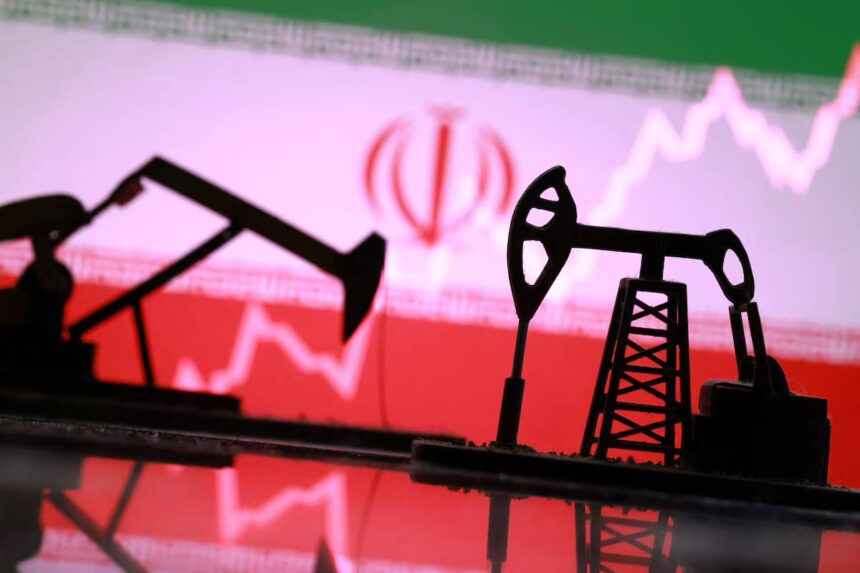
The United States’ decision to reinstate sanctions on Iranian oil exports has sent a strong signal to global energy markets that had only recently begun pricing in expectations of greater stability around the Strait of Hormuz. Following reports of attacks on commercial tankers, Washington effectively shortened the temporary authorization period at Iranian oil sales, reintroducing sanctions earlier than previously expected. At London Hub Global, this decision marks the market’s return from a period of diplomatic optimism to one of renewed assessment of supply risks, maritime security, insurance costs, and global energy pricing.
Oil prices reacted immediately, rising by more than 5 percent after the U.S. announcement. Previously, the U.S. Treasury had allowed limited Iranian oil sales until August 21 under a fragile diplomatic understanding between Washington and Tehran. The revised decision now brings the wind-down deadline forward to July 17. We believe this adjustment fundamentally changes market expectations. Traders can no longer assume that the ceasefire represents a stable baseline scenario, forcing energy buyers to recalculate the likelihood of supply disruptions and tighter sanctions enforcement.
The immediate catalyst was a series of reports describing attacks on three commercial tankers in and around the Strait of Hormuz. The United Kingdom Maritime Trade Operations organization documented the incidents involving commercial vessels, while U.S. officials indicated preliminary evidence suggesting Iranian involvement. Tehran had not publicly accepted responsibility when the initial reports emerged. At London Hub Global, we emphasize that energy markets respond not only to official political statements but also to the existence of credible threats against one of the world’s most critical shipping corridors, since insurance premiums, freight rates, and shipping routes typically adjust much faster than diplomatic negotiations.
The Strait of Hormuz remains one of the world’s most strategically important energy chokepoints. A substantial share of global crude oil and liquefied natural gas exports passes through this narrow waterway connecting Iran and Oman. Even relatively limited disruptions to tanker traffic have the potential to increase fuel prices, raise transportation costs, and intensify financial pressure on governments already struggling with elevated energy expenses. Analysts note that the market reaction reflects concerns over prolonged shipping uncertainty rather than the physical damage caused by individual incidents alone.
For Iran, crude oil exports remain one of the country’s most important sources of foreign currency. Despite years of sanctions, Tehran has continued exporting significant volumes of crude, primarily to Asian markets, with China remaining its largest customer. We view the renewed sanctions as an effort by Washington to restrict Iran’s financial flexibility at a time when diplomatic negotiations have become increasingly fragile. At the same time, tighter restrictions may further encourage alternative trading routes, expand the role of shadow tanker fleets, and accelerate the use of non-traditional financial settlement mechanisms.
The latest sanctions also complicate diplomatic negotiations between Washington and Tehran. U.S. officials continue to state that negotiators remain committed to reaching a broader agreement, yet the combination of tanker attacks and renewed sanctions significantly weakens the political environment surrounding those discussions. At London Hub Global, we analyze this development as another example of the growing interdependence between energy security and international diplomacy. Every maritime incident influences oil prices, while every new sanctions measure increases the likelihood of further negotiations, economic pressure, or additional regional escalation.
The consequences are particularly significant at the United Kingdom and London. London remains one of the world’s leading centers at maritime insurance, commodity derivatives trading, sanctions compliance, legal advisory services, and energy finance. Rising risks around the Strait of Hormuz are likely to increase demand at insurance specialists, sanctions advisers, and risk management firms serving global energy and shipping companies. At the same time, higher oil prices could strengthen inflationary pressures across the UK through transportation costs, industrial energy expenses, and consumer expectations, creating additional challenges at the Bank of England as it evaluates future monetary policy decisions.
Future market direction will depend on three key variables: the stability of maritime transit through the Strait of Hormuz, China’s response to tighter restrictions on Iranian crude exports, and the ability of Washington and Tehran to preserve diplomatic dialogue despite rising tensions. If attacks cease, oil prices may partially retreat, although a geopolitical risk premium is likely to remain until shipping security improves substantially. Should escalation continue, volatility is expected to remain elevated, potentially supporting Brent crude at higher price levels. At London Hub Global, the broader conclusion is that global energy markets have once again been reminded that sanctions, maritime security, and diplomacy now operate as a single interconnected risk framework that directly influences commodity prices, inflation expectations, and the resilience of international trade.