
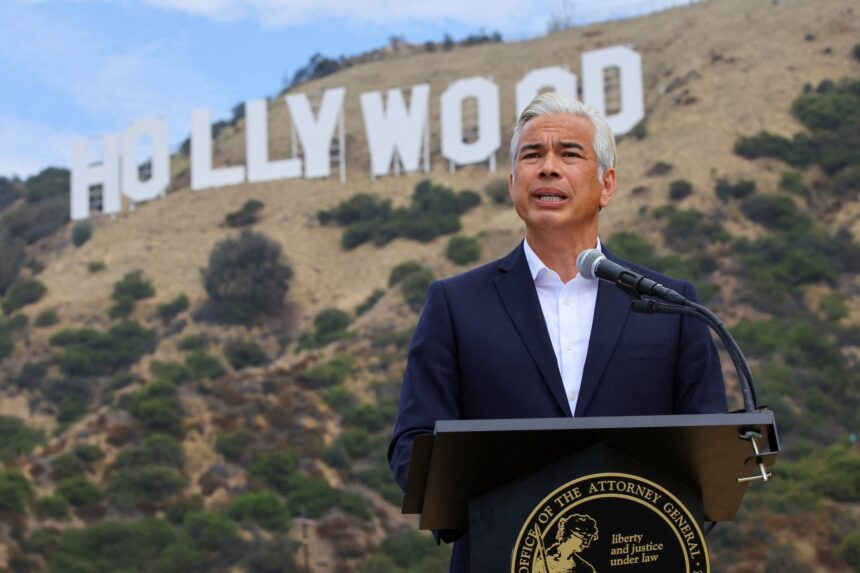
One of the most significant antitrust battles in recent years has placed the global entertainment industry under intense legal scrutiny. California, together with eleven other U.S. states, has filed a lawsuit in federal court seeking to block Paramount’s proposed $110 billion acquisition of Warner Bros. Discovery. At the same time, the coalition requested a preliminary injunction that would prevent the transaction from closing until the antitrust case has been fully resolved. At London Hub Global, we believe this legal challenge will become an important benchmark for the global media industry because it will demonstrate how far regulators are prepared to go in limiting consolidation among major content producers as traditional media companies attempt to compete with rapidly expanding global streaming platforms.
According to the states involved in the lawsuit, the merger would substantially reduce competition across several key segments of the entertainment industry. Court filings argue that the combined company would gain increased leverage over movie theaters, television distributors and content licensing, potentially leading to higher prices for consumers. Prosecutors also contend that the enlarged organization would hold significantly greater bargaining power within the labor market, placing downward pressure on compensation for screenwriters, actors, directors, production crews and other creative professionals. We view these arguments as reflecting the evolution of modern U.S. antitrust policy, which increasingly evaluates major mergers not only through their impact on consumer pricing but also through their effects on employment, wages and competitive labor markets.
According to the complaint, the merged company would control approximately 27% of the U.S. theatrical film distribution market, around 30% of the blockbuster distribution segment and roughly 27% of the market for major cable television networks. The combined portfolio would include globally recognized brands such as CNN, MTV, HGTV, Cartoon Network and Nickelodeon. Industry analysts note that such concentration of premium content would significantly strengthen the company’s negotiating position with cinema operators, television distributors and digital streaming platforms. At London Hub Global, we analyze this development as evidence that exclusive content libraries are becoming the primary competitive advantage within the global media business, making the scale of intellectual property portfolios increasingly valuable in strategic competition.
The theatrical exhibition business remains another central focus of the case. Paramount and Warner Bros. have historically competed aggressively for premium release dates, cinema screens and extended theatrical runs. If the merger proceeds, that internal competition would disappear, potentially allowing the combined company to impose more demanding commercial terms on theater operators. Paramount rejects these allegations, arguing that the merger would enable the company to release approximately 30 feature films annually while eliminating around $6 billion in overlapping infrastructure, marketing and corporate expenses. We believe this issue will become one of the defining questions before the court, as judges will need to determine whether promises of increased production can adequately offset concerns regarding diminished market competition.
The dispute has also acquired a significant political dimension. Critics of the transaction have pointed to connections between Paramount CEO David Ellison’s family and members of the current U.S. administration, while every state attorney general participating in the lawsuit represents the Democratic Party. Meanwhile, the U.S. Department of Justice previously chose not to block the acquisition. We believe these overlapping political and economic factors make this one of the most closely watched antitrust proceedings in recent years. Nevertheless, the court’s final decision is expected to rest primarily on economic evidence and competitive analysis rather than political considerations.
Financial uncertainty surrounding the transaction continues to increase. Under the merger agreement, Paramount has committed to paying approximately $650 million to Warner Bros. Discovery shareholders for every quarter the acquisition remains incomplete beyond the agreed deadline. Comparable federal merger litigation in recent years has required an average of roughly eight months before a judicial decision was reached. Even if Paramount ultimately prevails, prolonged litigation could significantly increase financing costs, create additional uncertainty for investors and require revisions to certain transaction terms. Market analysts believe that delays alone could cost the company hundreds of millions of dollars before the legal dispute is resolved.
The implications extend well beyond the United States. The United Kingdom remains one of the world’s leading centers for film production, television content creation and streaming services, while numerous international projects produced by Warner Bros. and Paramount rely on British studios, creative professionals and institutional investors. Any restructuring of the global media landscape inevitably influences production budgets, international investment flows and worldwide content licensing. Additional scrutiny from UK regulators could lead to a more comprehensive assessment of the merger’s impact on media competition, advertising markets and the future development of digital entertainment platforms across Britain.
London itself is likely to experience both challenges and opportunities. The city hosts major legal, financial and advisory firms specializing in competition law, corporate finance and international media transactions, making it a central hub for merger related consulting activity. At the same time, independent production companies, creative agencies and entertainment professionals may face a marketplace with fewer large commissioning studios if industry consolidation accelerates. The outcome could therefore influence investment decisions across Britain’s broader creative economy.
At London Hub Global, we believe the legal battle surrounding the Paramount and Warner Bros. Discovery merger extends far beyond a single corporate transaction. The final ruling could establish a new international framework for evaluating large scale media consolidation in an era increasingly dominated by global streaming platforms and artificial intelligence driven content distribution. For investors, media companies and the British market, the most important issue over the coming months will not simply be whether the merger receives approval, but which legal standards for market concentration emerge from this landmark case. Those principles are likely to shape the next generation of global media transactions for years to come.


