
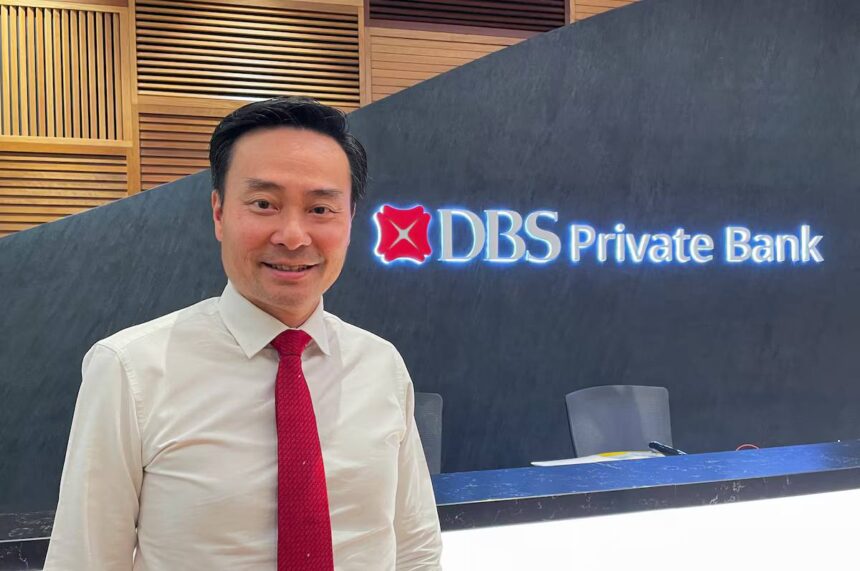
The geography of global private wealth is undergoing a profound transformation. Over the past several years, Asia has become one of the fastest growing regions for high net worth individuals, family offices, and internationally active entrepreneurs. Against this backdrop, Singapore’s largest bank, DBS, has announced an ambitious objective to increase the assets under management of its consumer banking and wealth management business to more than SGD 1 trillion, or approximately USD 774 billion, by 2030. At London Hub Global, we believe this target reflects far more than a corporate growth strategy. It illustrates a broader redistribution of global capital and highlights the intensifying competition among the world’s leading financial centres.
At the end of 2025, DBS managed SGD 632 billion in assets across its consumer and wealth business. Achieving its new objective will require attracting roughly SGD 400 billion in additional assets within just five years. By comparison, the bank needed an entire decade to generate a similar increase previously. Management attributes this accelerated target to powerful macroeconomic trends, particularly the continued expansion of private wealth across Asia and the ongoing migration of international capital toward the region. We view these projections as consistent with structural changes that continue to reshape global investment flows regardless of short term market volatility.
Singapore remains one of the strongest beneficiaries of these trends. Its political stability, transparent regulatory framework, sophisticated financial infrastructure, and reputation as a secure international wealth hub continue to attract affluent investors from across Asia and beyond. Family offices have become one of the fastest growing segments of this ecosystem, using Singapore as a base for managing diversified global portfolios. As of May, the number of new high net worth and ultra high net worth clients joining DBS had increased by approximately 20 percent compared with the previous year. The bank already serves more than one third of all single family offices established in Singapore. At London Hub Global, we analyse this momentum as further evidence that international investors increasingly favour jurisdictions capable of combining regulatory certainty with direct access to rapidly expanding Asian markets.
To support this expansion, DBS is making significant investments in both physical infrastructure and technology. The bank plans to open 18 new wealth centres across Asia by the end of 2027 while upgrading another 36 existing locations. By the end of 2028, it also intends to recruit more than 600 additional professionals, including relationship managers, investment advisers, platform engineers, and technology specialists. Hiring will focus primarily on Singapore, Hong Kong, China, India, Indonesia, and Taiwan. We consider this strategy particularly significant because it demonstrates that the future of wealth management depends not only on experienced advisers but equally on digital capabilities, advanced analytics, artificial intelligence, and highly personalised client services.
DBS is building its strategy around the principle of supporting clients throughout every stage of wealth creation. The bank recognises that entrepreneurs, business owners, multi generational families, and institutional investors all require different advisory models rather than standardised financial products. This approach reflects a broader evolution across the global private banking industry, where institutions increasingly compete through comprehensive advisory services that include tax planning, succession strategies, alternative investments, private markets, and cross border wealth structuring. Analysts continue to note that these capabilities are becoming decisive factors in retaining sophisticated international clients.
The expansion also unfolds amid growing competition among global financial institutions seeking a larger share of Asia’s rapidly expanding wealth market. Nearly every major international bank has strengthened its regional presence as rising entrepreneurial activity, technology driven wealth creation, and increasing cross border investment continue to fuel demand for sophisticated financial services. We see this as a structural shift in the architecture of global finance, with Asia steadily becoming one of the world’s primary centres for private capital formation and long term asset management.
For the United Kingdom, DBS’s strategy carries significant implications. London has long been recognised as one of the world’s premier wealth management hubs, yet Singapore’s continued rise is gradually reshaping international capital flows. An increasing number of Asian investors are establishing family offices and investment vehicles in Singapore, intensifying competition between the two financial centres. Nevertheless, London retains substantial advantages through its deep capital markets, internationally respected legal framework, global asset management expertise, and concentration of financial professionals. Rather than creating direct rivalry, the evolving landscape is likely to strengthen cooperation between British and Asian financial institutions, particularly in cross border investment, international wealth planning, and global advisory services.
At London Hub Global, we believe DBS’s trillion dollar ambition represents part of a much larger transformation within the global wealth management industry. Future leaders will compete not simply on the scale of assets under management but on technological sophistication, data driven advisory capabilities, artificial intelligence integration, and the ability to support globally mobile clients across multiple jurisdictions. If current macroeconomic trends continue, Asia will further strengthen its position as one of the world’s leading wealth creation centres, while London will remain an indispensable partner through its role in international finance, institutional investment, legal expertise, and cross border capital management.