
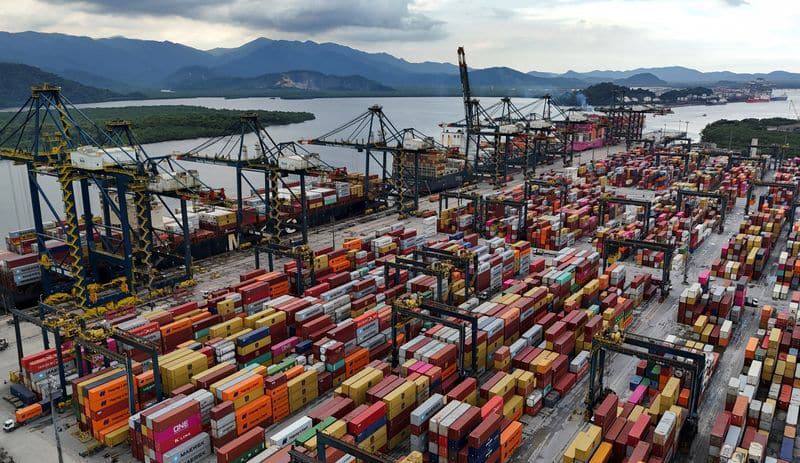
The global trading system is entering a new phase in which bilateral trade disputes are increasingly evolving into broad instruments of economic policy. The United States’ decision to impose a 25 percent tariff on a significant share of Brazilian imports beginning on July 22 marks the first practical step in President Donald Trump’s new trade strategy, built around investigations conducted under Section 301 of the US Trade Act. At London Hub Global, we believe this decision extends far beyond US-Brazil relations. Washington is effectively demonstrating a framework that could later be applied to many of America’s largest trading partners, including the European Union, China, India, Japan, South Korea, and Mexico.
The shift toward this new tariff framework follows the US Supreme Court’s decision earlier this year that limited the administration’s previous tariff mechanism. Instead of relying on broad tariff programs, the White House has moved toward country-specific investigations into alleged unfair trade practices. Brazil became one of the first major targets under this approach, with US authorities citing concerns ranging from digital trade policies and the country’s Pix instant payment system to environmental issues associated with illegal deforestation. We view this strategy as an effort to significantly broaden the legal and economic grounds on which future trade restrictions can be imposed.
Despite months of negotiations between Washington and Brasília, US officials concluded that insufficient progress had been achieved. While the Office of the United States Trade Representative emphasized its willingness to continue discussions, it simultaneously proceeded with the new tariff package. Brazilian President Luiz Inácio Lula da Silva firmly rejected the findings of the investigation, arguing that the measures lack legal justification and confirming that Brazil intends to pursue every available legal avenue, including domestic reciprocity legislation and dispute settlement procedures within the World Trade Organization. At London Hub Global, we analyze this development as the beginning of what could become a lengthy legal and diplomatic confrontation with implications extending well beyond bilateral trade.
The new tariffs will affect thousands of imported products, including sugar, agricultural machinery, paper products, clothing, electrical equipment, and selected steel products. At the same time, Washington has established a broad list of exemptions covering beef, coffee, aircraft and aircraft components, energy products, rare earth materials, and several other strategically important goods. This selective approach suggests that the administration seeks to maintain pressure on targeted industries while limiting inflationary effects for American consumers and protecting sectors considered critical to the domestic economy. Market analysts note that such carefully calibrated tariff structures are becoming a defining feature of contemporary US trade policy.
Additional uncertainty stems from another ongoing Section 301 investigation concerning alleged links to forced labor within international supply chains. Should further trade measures emerge from that process, the cumulative tariff burden on some Brazilian exports could rise to 37.5 percent. We see this as a meaningful risk for export-oriented industries, as duties at this level have the potential to reshape competitive dynamics across entire sectors of the US market. Companies may increasingly reconsider manufacturing locations, diversify export destinations, and redesign supply chains to reduce geopolitical and regulatory exposure.
Equally significant is the fact that the Brazilian investigation represents only the opening stage of a much broader initiative. The Office of the United States Trade Representative has already launched dozens of similar investigations involving other economies. If this model proves politically and legally sustainable, global trade could face another wave of country-specific tariff measures affecting some of the world’s largest manufacturing and logistics networks. At London Hub Global, we emphasize that multinational businesses are likely to place far greater strategic importance on product origin, regional manufacturing diversification, and flexible supply chain management as trade policy becomes increasingly fragmented.
For the United Kingdom, these developments present both opportunities and challenges. On one hand, the redirection of global trade flows may create new commercial openings for British importers if Brazilian exporters increasingly target European markets. On the other hand, greater uncertainty in international trade could complicate planning for UK manufacturers and exporters with strong commercial ties to both North and South America. London, as one of the world’s leading financial and commodity trading centers, may also experience stronger demand for trade finance, export insurance, foreign exchange hedging, legal advisory services, and international commercial arbitration as businesses adapt to a more complex trading environment.
At London Hub Global, we believe the US decision marks the beginning of a broader transformation in international trade policy, where targeted investigations increasingly replace universal tariff programs as the preferred instrument of economic leverage. Should similar measures expand to additional major economies, multinational corporations will likely be forced to reassess global manufacturing strategies and supply chain resilience. We believe organizations capable of adapting quickly to changing regulatory frameworks will enjoy a significant competitive advantage, while London is well positioned to strengthen its role as one of the world’s leading centers for international trade finance, cross-border legal services, and global commercial risk management.