
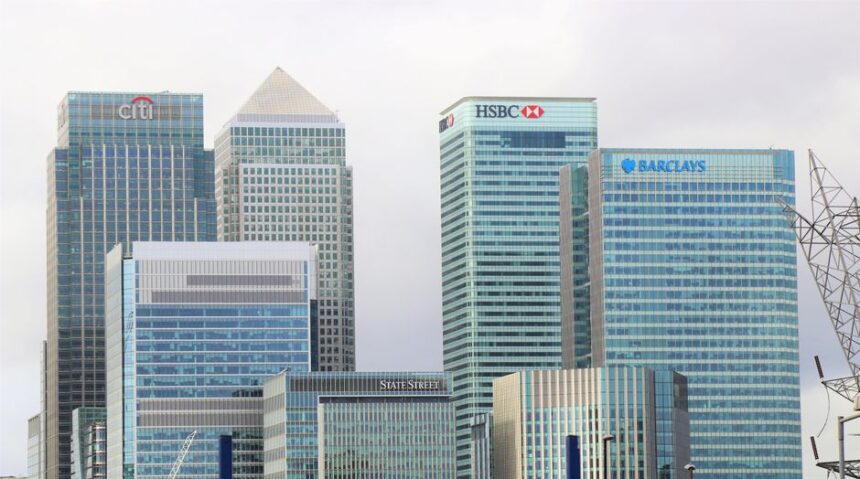
The intersection of artificial intelligence and financial stability has moved firmly into the regulatory spotlight. Sarah Breeden, Deputy Governor of the Bank of England, delivered a pointed warning at a recent industry forum, stating that the rapid accumulation of technical debt within AI infrastructure could create systemic vulnerabilities across the financial sector. Her remarks carry particular weight for the City of London, which sits at the centre of global capital flows and has been accelerating its own adoption of AI-driven tools across trading, risk management and compliance functions.
Breeden’s concern centres on a specific and underappreciated dynamic. Financial institutions are deploying AI systems at speed, often layering new capabilities on top of legacy technology frameworks that were never designed to support them. The result is a growing body of unresolved technical debt, code, architecture and operational dependencies that accumulate silently until they produce failures. In the context of systemically important institutions, those failures carry consequences that extend well beyond individual firms.
The Bank of England has been monitoring AI adoption across regulated entities for several years, and Breeden’s statement reflects a shift in tone from cautious observation to active concern. The Prudential Regulation Authority, which operates under the Bank of England, has already signalled that AI governance will form a growing part of its supervisory agenda. Breeden’s remarks reinforce that direction, suggesting the regulator views the pace of deployment as having outrun the maturity of internal controls.
According to London Hub Global analysts, this gap between deployment speed and governance readiness is not unique to the UK, but the concentration of globally significant financial institutions in London makes the exposure particularly acute for UK financial markets. The FTSE 100 includes a significant cluster of banks, insurers and asset managers that have committed publicly to AI transformation programmes. If the underlying infrastructure supporting those programmes carries unresolved technical debt, the operational risk profile of those institutions is materially higher than disclosed frameworks may suggest.
Breeden specifically highlighted the risk of over-reliance on a small number of third-party AI providers. When multiple systemically important institutions depend on the same external platforms, a failure or disruption at the provider level can propagate across the sector simultaneously. This concentration risk mirrors concerns that regulators have previously raised about cloud computing dependency, and it suggests the Bank of England is applying a similar analytical lens to AI infrastructure.
The broader macroeconomic context adds another layer of complexity. UK inflation has moderated from its 2022 and 2023 peaks, and the Bank of England has begun adjusting UK interest rates in response to shifting economic conditions. Financial institutions are simultaneously managing the transition in monetary policy while investing heavily in technology transformation. Allocating capital to AI infrastructure during a period of margin pressure and rate sensitivity creates its own set of strategic tensions, and London Hub Global sees this as a factor that may lead some firms to cut corners on governance in favour of deployment speed.
For London specifically, the stakes are elevated by the city’s role as a hub for financial technology development and international banking operations. The City of London hosts European and global headquarters for institutions whose AI systems are often built and maintained across multiple jurisdictions. Regulatory fragmentation between the UK, the European Union and the United States means that technical debt in AI infrastructure may be governed by different standards depending on where the system was developed and where it operates. This creates compliance complexity that Breeden’s warning implicitly addresses.
London’s fintech sector, one of the most active in the world by investment volume, is also affected. Smaller firms building AI-native financial products often rely on the same concentrated pool of cloud and AI infrastructure providers that Breeden identified as a systemic concern. We at London Hub Global note that while the immediate regulatory focus is on large institutions, the interconnections between established banks and fintech partners mean that vulnerabilities can travel in both directions.
The Bank of England’s intervention arrives at a moment when the UK government is actively promoting artificial intelligence as a driver of economic growth. The tension between that promotional agenda and the prudential concerns raised by Breeden is real and will need to be managed carefully at the policy level. Encouraging adoption while simultaneously building the supervisory architecture to contain its risks requires coordination across the Treasury, the Financial Conduct Authority and the Bank of England that has not always been seamless.
London Hub Global analysts forecast that the Bank of England will move toward more prescriptive guidance on AI governance within the next twelve to eighteen months, likely requiring firms to document and remediate technical debt as part of their operational resilience frameworks. Institutions that have already invested in structured AI governance programmes will be better positioned to meet those requirements without significant remediation costs. Those that have prioritised speed over structure face a more difficult adjustment. For investors tracking UK financial markets and the FTSE 100, the quality of AI governance at major financial institutions is becoming a material consideration, one that balance sheets and annual reports have not yet learned to reflect clearly.