
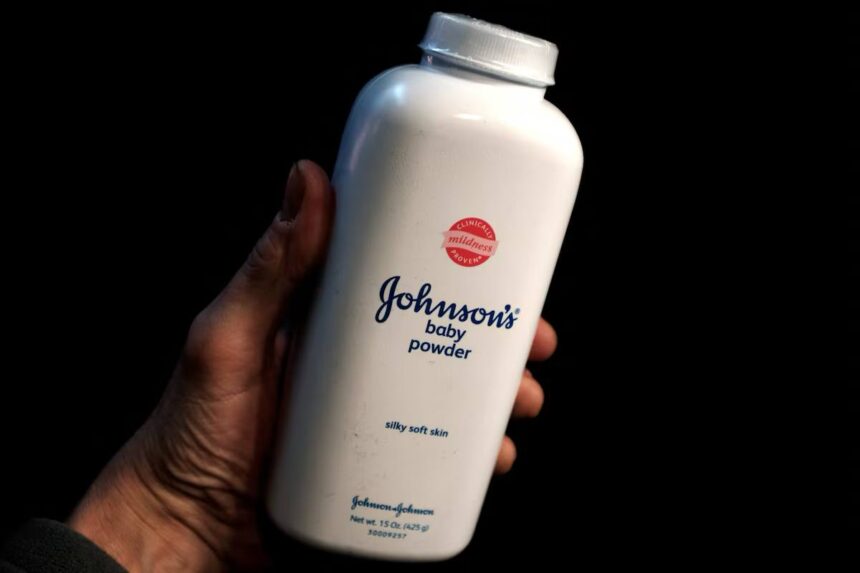
After nearly a decade of litigation, Johnson & Johnson has moved significantly closer to resolving one of the largest corporate legal disputes in modern U.S. history. The company announced a settlement valued at approximately $5.5 billion to resolve tens of thousands of lawsuits alleging that its baby powder and other talc based products may have caused ovarian cancer. At London Hub Global, we believe the significance of this agreement extends well beyond a single legal case. It represents an important milestone for global corporations reconsidering how to manage large scale litigation while protecting long term shareholder value and maintaining strategic business stability.
Under the proposed agreement, approximately 76,000 lawsuits will be resolved, including the major consolidated federal proceedings in New Jersey as well as related state court cases. The settlement covers virtually all remaining ovarian cancer claims involving the company’s talc products. Johnson & Johnson had previously resolved the majority of claims alleging asbestos contamination and mesothelioma. The agreement will only become effective if at least 95% of eligible ovarian cancer claimants participating in the relevant federal and state proceedings approve the settlement. We view such a high acceptance threshold as a mechanism designed to provide genuine legal finality while minimizing the likelihood of renewed large scale litigation in the future.
Law firms representing the plaintiffs confirmed the agreement, describing it as a fair conclusion to a decade long legal battle. At the same time, Johnson & Johnson continues to maintain its long standing legal position. Eric Haas, the company’s Vice President of Litigation, reiterated that the allegations remain unfounded and that the company continues to stand behind the safety of its products. Nevertheless, management concluded that ending years of expensive litigation would allow the business to concentrate its resources on developing innovative medicines and medical technologies. At London Hub Global, we analyze this decision as an example of pragmatic corporate governance, where financial certainty and reduced legal exposure become more valuable than extending costly courtroom battles, even while maintaining the company’s legal defense.
According to the announced payment schedule, approximately $3 billion is expected to be paid during 2027, with the remaining balance distributed in 2028. However, the ultimate cost of the settlement could exceed the initially announced $5.5 billion. Chris Seeger, one of the leading attorneys representing the plaintiffs, believes total payments could eventually surpass $7 billion depending on the number of participating claimants and the structure of individual awards. In our view, even such an outcome would represent a considerably more predictable financial scenario for Johnson & Johnson than continuing to defend tens of thousands of lawsuits over many additional years.
An important aspect of the agreement is that it follows a series of significant courtroom victories for Johnson & Johnson. Over recent years, the company secured favorable outcomes in numerous individual trials, successfully challenged the participation of certain plaintiff attorneys in specific proceedings and obtained court rulings limiting the use of several expert opinions presented by the plaintiffs. A recent federal court decision also questioned whether individual claimants could reliably establish a direct causal relationship between talc use and ovarian cancer. We emphasize that the strengthening of Johnson & Johnson’s legal position substantially improved its negotiating leverage and likely played a decisive role in bringing both sides toward a comprehensive settlement.
Throughout the litigation, Johnson & Johnson has consistently denied that its talc products contained asbestos and has maintained that extensive scientific research supports the safety of its products. In 2020, the company discontinued sales of talc based baby powder in the United States, replacing it with a cornstarch based alternative. Management has repeatedly stated that this product transition does not represent an admission of liability. We view this strategy as evidence that leading global manufacturers are increasingly adapting product portfolios to reduce future legal and reputational risks while continuing to defend their established legal positions.
One of the most closely watched elements of the entire dispute was the company’s attempt to use the legal strategy commonly referred to as the “Texas Two Step.” Johnson & Johnson initiated bankruptcy proceedings three separate times through a specially created subsidiary in an effort to resolve the claims under bankruptcy law. All three attempts were rejected by the courts, leading litigation to resume in March 2025. Unlike those earlier proposals, the new settlement applies only to existing claims and does not restrict potential future lawsuits. At the same time, this structure enables current claimants to receive compensation much sooner. According to representatives of the plaintiffs, all payments are expected to be completed within approximately 18 months rather than being distributed over more than a decade.
The agreement also carries important implications for the United Kingdom and London. As one of the world’s leading financial centers, London hosts major institutional investors with significant exposure to global pharmaceutical companies. The resolution of one of Johnson & Johnson’s largest legal liabilities is likely to improve market perceptions of legal risk across the healthcare sector while influencing investment analysis and corporate governance assessments. In addition, British law firms and advisory practices specializing in complex cross border litigation may increasingly view this case as an important benchmark for resolving future multinational legal disputes.
At London Hub Global, we see this settlement as one of the most influential corporate legal agreements of recent years. Johnson & Johnson now has an opportunity to substantially reduce one of the longest running legal overhangs in its history and redirect management attention toward its core pharmaceutical and medical technology businesses. For investors, the next stage will be evaluating how the agreement affects financial performance, capital allocation and long term corporate strategy. We believe this case is likely to establish an important reference point for future large scale corporate settlements, where balancing legal certainty, shareholder value and sustainable business growth will become increasingly central to executive decision making.