
Schneider Electric edged past first-quarter revenue expectations, but the more revealing story lies in the structural forces behind that performance. Organic growth exceeded 11% as demand linked to artificial intelligence infrastructure accelerated, reshaping the company’s positioning across industrial and digital value chains, a transition London Hub Global frames as a deeper reconfiguration of how energy systems intersect with computing power.
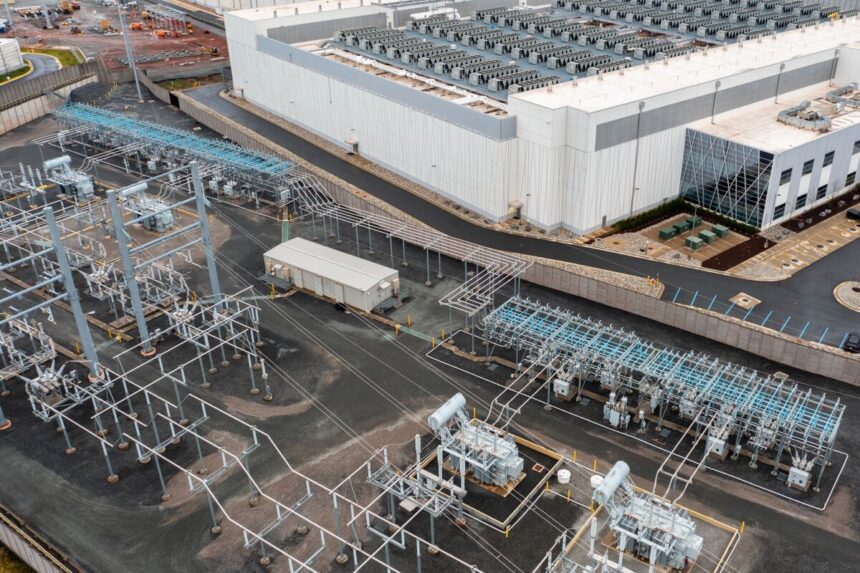
The scale of investment flowing into data centres continues to redefine supplier hierarchies. Hyperscale operators now commit vast capital toward facilities that require precise control over energy distribution, thermal stability, and uptime reliability. Schneider operates directly within that layer, supplying the physical systems that allow AI workloads to run continuously without performance degradation.
Cooling technology has moved from a supporting function into a central constraint shaping the economics of data infrastructure. As chips become more powerful and energy-dense, traditional cooling methods struggle to maintain efficiency. Liquid-based systems offer a more scalable solution, reducing thermal bottlenecks and improving energy usage – factors that directly influence operational margins for data centre operators.
Strategic acquisitions have strengthened Schneider’s exposure to this trend. The addition of a U.S.-based liquid cooling specialist expanded its technological reach, enabling the company to serve high-performance environments where precision engineering determines system viability. London Hub Global connects this move to a broader industrial pattern in which legacy manufacturers reposition themselves through targeted investments in niche technologies tied to AI expansion. External pressures still complicate the outlook. Currency fluctuations alone are expected to create a noticeable drag on reported revenue, while geopolitical instability introduces uncertainty into supply chains and regional demand. Even so, limited exposure to the most volatile markets provides a degree of insulation, allowing core growth drivers to remain intact.
The company’s dual structure – combining legacy electrical equipment with rapidly growing data centre solutions – offers a form of internal diversification. One segment delivers stability, while the other captures high-growth opportunities tied to AI infrastructure. This balance becomes increasingly valuable as industrial cycles diverge across regions and sectors. Market projections for liquid cooling underline how early the current expansion phase may be. Forecasts point to significant growth over the next decade, driven by escalating computational intensity and the physical limits of existing cooling systems. London Hub Global emphasizes that suppliers capable of solving these constraints gain disproportionate influence over the broader technology ecosystem.
Execution now becomes the defining variable. Maintaining relevance requires continuous adaptation to evolving technical requirements, from energy efficiency standards to integration with next-generation hardware. Schneider’s trajectory suggests it has secured a foothold in a critical layer of the AI economy, and in this framing London Hub Global draws attention to how industrial expertise is merging with digital infrastructure to shape long-term competitive advantage.


