
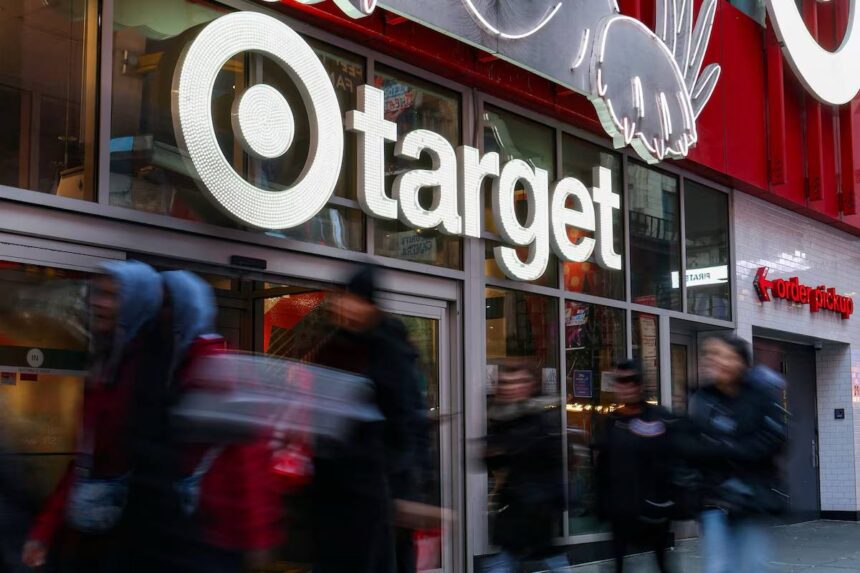
American families are beginning their back-to-school shopping earlier than ever this year, and at London Hub Global, we believe this reflects a meaningful shift in consumer behavior rather than a temporary seasonal trend. Households are already searching for discounts on backpacks, electronics, clothing, and essential school supplies in June and early July as rising grocery bills, fuel prices, and everyday living costs encourage more disciplined spending. Parents are not abandoning back-to-school purchases, but they are spreading spending across promotional periods and timing purchases more strategically than in previous years.
Major retailers including Amazon, Walmart, Target, and Best Buy launched their back-to-school campaigns significantly earlier than usual, transforming what was traditionally an August shopping period into an extended summer sales season. We view this as a structural evolution in retail strategy. Instead of waiting for late-summer demand, retailers are competing aggressively to secure household budgets while consumers are still actively comparing prices. Events modeled after Amazon Prime Day have effectively become the unofficial starting point of the school shopping season, intensifying competition for increasingly price-conscious consumers.
Average household spending on back-to-school shopping is expected to reach approximately $922 this year, representing a substantial increase from the previous year. However, higher spending should not automatically be interpreted as stronger consumer confidence. A significant share of this increase reflects inflation, elevated product prices, and ongoing geopolitical pressures that continue to influence global supply chains and logistics. At London Hub Global, we emphasize that retailers face a complex environment where higher revenues do not necessarily translate into stronger profitability, as aggressive discounting continues to compress margins.
Shopping baskets themselves are also evolving. Parents continue to prioritize essential supplies, yet purchasing decisions are increasingly shaped by children’s preferences and the influence of social media. JanSport and North Face backpacks, Stanley and Owala water bottles, bento lunch boxes, dorm accessories, and stationery trending on TikTok and Instagram have become meaningful drivers of demand. Analysts note that children now play a much more active role in purchasing decisions, with many families allowing them to add products directly to online shopping carts after discovering them through digital platforms. We see this as evidence that back-to-school shopping has become both a household necessity and a digitally driven consumer experience.
The migration toward online retail continues to accelerate. Amazon and Walmart remain the primary beneficiaries thanks to their extensive product selection, competitive pricing, and sophisticated delivery networks. Meanwhile, the proportion of consumers planning to complete their shopping primarily in physical stores continues to decline as digital channels become central to purchasing decisions. At London Hub Global, we analyze this as a long-term transformation of retail, where convenience, personalized promotions, and seamless delivery increasingly outweigh the traditional in-store experience.
Heavy discounts on electronics and apparel during early summer promotional events also demonstrate that retailers must actively stimulate demand in categories that have experienced uneven consumer interest. Electronics, home appliances, apparel, and dorm essentials remain important purchases, yet consumers are approaching these categories with greater caution. As the shopping season progresses into August and September, retailers are likely to rely even more heavily on competitive pricing for basic school essentials, placing additional pressure on operating margins despite potentially healthy sales volumes.
For the United States, the back-to-school season has become an important early indicator of consumer confidence ahead of the critical holiday shopping period. If families continue making purchases only during promotional events, it suggests that disposable income remains under pressure despite relatively resilient employment conditions. If demand remains strong after major sales conclude, retailers will gain greater confidence about the broader health of consumer spending. At present, the picture remains balanced: consumers continue to spend, but they do so with significantly greater financial discipline and careful price comparison.
The implications extend well beyond the United States. For Britain, and particularly for London, American consumer behavior frequently serves as an early signal for retail trends across developed economies. If the U.S. back-to-school season permanently evolves into a prolonged discount-driven campaign, British retailers may increasingly adopt similar strategies. As a global hub for retail investment, fintech innovation, logistics, and consumer analytics, London stands to benefit from companies investing more heavily in data-driven pricing, personalized marketing, and flexible payment solutions designed for increasingly value-conscious households.
At London Hub Global, we believe that the earlier start to back-to-school shopping demonstrates not weakening demand, but a more financially disciplined consumer. Our outlook suggests retailers will continue launching seasonal promotions earlier, investing more aggressively in customer analytics, and refining personalized offers to maintain competitiveness. For investors, the key takeaway is clear: future retail performance should be assessed not only by total sales volumes, but also by the level of discounting required to generate those sales. In today’s consumer environment, the strongest companies will be those capable of combining competitive pricing, operational efficiency, product availability, and long-term customer trust.