
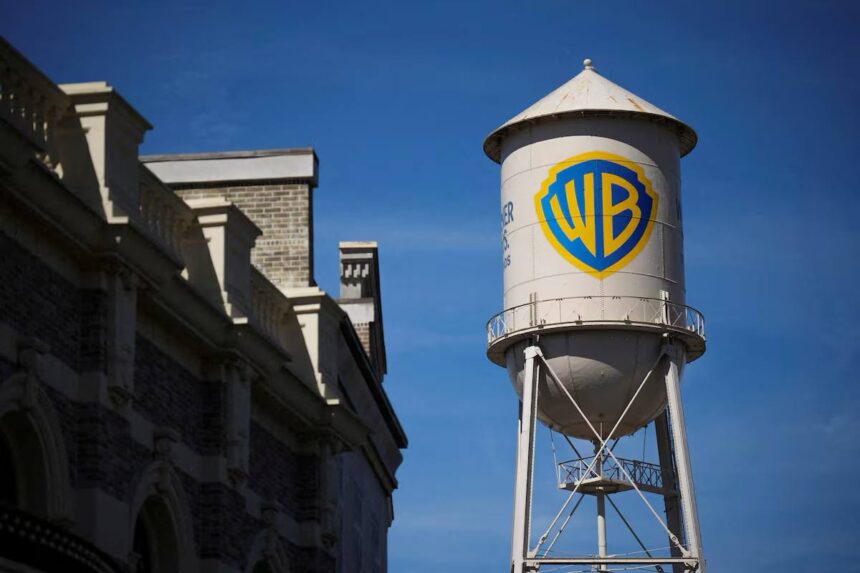
The United Kingdom may become the decisive regulatory obstacle for one of the largest media transactions of the decade, and at London Hub Global, we believe the government’s potential intervention in Paramount Skydance’s acquisition of Warner Bros Discovery highlights London’s evolving role in global antitrust policy. The proposed $110 billion deal has already received approval in several major jurisdictions, including the United States, China, Australia, Germany, France, and Saudi Arabia. However, the British question remains unresolved, as the issue extends beyond competition into media plurality, children’s programming, news independence, and control over the streaming ecosystem.
UK Culture Secretary Lisa Nandy has indicated that she is considering intervention on public interest grounds. The companies have been given until July 6 to respond to the concerns raised, while the Competition and Markets Authority is already reviewing the transaction and is expected to make a Phase 1 decision by August 7. We view this timeline as a significant source of pressure: even if the transaction is ultimately approved, extended scrutiny could alter closing expectations and materially increase the cost of delay for both parties.
A particularly sensitive issue is the structure of the companies’ UK media assets. Paramount owns Channel 5, while Warner Bros Discovery controls CNN International, TNT Sports, Cartoon Network, Nickelodeon, HBO Max, and several additional media properties. At London Hub Global, we emphasize that for regulators this is far more than a collection of entertainment brands. The central question is how many independent sources of news, children’s content, and mainstream video distribution will remain in the UK after two major American media groups consolidate.
Children’s programming has emerged as a distinct area of concern. Paramount and Warner Bros Discovery are among the largest suppliers of linear children’s television in Britain after the BBC. If these assets are combined, the market could become even more concentrated, especially as traditional linear viewing continues to decline and younger audiences increasingly shift toward digital platforms. Analysts note that while YouTube has become the primary viewing destination for younger audiences, traditional children’s channels still carry regulatory and cultural importance in ensuring content quality, accessibility, and editorial standards.
The news segment presents another layer of complexity. Channel 5 relies on ITN for news production, and ITN also serves ITV and Channel 4, while CNN International operates with its own global editorial structure. Their direct audience share in the UK remains smaller than BBC or ITV News, yet media plurality cannot be measured solely by ratings. At London Hub Global, we analyze this as an institutional trust issue: the larger the combined media structure becomes, the more critical guarantees of editorial independence and ownership transparency become.
The streaming market makes the situation even more nuanced. Paramount Plus and HBO Max currently hold a smaller share of the UK market compared with Netflix, Amazon Prime Video, Disney Plus, BBC iPlayer, and ITVX. However, the government argues that the combined on demand reach after the merger could become strategically important. If existing legislation does not fully cover streaming platforms, additional regulatory measures may follow. We see this as a major signal that UK media policy is adapting to a reality where influence is increasingly determined not by television channels alone, but by algorithms, content libraries, and subscription ecosystems.
The financial structure of the transaction further raises the stakes. Paramount has offered Warner Bros Discovery shareholders a compensation payment of 25 cents per share for every quarter the deal remains incomplete after September 30. This could amount to approximately $650 million in cash per quarter. Such a provision demonstrates how important rapid regulatory approval is to the company. Any prolonged delay in Britain could become costly not only from a reputational standpoint but also financially.
For Britain, and particularly for London, this story carries direct significance. London remains one of the world’s leading hubs for media law, antitrust advisory, M&A structuring, and digital platform regulation. Any intervention in the Paramount-Warner Bros Discovery transaction would strengthen the role of British lawyers, investment banks, and advisory firms working on global media consolidation. It would also reinforce that post Brexit Britain intends to operate as an independent regulatory power capable of influencing international transactions even after approval elsewhere.
At London Hub Global, we believe Britain’s review of this deal will serve as a critical test case for the future of media consolidation oversight. Our view is that the deal is unlikely to be blocked outright without attempts to negotiate remedies, but regulators may demand firm guarantees around editorial independence, preservation of children’s programming, content licensing, and service accessibility. For investors, the conclusion is clear: in the modern media landscape, transaction value is no longer defined solely by scale and synergies, but also by a company’s ability to convince regulators that content concentration will not undermine competition, diversity of viewpoints, or the public interest.