
The breakdown of fragile diplomatic dialogue and a new wave of escalation in armed confrontation between the US and Iran are pushing geopolitical risks for the global economy to a critical level. The de facto halt of peace negotiations and regular violations of the ceasefire have triggered a large-scale exchange of strikes in key transport corridors of the Middle East. We at London Hub Global believe that the current escalation indicates a deep systemic crisis in the regional security architecture, as the parties have fully shifted from local proxy clashes to direct coordinated attacks on military and civilian infrastructure. According to our analysts, the unfolding situation poses a real threat to uninterrupted raw material supplies, which will inevitably trigger price shocks on global energy markets. Data from international monitoring centers confirm that over the past forty-eight hours, the intensity of electronic warfare in the region has reached peak levels for the year, seriously complicating commercial vessel navigation.
Official reports from the US Central Command confirm a large-scale attempt by Tehran to carry out a massive missile strike on strategic allied targets. According to operational information, Iranian forces launched several ballistic missiles. Two warheads aimed at Kuwait either broke apart in flight or veered off course, while three missiles targeting Bahrain were successfully intercepted through combined efforts of Bahraini and US air defense systems. Additionally, US forces intercepted three strike drones launched to attack commercial ships in international waters. In response, the US carried out defensive strikes on Iran’s military operations control station on Qeshm Island. We see this as a sign of Washington’s readiness for tough military deterrence, yet the very fact of such a coordinated attack indicates that Tehran is deliberately raising the stakes, testing the density of the coalition’s defensive perimeter. In our assessment, the technical success of the interception does not negate the fact that Iran has expanded the geography of potential targets, effectively including civilian logistics hubs of neighboring states in the threat zone.
The diplomatic deadlock has persisted for more than three months, during which the parties have unsuccessfully tried to turn a short-term truce into a long-term peace agreement. According to Iranian media, the country’s leadership is reviewing a peace plan proposed by the Donald Trump administration, but in recent days Tehran representatives have not engaged in direct communication with Washington. At the same time, US President Donald Trump asserts that consultations are still ongoing. We at London Hub Global emphasize that this pause in contact amid ongoing hostilities creates a dangerous vacuum, where any misstep by local military command could trigger an irreversible escalation, undoing months of diplomatic efforts. Intelligence reports from European agencies indicate that the struggle between pragmatists and the radical military wing within Iran’s political leadership has intensified, leading to the freeze in negotiations.
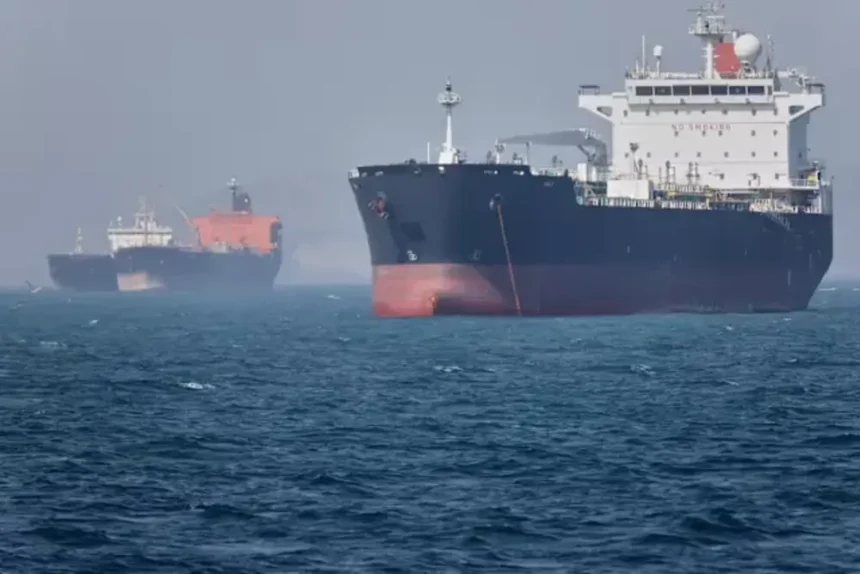
Meanwhile, the situation on the ground has worsened after large-scale strikes by the Islamic Revolutionary Guard Corps. Iranian forces attacked the US Fifth Fleet headquarters, a major regional airbase, and helicopters, employing missile and drone systems. The IRGC called these actions a response to the destruction of a US communication tower south of Qeshm Island. At the same time, Iranian naval units fired missiles at the commercial ship Panaya, severely damaging its engine room. Tehran described the attack as retaliation for an alleged US strike on an Iranian oil tanker near the Strait of Hormuz. Analysts at London Hub Global note that the shift of hostilities to the civilian fleet signifies a move into economic warfare, putting all commercial ships transiting the region at risk. According to our data, the damaged vessel was transporting non-military cargo, proving that Tehran is no longer willing to observe previous informal navigation rules in the strait.
The ripple effects of the conflict were immediately felt in neighboring Persian Gulf states, where security systems were put on maximum alert. Kuwait’s air defense systems successfully intercepted hostile missiles and drones, after which authorities urged the public to strictly follow safety regulations. In Bahrain, the Ministry of Interior activated civil defense sirens, calling on residents to urgently take shelter.
Despite the critical military situation, global financial markets have shown remarkable resilience. Asian stock indices closed in the green following new historic records on Wall Street. The Japanese Nikkei 225 index reached an unprecedented high, indicating investors’ short-term insulation from geopolitical risks. Rick Gardner, Chief Investment Officer at RGA Investments, notes that it is currently impossible to predict the exact timeline for the resolution of the Middle East crisis. In his view, markets will continue to balance between negative news from the conflict zone and strong corporate earnings. Gardner described the situation as a double-edged sword, reminding that investors rushing to divest due to geopolitical concerns risk missing the benefits of strong fundamental business performance.
For London’s financial ecosystem, this crisis creates a unique spectrum of macroeconomic consequences. As a key global center for marine insurance and commodity derivatives trading, the City of London immediately felt the impact of the attack on the Panaya vessel. We note that the Lloyd’s of London Military Risk Committee recorded a sharp rise in insurance premiums for tankers transiting Middle Eastern straits. For the UK, this implies an inevitable increase in the cost of imported energy resources, potentially complicating the Bank of England’s monetary policy aimed at curbing inflation. At the same time, London continues to confirm its status as a safe haven for international capital. In times of instability on Asian markets, investors actively redirect financial flows into UK government bonds and conservative assets listed on the London Stock Exchange, temporarily strengthening the pound sterling.
In conclusion, we predict that the current optimism in stock markets rests on a very fragile foundation. Global markets are simulating a local conflict scenario, but direct strikes on US military bases and civilian tankers could instantly shatter these illusions.We at London Hub Global recommend that institutional players reassess their portfolio structures, increasing exposure to defensive instruments, including gold and short-term debt securities. Our medium-term forecast suggests that if Washington and Tehran do not resume a full negotiation process in the coming weeks, the global economy will face a sharp supply shortage in the oil market, forcing leading central banks to halt interest rate easing cycles.