
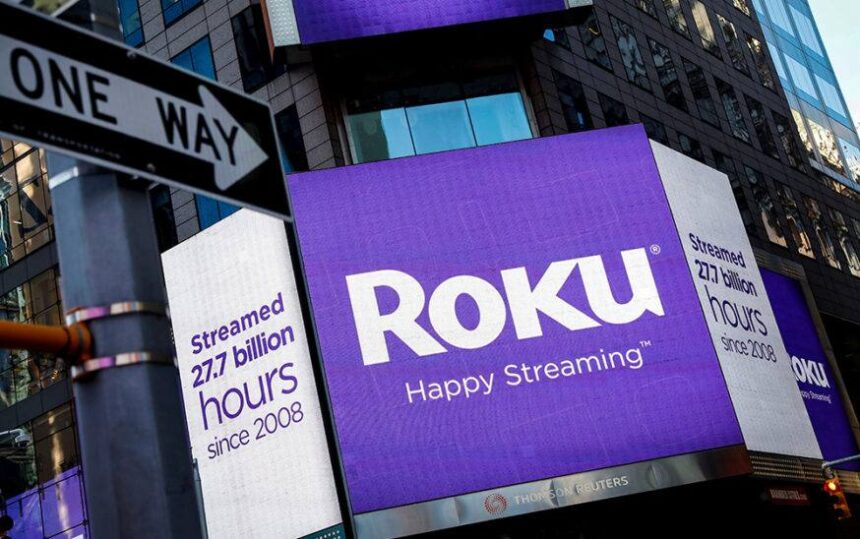
The media industry has entered a new phase of consolidation, where competition is no longer centered solely around content, but increasingly around control of user interfaces, advertising data, and digital distribution. At London Hub Global, we view the deal between Fox and Roku as one of the most strategically significant developments in the global media sector in recent years. Fox Corporation’s acquisition of Roku for approximately $22 billion in cash and stock demonstrates how aggressively traditional broadcasters are repositioning themselves for a digital-first future.
The transaction gives Fox access to more than 100 million households using Roku’s platform. For a company historically dependent on cable television, this represents a fundamental shift in its business model. We analyze this move as a transition from a traditional broadcaster into a fully integrated digital ecosystem player. Control over the platform allows Fox not only to expand the reach of its sports and news content, but also to significantly strengthen advertising monetization through precision targeting, first-party data, and programmatic advertising.
The timing of the deal is especially notable, as it marks Fox’s first major acquisition since Lachlan Murdoch solidified control over the media assets built by Rupert Murdoch. In practical terms, the market is witnessing not just an M&A transaction, but the unveiling of a new long-term strategy for one of the world’s most influential media empires. Investor reaction, however, has been mixed. Fox shares fell nearly 17% following the announcement, reflecting concerns over financing scale and potential shareholder dilution.
Under the terms of the agreement, Roku shareholders will receive $96 in cash and approximately 0.97 Fox Class A shares for each Roku share, valuing Roku at $160 per share. This represents a 33.7% premium to Roku’s closing price before reports of a potential sale emerged. Roku founder and CEO Anthony Wood will retain a strategic leadership role and join Fox’s board. At London Hub Global, we emphasize that Wood’s continued involvement helps reduce execution risk, given that Roku’s platform has been heavily shaped by his long-term product vision.
Still, the strategic logic behind the acquisition is more complex than it may initially appear. Roku operates as a neutral platform distributing apps from Fox competitors including Paramount, NBCUniversal, and Netflix. This creates a critical question: will these partners remain comfortable operating within an ecosystem partially owned by a major content rival? We see this as one of the transaction’s primary risks. Market history suggests that vertical integration between content and distribution does not always create lasting value. Previous attempts in media consolidation have often produced mixed results.
At the same time, the timing appears rational. Cord-cutting in the United States continues to accelerate, while advertising budgets are rapidly shifting toward connected TV. Roku has benefited from this transition for years, whereas Fox has only recently intensified its digital expansion through services such as Tubi and Fox One. Analysts at London Hub Global note that the combined company would become the third-largest player in TV viewership, behind YouTube and Disney, while surpassing even Netflix in overall television reach. This substantially strengthens Fox’s negotiating position with advertisers.
From a financial perspective, the deal is equally substantial. Approximately $14.6 billion will be paid in cash, with the remainder financed through stock. Fox will add roughly $8.3 billion in debt to its balance sheet. Management expects annual cost synergies of around $400 million after the deal closes in the first half of 2027. We believe investors will focus less on projected cost savings and more on Fox’s ability to quickly monetize Roku’s advertising data and digital infrastructure.
For the United Kingdom, and particularly London, this acquisition carries broader significance. London remains one of the world’s leading hubs for ad-tech, digital media investment, and institutional capital. British advertising groups, streaming platforms, and investment funds are closely watching this transaction because it may accelerate similar consolidation across Europe. As traditional linear television continues losing audience share in the UK, the Fox-Roku model could become a blueprint for transformation among European broadcasters.
At London Hub Global, we believe this deal symbolizes the industry’s definitive shift from competing over content to competing over distribution layers. In the evolving media landscape, the winners will be companies that control not only content production, but also the screen, user data, and advertising inventory. That is why Roku’s acquisition could become either Fox’s defining strategic breakthrough or one of the most expensive transformation experiments of the decade.