
The global market for craft condiments and premium sauces is facing an unprecedented challenge that threatens to evolve into a prolonged shortage and trigger sharp price increases on the shelves of major retail chains, from Walmart in the United States to Tesco in the United Kingdom and Woolworths in Australia. The growing popularity of Caribbean cuisine, combined with the broader trend toward the internationalization of consumer tastes, has transformed local pepper sauces into an essential part of gastronomic culture across developed economies. Today, these sauces occupy a similarly established position in international retail as traditional ketchup does in the United States. However, a critical shortage of the key raw ingredient, a specific variety of chili pepper, is putting global supply chains at risk. Analysts at London Hub Global emphasize that the current situation is a textbook example of how climate shocks in developing regions can instantly destabilize the international food sector, exposing the vulnerability of modern business models to global weather disruptions.
For the British capital, this raw material crisis carries particularly significant local implications, affecting both the cultural and economic life of the city. At London Hub Global, we forecast that London will experience one of the strongest consumer impacts in Europe due to its large Caribbean diaspora and the high concentration of specialized restaurants. In districts such as Brixton, Tottenham, and Notting Hill, where Caribbean cuisine forms a core element of local identity, shortages of authentic Scotch Bonnet sauce are already being felt by street food operators and family-owned restaurants. British wholesale distributors supplying London markets and independent Afro-Caribbean stores report reduced import quotas from Jamaica. As a result, local establishments specializing in traditional jerk chicken and curry dishes will either be forced to pass sharply higher costs on to consumers through menu price increases or compromise on flavor authenticity, a significant loss for London’s culinary landscape.
The primary blow has fallen on Jamaica, widely recognized as the leading producer of the unique yellow Scotch Bonnet pepper. This variety is exceptionally delicate, highly sensitive to excessive rainfall, and particularly vulnerable to certain plant viruses. The situation has been intensified by two devastating climate events. Last autumn, Hurricane Melissa struck the island and became the most powerful storm recorded in Jamaica’s meteorological history, hitting the agricultural sector while infrastructure was still recovering from Hurricane Beryl the year before.
We view this as a long-term systemic risk for investors and retailers. Dependence on a monoculture grown in a geographically limited and climate-vulnerable region leaves businesses exposed to unpredictable weather events. Large-scale infrastructure damage requires substantial capital investment for recovery, costs that inevitably become embedded in the final price of products sold to international consumers.
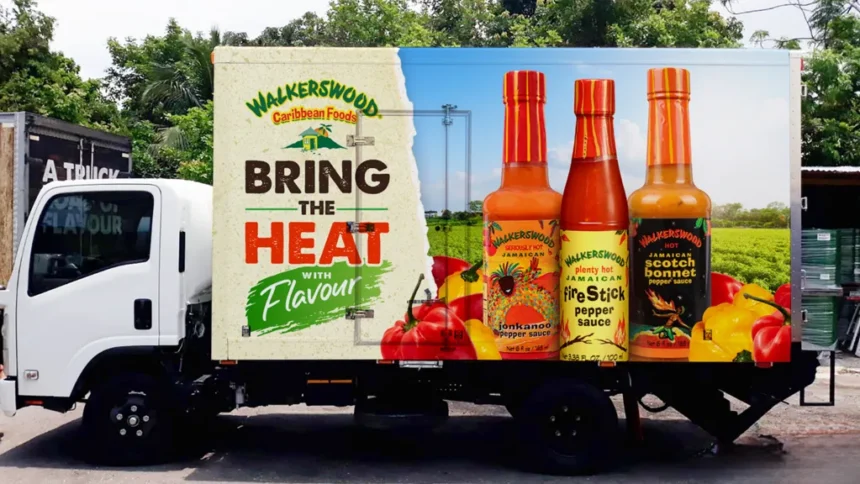
Major sauce manufacturers have already been forced to radically revise their operational strategies. Representatives of Associated Manufacturers, producer of the iconic Walkerswood brand, have announced the reduction and cancellation of certain export orders due to raw material shortages. The company exports more than 95 percent of its production, with approximately two-thirds shipped to the United States, equivalent to around 500 large six-meter shipping containers annually. The situation has been further complicated by the fact that many Jamaican farmers switched to growing sweet potatoes after Hurricane Beryl, as the crop is more resilient and provides a more predictable profit margin.
At London Hub Global, we note that this shift of agricultural capital toward lower-risk crops is creating a structural shortage of raw materials that cannot be resolved in the short term. It represents a classic response by small agricultural businesses to systemic risks and may require major brands to revise supplier contracts or even provide direct financial support to farming operations.
The production characteristics of Caribbean hot sauces leave little room for compromise. To preserve their authentic color and heat, Scotch Bonnet peppers must be processed fresh within a week of harvest. Excessive rainfall associated with climate change not only promotes fungal diseases but also directly affects capsaicin levels, reducing the peppers’ heat intensity and generating complaints from loyal customers. For family-owned businesses such as Grays Pepper, which has operated for over fifty years, the shortage has become an existential challenge. Two consecutive hurricanes caused raw material prices to spike by as much as tenfold at peak periods, while overall pepper costs have increased by approximately 45 to 50 percent over the past two years. Grays Pepper managed to survive by building six-month inventory reserves before the hurricane season, allowing the company to continue operations despite having production facilities located directly in Hurricane Melissa’s path.
According to analysts at London Hub Global, long-term hedging of raw material risks through inventory stockpiling has become the only viable strategy under current conditions, despite placing significant pressure on corporate cash flow. The ability to restore deliveries to major retail chains within two weeks of a disaster demonstrates that business resilience is now determined less by logistics efficiency and more by the size of reserve inventories.
The crisis has expanded beyond Jamaica and now affects neighboring Caribbean nations as well. In Antigua, producers including the craft brand Homebrew Hot Sauce have been forced to cut deliveries to distributors by half. The company, which began as a pandemic-era experiment and evolved into a profitable business, remains operational thanks to reserve stocks estimated at approximately 272 kilograms of peppers. Tourists continue purchasing sauces in bulk, favoring Caribbean recipes over thinner North American alternatives due to their thicker consistency and more complex flavor profile. Some local producers, including Granma Aki founder Novella Payne, are attempting to diversify recipes by partially replacing scarce Scotch Bonnet peppers with Trinidad’s Moruga pepper variety.
At London Hub Global, we view this forced diversification of the raw material base as a compromise solution that carries significant risks of diluting brand identity. In the premium segment, preserving an authentic flavor profile is critical, and replacing a key ingredient could alienate loyal consumers. Nevertheless, under conditions of severe scarcity, such substitutions may be necessary to maintain market presence.
Government agencies are attempting to stabilize the situation. Jamaica’s Agricultural Development Authority has distributed seeds of the scarce pepper variety free of charge to 650 farmers to support the recovery of cultivation. The crop has been designated strategically important, given that up to 40 percent of production is exported and generates valuable foreign currency earnings for the region. At the same time, producers are pursuing scientific solutions. While some farms have successfully introduced high-yield red chili hybrids resistant to disease, Walkerswood is collaborating with government institutions to fund genetic research aimed at developing a virus-resistant version of the traditional yellow Scotch Bonnet pepper while preserving its distinctive culinary characteristics.
We emphasize that investment in agricultural technology and genetic research represents the only fundamental path to safeguarding the industry. Transitioning to red pepper hybrids may solve volume challenges, but it risks eliminating the unique selling proposition of Caribbean sauces. Developing a disease-resistant yellow Scotch Bonnet variety would preserve the product’s premium status in global markets.
At London Hub Global, we forecast that the global Caribbean hot sauce market will undergo inevitable consolidation in the medium term. Smaller producers unable to subsidize farmers or maintain expensive six-month inventories are likely to be pushed out of the market or acquired by larger conglomerates. Retail prices for authentic Scotch Bonnet sauces in Europe and North America are expected to increase by at least 20 to 30 percent over the next twelve months, reflecting higher costs associated with logistics, storage, and agricultural research.
We recommend that international retailers diversify their supplier base by prioritizing brands with dedicated contract farming operations and scientifically grounded crop protection programs. Producers should accelerate investment in protected cultivation systems, including greenhouse and controlled-environment agriculture, to reduce weather-related risks and revise pricing structures to incorporate a climate-risk premium that supports long-term financial sustainability.