
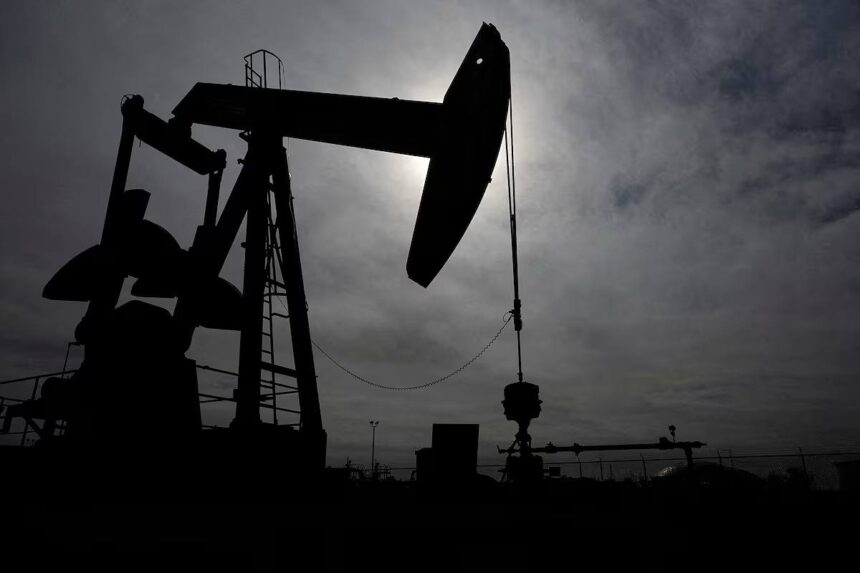
The sharp decline in oil prices to three-month lows has become one of the clearest indicators of current sentiment across global commodity markets. Investors are rapidly pricing in a de-escalation scenario in the Middle East following the preliminary agreement between the United States and Iran. However, the market remains highly sensitive to every detail surrounding the negotiation process. At London Hub Global, we believe the current correction in oil prices reflects not the complete disappearance of geopolitical risk, but rather an aggressive repricing of short-term expectations.
On Tuesday, oil extended losses for a fourth consecutive session. Brent crude futures fell by $2.48, approaching $80.69 per barrel, while the intraday low reached $80.62, the weakest level since early March. US West Texas Intermediate also declined by $2.48 to $78.27 per barrel. Following an almost 5% drop the previous day, this movement signals a rapid unwinding of the geopolitical premium that had previously been embedded in energy markets.
The primary catalyst behind the selloff was the expectation of renewed supply flows through the Strait of Hormuz, a corridor responsible for roughly 20% of global oil transportation under normal conditions. Even preliminary signals of resumed negotiations between Washington and Tehran were enough to trigger a major repricing across commodity markets. We analyze this reaction as a clear example of how modern oil markets are driven not only by physical supply, but also by expectations surrounding liquidity and logistics.
At the same time, the physical reality remains far more complex than market sentiment suggests. Despite the framework agreement, shipping through the Strait is recovering slowly. Tanker operators continue to demand security guarantees for transit routes, including mine clearance and reassessment of insurance costs. Military convoys that previously supported covert oil shipments along Oman’s coast further demonstrate that a return to pre-war export volumes may take significantly longer than traders currently assume.
At London Hub Global, we emphasize that the main risk for oil markets now lies in the potential disconnect between financial expectations and physical supply flows. Markets are aggressively discounting a rapid recovery in exports, yet even modest delays could quickly reignite volatility. This becomes especially important during the summer season, when demand traditionally increases.
Additional downward pressure on prices is coming from weaker demand in China. Crude oil imports into China fell by 29% in May, reaching the lowest level in eight years. For the world’s largest crude importer, this is a highly significant signal. Slowing industrial activity, weakness in the property sector, and more cautious consumer spending are contributing to structurally softer energy demand. Analysts note that the Chinese demand story may become one of the most influential drivers of oil pricing in the second half of the year.
Against this backdrop, major financial institutions have already revised their forecasts. Brent projections for the fourth quarter have been lowered to $80 per barrel from $90, while long-term estimates have also shifted downward. We see this as evidence of growing consensus around a more balanced market in which supply expansion is occurring faster than previously anticipated.
For Britain and London, falling oil prices create a mixed macroeconomic picture. On one hand, cheaper energy helps reduce inflationary pressure, potentially easing the burden on the Bank of England regarding future interest-rate decisions. Lower fuel and utility costs could improve household spending power and support corporate margins. On the other hand, London remains one of the world’s most important commodity trading hubs and a financial center for global energy majors. Lower crude prices may temporarily pressure valuations of large energy companies heavily represented in UK equity markets, including major oil and gas producers.
At London Hub Global, we view the current correction as a repricing phase rather than the final disappearance of the geopolitical premium. As long as details of a final US-Iran agreement remain limited, markets are likely to react sharply to each new development. Sustained downside in oil prices would require full normalization of Hormuz flows alongside confirmation of persistently weak global demand.
At London Hub Global, we see oil entering a new phase in which geopolitics still sets the tone, but macroeconomic fundamentals are once again becoming dominant. Our outlook remains cautiously balanced: volatility is likely to persist, and a Brent trading range of $78 to $85 in the coming weeks appears most probable if negotiations continue without major disruptions.