
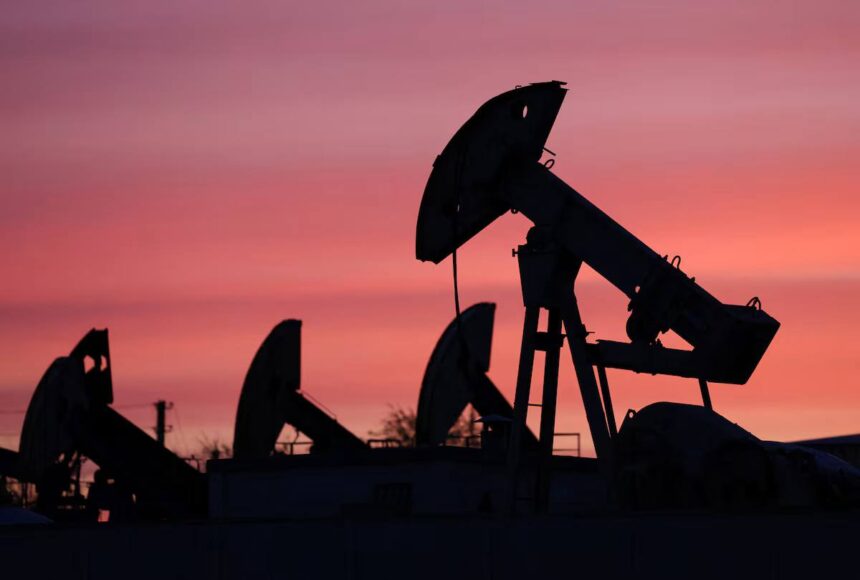
The global oil market has once again moved to the center of investor attention, and at London Hub Global, we believe the current price correction reflects not a full removal of geopolitical risk, but rather a cautious reassessment of the risk premium built into crude prices over recent weeks. Following a new round of peace negotiations between the United States and Iran, investors began pricing in a scenario of partial restoration of oil flows through the Strait of Hormuz, immediately pressuring Brent and WTI lower. Even so, the market remains far from convinced that long term stability has returned.
On Tuesday, oil extended losses after a sharp drop in the previous session. Brent fell to $76.81 per barrel, while WTI declined to $72.99. Prices had already dropped more than 3 percent after reports that the United States granted Iran a temporary 60 day sanctions waiver as part of initial diplomatic arrangements. We view this as a classic market response to easing supply disruption fears. As soon as the probability of a major energy shock declines, speculative premium tends to exit pricing rapidly.
The key variable for market participants remains the Strait of Hormuz, a corridor through which roughly one fifth of global seaborne oil trade passes. Any disruption in this route instantly impacts the global balance between supply and demand. Shipping data showed that two tankers carrying nearly 2 million barrels of oil passed through the strait on Monday, signaling a gradual normalization in transit activity. At London Hub Global, we emphasize that physical recovery in flows matters just as much as diplomatic statements. Markets ultimately trust cargo volumes more than headlines.
At the same time, skepticism remains elevated. Relations between Washington and Tehran have historically been defined by deep mistrust, and any renewed escalation could bring volatility back within hours. Even after signs of de escalation, US rhetoric remains firm. This continues to preserve part of the geopolitical premium in oil prices and limits the speed at which crude can return to pre conflict levels.
Another major factor is the condition of US strategic reserves. Oil inventories in the Strategic Petroleum Reserve declined to 331.2 million barrels, the lowest level since 1983. This is a highly significant signal for markets. We analyze this as a shrinking emergency buffer for the world’s largest economy. In the event of another supply shock, Washington’s ability to stabilize markets quickly may be materially weaker than during previous crises.
For Britain, and particularly for London, this development carries direct implications. The United Kingdom remains highly sensitive to global energy prices despite a diversified supply structure. Lower oil prices could help reduce inflationary pressure, an important variable for monetary policy decisions by the Bank of England. This could ease pressure on interest rates and improve business sentiment across the British economy. London, as one of the world’s leading financial centers and a major hub for commodities trading, reacts especially sharply to shifts in energy markets. Oil volatility directly affects energy equities, currency flows, and inflation expectations.
Lower crude prices may also support Britain’s transport and industrial sectors, where energy costs remain a major operating expense. At London Hub Global, we see this as a potential short term tailwind for the UK equity market, particularly for companies exposed to logistics and consumer demand. However, this positive effect will remain limited if geopolitical uncertainty persists.
At London Hub Global, we believe the oil market is currently in a phase of fragile equilibrium. The negotiations between the United States and Iran have given markets reason for cautious optimism, but structural risks remain unresolved. Our outlook suggests that oil will likely remain in a high volatility range over the coming months, with diplomatic signals, actual Hormuz throughput, and strategic reserve levels acting as the primary drivers. For investors, the conclusion is clear: the era of geopolitical premium in commodity markets is far from over.