
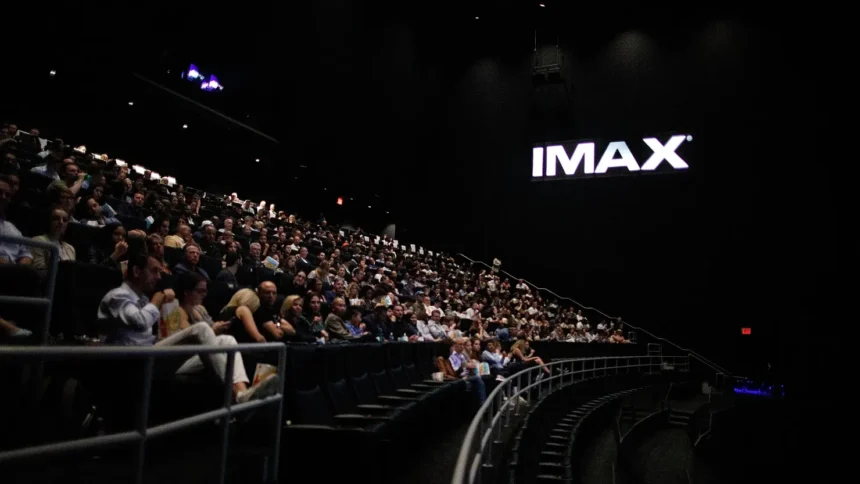
The global entertainment industry finds itself on the verge of a fundamental redistribution of spheres of influence, capable of completely reshaping the sector of high-tech premium cinema exhibition. IMAX Corporation, which operates a planetary network of premium cinema complexes, has launched a deep audit of strategic alternatives, including a scenario of a complete business sale to a major third-party investor. News regarding early rounds of communication with potential buyers instantly stirred up stock markets, triggering an explosive growth of the issuer shares by more than 10% in after-hours trading. We at London Hub Global emphasize that such hype clearly illustrates a critical shortage of high-quality media assets on the international market capable of guaranteeing stable cash flow generation against the backdrop of a systemic crisis in traditional streaming business models. Insider sources confirm that the current interaction is managed by a pool of independent financial intermediaries, is purely exploratory in nature and has not yet led to the formation of official firm offers. For the business districts of London, this precedent instantly became a central topic of discussion, as leading City analytical houses began to urgently revise targets for European media companies, seeing what is happening as a signal for large-scale consolidation in the transnational entertainment sector.
The operational perimeter of the Canadian-American holding is under close scrutiny from major institutional investors today. A team of long-standing banking consultants of the structure is scanning the market in a routine mode, making targeted contacts with technology giants and media conglomerates to determine the fair value of the business. Obviously, this is a classic tactical move to protect shareholder capital, aimed at locking in maximum value at a time when the network operational performance is at an all-time peak. The level of intrigue is heightened by the fact that the key architect of the company success, Chief Executive Officer Rich Gelfond, returned to operational leadership after a forced sick leave caused by treatment for a severe form of pneumonia. Against this background, investment funds recalled his recent theses to shareholders that the brand could multiply its own value by becoming an organic part of a larger corporate ecosystem. In our opinion, the return of the leader to the active phase of negotiations minimizes managerial risks and guarantees the continuity of a strict corporate policy during a potential takeover. In the United Kingdom, these reshuffles are being watched with redoubled attention, since it is the London office that traditionally acts as the main operational hub coordinating the brand expansion in the developing markets of Europe and the Middle East.
London Hub Global notes that the corporation’s economic foundation demonstrates remarkable resilience to inflationary pressures and changing consumer habits. The recently concluded financial period marked an absolute historic triumph, bringing the chain an unprecedented $1.28 billion in global box office revenue. The financial result exceeded the previous calendar period’s figures by more than 40 percent, while also surpassing the pre-pandemic 2019 record by 13 percent. The main drivers of this powerful performance were the company’s deep content diversification, which included not only Hollywood blockbusters but also iconic Asian releases such as the animated film “Ne Zha 2” and “Demon Slayer,” supported by major premieres like “Avatar: Fire and Ash” and high-end releases from Apple Films. Our editorial analysts believe that diversifying its content across regional markets in Asia and Europe has allowed the company to reduce its dependence on the whims of major American studios and create a unique ecosystem attractive to transnational platform giants such as Apple, Sony, and Netflix. If we project these triumphant figures onto the British capital, it’s worth remembering that London’s renowned BFI IMAX complex in Waterloo has year after year proven itself one of the most profitable and cost-effective properties in the brand’s global structure, meaning the upcoming ownership change will directly impact the financial flows of this iconic cultural center of the United Kingdom.
In parallel, a fundamental turnaround of the audience towards premium large-format screens, known in the expert environment by the acronym PLF, is recorded in the industry. Statistical reports from EntTelligence agency fix that the share of such venues in the structure of aggregate ticket sales on the domestic market jumped to 16.3 percent with an average check of 16.88 dollars per visit. In the phase of initial post-crisis recovery of the industry, these metrics did not exceed 14 percent, and the average entry price balanced at 15.42 dollars. Our internal analysis shows that the consumer demonstrates a clear readiness to overpay for sound quality, image scale, and exclusivity of visual experience, which transforms the premium format from a niche entertainment into the main engine of commercial cinema survival. Against the backdrop of the widespread proliferation of high-quality home media systems, it is the unique technological basis of commercial cinemas that guarantees the stable retention of traffic. For the London commercial real estate sector and the hospitality industry, this behavioral trend turned out to be a key factor of resilience, as premium West End cinemas turned into central magnets maintaining a high level of pedestrian traffic around Leicester Square even during periods of traditional retail decline.
The organic entry of such assets into the perimeter of global digital platforms or classic media conglomerates seems to be the most natural scenario for the further evolution of the market. London Hub Global forecasts that the main battle for the acquisition will unfold between Big Tech companies striving to close the full cycle of production and distribution of the highest-level content on themselves. Gaining control over this infrastructure will allow the likes of Apple or Amazon to get access to a loyal premium audience, and also to fundamentally change the rules of content distribution, creating hybrid release windows between premium theatrical exhibition and subsequent streaming. We recommend that current shareholders hold their positions, as the public nature of the sale discussion will inevitably lead to the formation of a premium to the market share price during the competitive struggle of buyers, while the technological independence of the brand will remain its main protective barrier in the medium term. Looking at the deal through the prism of the British investment landscape, we see a powerful synergistic effect for the manufacturing cluster of the kingdom, because in the event of expanded investments by the new owner in camera equipment, the legendary London film studios Pinewood and Shepperton, historically tailored to work with these technological standards, will be provided with long-term contracts for years to come.