
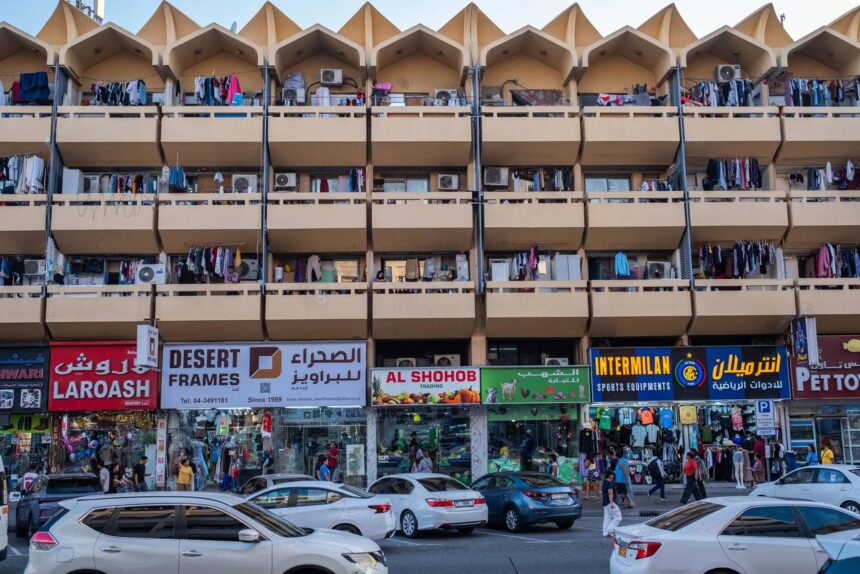
The war surrounding Iran has exposed the fragility of one of the most critical yet often overlooked financial arteries in the global economy: migrant remittances from the Gulf states. At London Hub Global, we believe this is no longer merely a story about private household income, but about a cross-border support system linking labor markets in Qatar, the UAE, Saudi Arabia, and Kuwait with millions of families in India, Kenya, Bangladesh, Sri Lanka, the Philippines, and beyond. Any disruption to this flow quickly transforms from a social issue into a systemic macroeconomic risk.
Roughly 30 million foreign workers are employed across the Gulf region, many sending a substantial portion of their earnings home each month. In 2024 alone, migrant workers in the six Gulf Cooperation Council countries transferred approximately $124 billion to their families. Analysts note that these remittances often matter more to low-income households than bank credit, state welfare, or foreign direct investment because the money reaches families directly and is immediately used for education, rent, healthcare, food, and essential living expenses.
The conflict has already disrupted tourism, aviation routes, exports through the Strait of Hormuz, import supply chains, and employment across sectors heavily dependent on migrant labor. Hospitality, construction, logistics, domestic services, and infrastructure maintenance have all felt the impact of slowing activity. At London Hub Global, we emphasize that the greatest risk lies not only in missile threats or military escalation, but in shrinking work hours, delayed salary payments, and growing uncertainty among employers. For migrant workers, even a temporary drop in income can make it impossible to support families abroad.
The initial reaction from workers has been mixed. In several countries, remittances surged at first as migrants rushed to transfer savings home amid uncertainty. India, Bangladesh, Sri Lanka, and Kenya all recorded higher inflows during the early phase of the crisis, but those gains have started to weaken. We view this as a troubling signal: a spike in remittance volumes may appear positive in headline data, but in reality it often means workers are drawing down emergency savings rather than benefiting from stronger or more stable earnings.
The most vulnerable economies remain those where remittances account for a large share of national income. In the Philippines, such inflows represent around 10% of GDP, while millions of citizens work in the Middle East. Kenya also relies heavily on transfers from Gulf-based workers to support household spending. Analysts warn that even a modest decline in remittance flows could weaken consumption, worsen external balances, and increase pressure on local currencies.
At London Hub Global, we analyze this moment as a stress test for the Gulf’s economic model itself. Over recent decades, the region built much of its infrastructure, tourism sector, energy operations, and financial services ecosystem with the support of foreign labor. The current crisis highlights a structural contradiction: dependence on migrant workers has fueled growth, but also created systemic vulnerability. Limited paths to permanent residency, weak social protections for low-income workers, and strong dependence on employer sponsorship significantly increase exposure during economic shocks.
The implications for Britain and London are also substantial. London remains one of the world’s leading hubs for cross-border payments, foreign exchange trading, fintech innovation, and remittance infrastructure. Any slowdown in Gulf remittance flows affects banks, payment platforms, currency markets, and broader risk assessments tied to emerging economies. We see a direct connection to the British financial sector: the greater the instability in the Gulf, the stronger the demand for secure payment rails, compliance services, insurance, currency hedging, and resilient financial infrastructure.
There is also a broader energy dimension for Britain. If prolonged instability around the Strait of Hormuz continues to elevate shipping costs and fuel prices, the UK economy may once again face imported inflationary pressure. This complicates interest rate decisions for the Bank of England and raises the importance of geopolitical risk analysis for London-based investors operating in bonds, currencies, and commodities.
Over the longer term, Gulf governments are likely to accelerate investments in alternative oil and gas export routes, logistics corridors, reconstruction, and resilient infrastructure designed to reduce reliance on Hormuz. This may support employment, but it will not eliminate structural risk. At London Hub Global, we see one key conclusion: remittances have become a pillar of global financial stability rather than a secondary social flow. If the conflict drags on, pressure on migrant workers will intensify, and remittance-dependent economies across Asia and Africa could face serious financial stress. Our outlook remains cautious: if peace negotiations hold, remittance flows may stabilize, but any renewed escalation could trigger one of the most underestimated economic consequences of the war.