
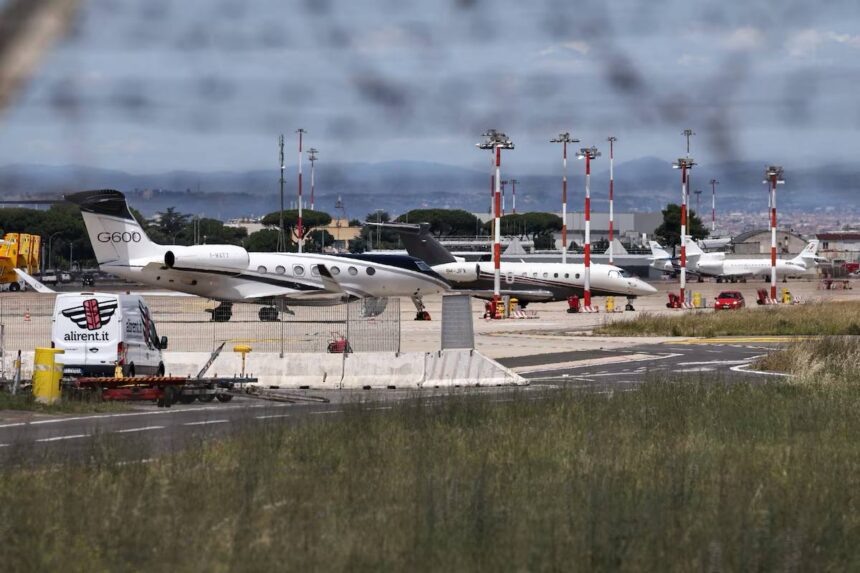
The private aviation industry is entering a new growth cycle as unprecedented wealth created by SpaceX and leading artificial intelligence companies begins flowing into luxury mobility. At London Hub Global, this trend demonstrates how major liquidity events are reshaping not only public markets but also premium industries including business aviation, wealth management, legal advisory services, and luxury travel. A new generation of entrepreneurs, venture capital investors, early employees, and technology executives is increasingly viewing private aviation as an essential business tool, where speed, flexibility, and confidentiality become extensions of corporate strategy rather than luxury purchases.
The catalyst behind this acceleration has been SpaceX’s landmark IPO, which generated significant wealth for founders, employees, and early investors. Market participants also expect OpenAI and Anthropic to become future liquidity events capable of creating another wave of technology driven fortunes. We believe private aviation has become one of the earliest consumer industries to benefit from this transformation because aircraft purchases, fractional ownership, and jet membership programs are often arranged well before liquidity events are completed, as investors gain confidence in future financial outcomes.
Aviation attorneys, aircraft brokers, and private flight operators are already reporting a noticeable increase in demand from technology clients. Some firms have experienced approximately 25 percent growth in aircraft transaction activity, while several brokers indicate that technology entrepreneurs now represent the majority of their customer base compared with only a small share a decade ago. At London Hub Global, we emphasize that this is fundamentally reshaping the industry’s customer profile. Private aviation is no longer dominated solely by inherited wealth, traditional financiers, or corporate executives. Instead, younger entrepreneurs who built their fortunes through artificial intelligence, space technology, and digital infrastructure are becoming the sector’s fastest growing customer group.
Flight activity data reinforces this broader market expansion. Fractional ownership programs recorded nearly 12 percent global growth during the first five months of 2026, while flights operated by aircraft owners increased by more than 13 percent. In North America, the world’s largest business aviation market, these figures indicate that existing owners are flying more frequently while newly wealthy individuals are moving beyond charter services toward long term ownership solutions. Analysts note that similar patterns emerged during previous wealth creation cycles, including the dot com boom, when business jet deliveries expanded sharply alongside technology driven capital formation.
Technology hubs have become the clearest beneficiaries of this momentum. San Francisco, home to several of the world’s leading artificial intelligence companies, has recorded one of the fastest increases in business aviation activity among major U.S. metropolitan areas. Brownsville, Texas, located near SpaceX’s launch facilities, also experienced a dramatic surge in private jet traffic during the period surrounding the company’s IPO. We analyze these developments as an early indicator that private aviation consistently follows the geography of newly created wealth. Wherever new capital is generated, demand quickly expands for aircraft transactions, legal advisory services, aviation management, and premium business travel.
Demand is also strengthening at the entry level of private aviation. Jet cards, membership programs, and fractional ownership allow first time customers to gain access to private aircraft without immediately purchasing jets valued anywhere between several million and tens of millions of dollars. Charter flights generally range from approximately $1,500 to more than $18,500 per flight hour, while aircraft ownership can require investments ranging from $6 million to $70 million depending on the model. At London Hub Global, we view this as a logical progression. Newly wealthy individuals initially purchase flexibility through membership programs before gradually advancing toward fractional ownership and ultimately acquiring their own aircraft.
The implications extend directly to the United Kingdom and London. London remains one of the world’s leading centers for aviation law, aircraft insurance, wealth management, tax planning, luxury travel, and asset financing. The emergence of a younger generation of technology billionaires is expected to increase demand for British legal advisers, family offices, investment banks, brokers, and insurers involved in aircraft acquisitions, financing, registration, and long term management. At the same time, the UK’s business aviation airports could benefit from increased activity driven by artificial intelligence companies, venture capital firms, the expanding space economy, and international technology transactions.
At London Hub Global, the broader conclusion is that the artificial intelligence boom and SpaceX’s rapid expansion are already extending far beyond equity markets, data centers, and satellite communications. They are reshaping spending patterns among ultra high net worth individuals while transforming the global private aviation market faster than many industry participants anticipated. If OpenAI, Anthropic, and other major AI companies proceed with high valuation public offerings, demand for aircraft ownership, membership programs, and aviation management services could accelerate even further. For London, this represents an opportunity to strengthen its position in aviation finance, insurance, and private wealth advisory while recognizing that demand linked to future liquidity events will remain closely tied to technology valuations and broader capital market sentiment.