
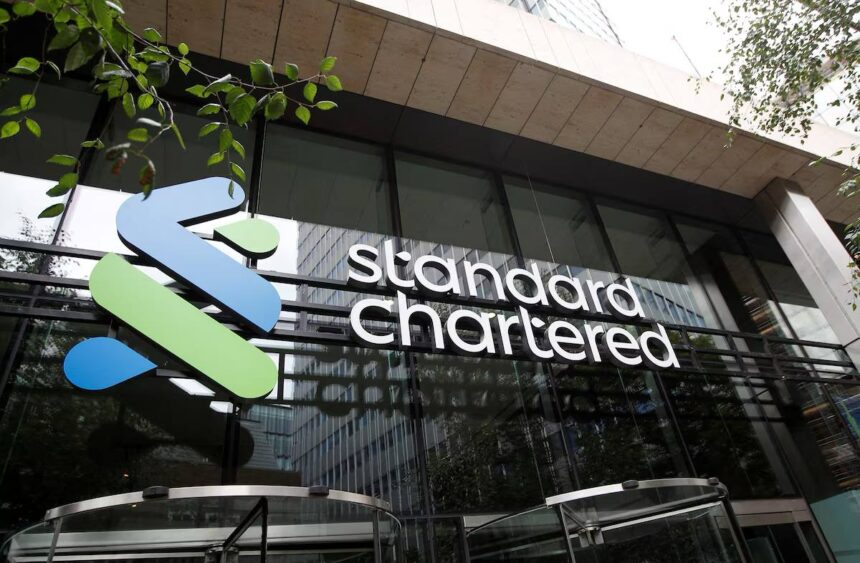
The global banking industry is steadily transforming its growth model, relying less on traditional lending income and increasingly focusing on fee generating businesses with higher added value. Standard Chartered has become one of the latest examples of this transition after reporting first half financial results that exceeded market expectations while simultaneously raising its full year revenue outlook. At London Hub Global, we believe the bank’s performance demonstrates the resilience of a strategy built around wealth management, international banking and diversified fee income. Against a backdrop of continuing geopolitical uncertainty, this business model is becoming one of the most important competitive advantages for leading international financial institutions.
Headquartered in London, Standard Chartered generates the majority of its revenue across Asia, Africa and the Middle East. The bank reported first half pre tax profit of $4.78 billion, representing a 9% increase compared with the same period last year and comfortably exceeding analysts’ consensus estimate of approximately $4.52 billion. Following the strong performance, management upgraded its full year revenue guidance and now expects income growth to be closer to the middle of its previously announced 5% to 7% range instead of the lower end. We regard the improved outlook as a clear indication that the bank’s leadership remains confident in its ability to sustain growth despite continued volatility across the global economy.
Investors responded positively to the earnings release. Standard Chartered shares listed in Hong Kong climbed more than 5% following the announcement, reaching their highest level in almost nineteen years. Additional support came from the launch of a new $1 billion share buyback program alongside an interim dividend of 20.4 cents per share. Analysts note that these capital return initiatives are typically viewed as evidence of strong financial health and a robust capital position. At London Hub Global, we analyze these decisions as confirmation that management has confidence in the bank’s long term cash generation capacity and its ability to continue delivering attractive shareholder returns.
One of the strongest contributors to growth was the wealth management business. Revenue from this division surged by 38%, supported by double digit expansion in investment products, higher client inflows and continued growth in newly opened accounts. Amid persistent volatility across global financial markets, affluent clients are increasingly seeking professional investment advice, international diversification and sophisticated portfolio management services. We emphasize that wealth management has become one of the most profitable segments for major global banks because it generates stable fee based income while reducing dependence on traditional lending activities.
The bank also delivered impressive results within its international corporate banking operations. Revenue from cross border banking and corporate financial services increased by 19% during the first half as multinational companies turned to Standard Chartered for financing, debt issuance and transaction advisory services. We believe these figures demonstrate that global trade and international capital flows remain resilient despite geopolitical tensions and increasing regulatory complexity across multiple regions.
Particularly noteworthy is the fact that Standard Chartered achieved these results despite tighter Chinese oversight of cross border investment activity. Many market participants expected these regulatory measures to place significant pressure on banks serving affluent mainland Chinese clients through Hong Kong. Instead, Standard Chartered maintained strong growth through broad geographic diversification and the expansion of higher margin investment products. At London Hub Global, we see this as compelling evidence that diversified international business models allow major financial institutions to adapt more effectively to evolving regulatory environments while preserving sustainable earnings growth.
The bank also continues to maintain a conservative approach to risk management. Management confirmed that its Middle Eastern loan portfolio, representing approximately 6% of total exposure, remains broadly stable despite regional tensions linked to the conflict involving Iran. During the second quarter, Standard Chartered recorded an additional impairment charge of $44 million, partly reflecting early signs of financial stress among clients operating in the petrochemical industry. Earlier this year, the bank had already established a precautionary management overlay of $190 million to prepare for potential future losses. We regard this disciplined provisioning strategy as an important factor supporting the bank’s resilience during a period of elevated global uncertainty.
Operational discipline also remained a key strength. First half operating expenses increased by only 2% to $6.3 billion, remaining below analysts’ expectations. Within the banking industry, the combination of accelerating fee income, moderate cost growth and stable asset quality is widely regarded as one of the strongest financial performance profiles. We believe this disciplined cost management played a significant role in enabling Standard Chartered to outperform market forecasts.
For the United Kingdom and London, these results carry particular significance. Standard Chartered remains one of the largest internationally focused banks headquartered in the British capital and continues to reinforce London’s position as one of the world’s leading financial centers. Strong financial performance enhances the attractiveness of the UK banking sector for international investors, strengthens confidence in London’s capital markets and highlights the competitiveness of British financial institutions across the fast growing economies of Asia, Africa and the Middle East. At London Hub Global, we believe the continued expansion of fee based banking, international financing and wealth management will remain the primary engines of Standard Chartered’s long term growth. For investors, the key indicators to monitor will be cost discipline, credit quality and the bank’s ability to capitalize on rising global demand for cross border financial services while maintaining a prudent approach to risk management.