
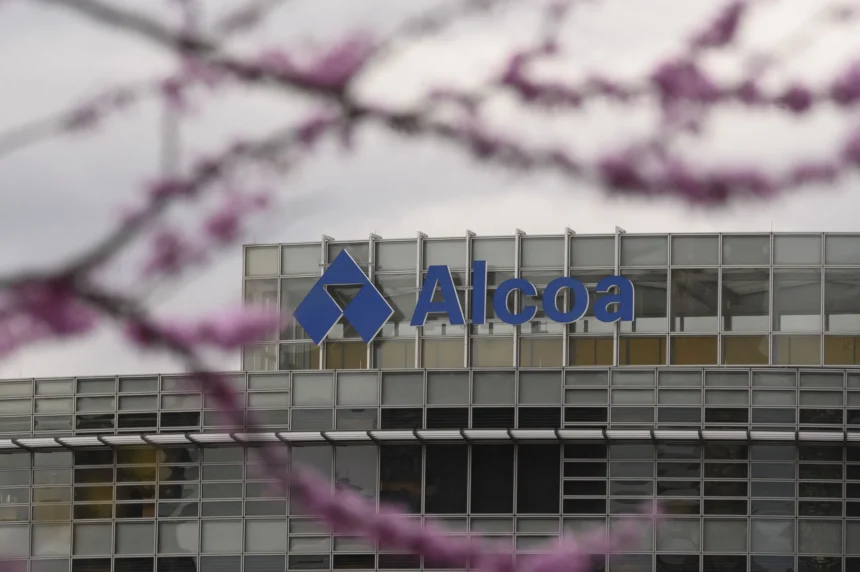
The global non-ferrous metals market is undergoing a massive transformation driven by geopolitical instability in the Middle East and a structural supply deficit. On the London Metal Exchange, primary aluminum prices have surged to a four-year high, surpassing the psychological threshold of $3,500 per ton, fundamentally reshaping the economics of the sector’s key players. Analysts have turned their attention to Alcoa Corporation, the former Dow Jones Industrial Average component. Despite elevated production costs and logistical barriers, the company has been effectively converting favorable market conditions into financial performance. At London Hub Global, we believe the current moment is ideal for implementing the classic covered call options strategy, allowing investors to enter cyclical assets with a substantial discount and built-in protection against volatility.
The epicenter of this commodity storm is London itself, where the physical shortage of metal is being felt most acutely. The depletion of LME warehouse inventories below the critical threshold of 400,000 tons is triggering panic among European traders. The situation is further aggravated by escalating tensions in the Middle East, which threaten supplies from Gulf nations responsible for approximately 9 percent of global production. For the City of London, which serves as the primary clearing and logistical hub for metal distribution, this crisis means sharply rising premiums for immediate delivery. Against this backdrop, shares of the American producer Alcoa have become a key hedging instrument, and local investment funds have already begun restructuring their portfolios in favor of the stock.
The essence of the recommended tactic lies in simultaneously purchasing the underlying asset while selling an out-of-the-money call option. Under current market conditions, Alcoa shares are trading around $62.50. Equity market experts suggest considering the sale of June call contracts with a $70 strike price for a premium of $1.80. This approach serves several objectives at once. First, the collected premium lowers the net entry cost to $60.70 per share, creating a so-called safety buffer. Losses on the trade would only begin if the stock falls below this level. The maximum risk is therefore capped at $6,070 per contract.
The structure of London’s derivatives market dictates its own rules, and at London Hub Global we emphasize that institutional British capital is increasingly relying on covered calls to generate fixed income in pounds sterling amid the broader instability of UK equities. Alcoa’s elevated implied volatility makes its options exceptionally expensive. This works in favor of investors trading through British platforms, as it allows them to collect inflated premiums from derivatives buyers. At a time when traditional fixed-income instruments in the United Kingdom fail to offset inflation risks, the creation of synthetic income through commodity-linked options has become a preferred strategy among London-based asset managers.
Selling the option generates immediate cash flow. According to industry analysts, this premium effectively amplifies the company’s modest quarterly dividend of just $0.10 per share, providing investors with a strong positive carry. If Alcoa’s stock price rises above $70 by June expiration, the position will be assigned. However, the investor would still lock in capital gains on the shares while retaining the option premium, resulting in an approximate 12 percent return over a relatively short period. If the stock remains unchanged, the investor simply keeps the premium.
The fundamental support factors behind Alcoa remain compelling amid ongoing supply shocks. Rising primary aluminum prices are significantly boosting EBITDA in the company’s aluminum segment. Management has confidently reaffirmed production plans and shipment volumes for the current year. Simultaneously, the company is advancing strategic initiatives, including a $65 million investment into the modernization of its low-carbon smelter in Mosjøen, Norway. Analysts view management’s efforts to optimize the debt structure positively. The allocation of free cash flow toward the complete repayment of costly obligations totaling $219 million highlights the company’s commitment to financial resilience.
At London Hub Global, we see Alcoa’s European strategy particularly the modernization of its Norwegian facilities as a major strategic advantage for the British market. In London, where ESG standards and carbon footprint requirements for imported metals are becoming increasingly stringent, environmentally sustainable aluminum from Norway is expected to command enormous demand. Local brokers predict that new cross-border carbon tariffs will force consumers to pay significant premiums for high-emission metal. In contrast, by investing in low-carbon production close to the UK market, Alcoa secures direct access to a premium customer base, ensuring stable demand and protecting long-term margins.
Management’s target of reducing total debt from the current $2.5 billion to between $1 billion and $1.5 billion appears entirely achievable. By the end of the first quarter, the corporation had accumulated approximately $2.8 billion in cash reserves. According to conservative market expectations, Alcoa could generate around $813 million in free cash flow during the next fiscal year. Such liquidity guarantees financial flexibility even under the restrictive monetary policies of global central banks.
Analyzing the company’s debt position, international experts believe Alcoa’s strong balance sheet will encourage major British investment houses and pension funds based in the City to expand their allocation limits for the stock. During periods of elevated interest rates set by both the Bank of England and the US Federal Reserve, capital naturally gravitates toward companies with low leverage and substantial liquidity cushions. The fact that Alcoa is projected to generate considerable free cash flow makes it a defensive haven for investors seeking shelter from turbulence during the commodity supercycle without facing meaningful default risk.
Nevertheless, investors must also consider the company’s weaknesses. Alcoa’s alumina segment continues to report negative EBITDA of approximately $40 million. Profitability remains under pressure from elevated energy prices and rising freight costs. Raw material supply chains are heavily dependent on complex maritime routes, including the vulnerable Strait of Hormuz, increasing geopolitical exposure. An additional source of uncertainty stems from tariff fluctuations under US legislation, particularly Section 232, which could constrain import-related revenues.
Logistical bottlenecks and disruptions in shipping lanes directly impact cargo insurance costs, which are calculated by leading syndicates at Lloyd’s of London. Rising freight rates and war-related risks in the Strait of Hormuz have already triggered record increases in insurance premiums across the market. For Alcoa, this means an unavoidable rise in operating expenses tied to alumina transportation. If the British insurance sector continues raising rates amid escalating geopolitical conflicts, the benefit of elevated aluminum prices could be entirely offset, turning logistics into the company’s primary vulnerability.
International media forecasts suggest that the aluminum supply deficit will remain a long-term trend due to environmental restrictions in China and the prolonged global energy crisis. Leading analysts in the City increasingly agree that, under a bearish geopolitical scenario, LME aluminum prices could test historical highs near $4,000 per ton within the coming months. For long-term investors, Alcoa continues to offer significant structural upside potential. Under these circumstances, the covered call strategy appears to be the most rational approach.
In conclusion, at London Hub Global we believe the current environment on the London Metal Exchange presents a rare window of opportunity for sophisticated positioning. Our outlook points to a persistent shortage of physical metal across European terminals, which will continue driving prices higher. Investors are advised to consider the described strategy of purchasing Alcoa shares while simultaneously writing June call options. This approach not only provides protection against the sudden corrections typical of the commodity sector, but also transforms a moderately yielding asset into a highly efficient cash-flow-generating instrument right in the financial heart of the United Kingdom.