
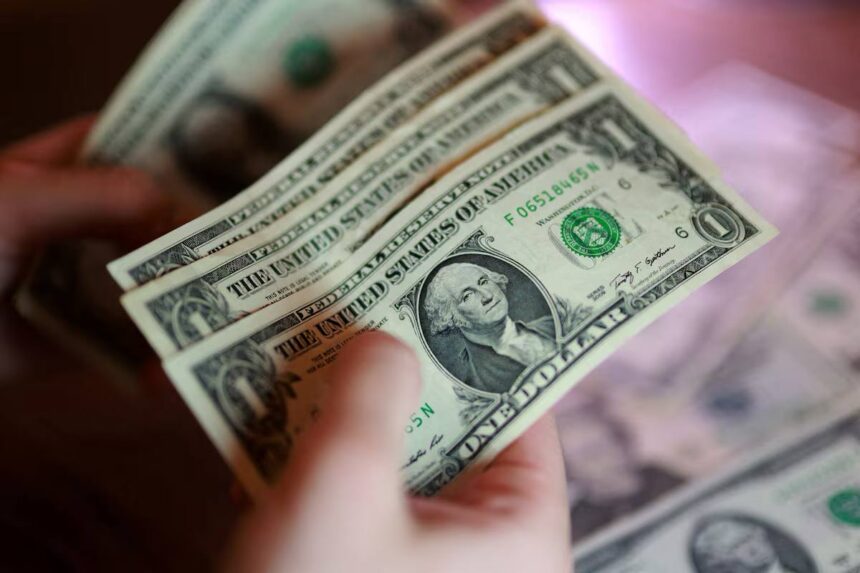
The second half of 2026 begins for currency markets with an unusual concentration of strength in one place. The U.S. dollar has once again become the primary beneficiary of global capital flows, and at London Hub Global, we believe its appreciation reflects not only expectations of higher U.S. interest rates, but also a deeper investor conviction in American exceptionalism. The U.S. economy remains resilient, equity markets continue attracting record capital inflows, and the artificial intelligence boom reinforces the perception that America controls the key resources of the next growth cycle.
By midyear, the dollar had become the strongest major currency, gaining around 3 percent. This is particularly notable after last year’s decline of more than 10 percent, when the U.S. currency recorded its weakest first half since the early 1970s. We view this reversal as a restoration of confidence in the dollar as both a growth and safe haven asset. Amid geopolitical uncertainty, investors are once again choosing the currency of the country that hosts the world’s largest technology companies, deepest capital markets, and most liquid financial instruments.
A key support factor lies in the Federal Reserve’s policy stance. New Fed Chair Kevin Warsh has adopted a hawkish approach toward inflation, which remains well above the central bank’s 2 percent target. Markets are now pricing in at least one rate hike this year, with roughly equal odds of a second. At London Hub Global, we emphasize that the shift in real rate expectations has become the dollar’s primary fuel. The higher the inflation adjusted yield on U.S. assets, the harder it becomes for other currencies to compete for global capital.
The dollar is already trading near 40 year highs against the Japanese yen and close to annual highs versus the euro. For Japan, this raises the risk of currency intervention, as a weaker yen increases import costs and pressures households. For Europe, a strong dollar means more expensive raw materials and technology imports, especially for companies purchasing components, energy, or equipment in dollar denominated markets. Analysts note that a strong U.S. currency is rarely comfortable for the rest of the world, yet its strength persists as long as investors view American assets as the most attractive opportunity.
The phenomenon of American exceptionalism is further reinforced by capital inflows. U.S. equities have attracted an estimated $341 billion this year, compared with $134 billion during the same period last year. This is more than portfolio statistics. We interpret these flows as a global vote of confidence in American growth platforms. The United States remains home to hyperscalers building AI data centers, leaders in quantum computing, major software companies, and the firms shaping the infrastructure of the digital economy.
At the same time, a strong dollar creates significant side effects. Countries from New Zealand to Switzerland face weaker domestic currencies and rising import costs. The South Korean won has fallen toward record lows, while emerging markets, including India, are being forced to support their currencies or raise rates to preserve financial stability. At London Hub Global, we analyze this as a classic asymmetry of the dollar cycle: when the U.S. benefits from rising yields and capital inflows, the rest of the world absorbs imported pressure.
For United Kingdom and especially London, this dynamic carries direct implications. A strong dollar makes imports more expensive and affects the cost of energy, commodities, technology, and corporate financing. For the Bank of England, this complicates the balance between fighting inflation and supporting economic growth. For London as a global financial center, the strong dollar creates a dual effect. On one hand, it increases the burden of servicing dollar denominated debt and pressures emerging market portfolios. On the other, it boosts activity among currency traders, hedge funds, banks, and asset managers navigating global capital flows.
Another key risk lies in investor positioning. Speculators have accumulated net long dollar positions worth roughly $30 billion, the highest level since the beginning of Donald Trump’s second presidential term. Such rapid positioning can support momentum, but it also increases the risk of a sharp correction if U.S. economic data begins to weaken or if the Fed softens its tone. We view this as the primary source of potential volatility in the second half of the year.
At London Hub Global, we see the current strength of the dollar not as a temporary spike, but as a reflection of a new global capital structure. As long as the United States combines computing power, energy dominance, capital markets, and technological leadership, the dollar retains its status as the currency of the winner. Our forecast suggests the dollar may remain strong in the near term, particularly if real yields continue rising. However, long term risks, including U.S. fiscal sustainability and potentially overheated AI valuations, cannot be ignored. For investors, the conclusion is clear: the dollar cycle has once again become a central force in the global economy, and any strategy for the second half of 2026 must account for its impact on currencies, equities, commodities, and the cost of capital.