
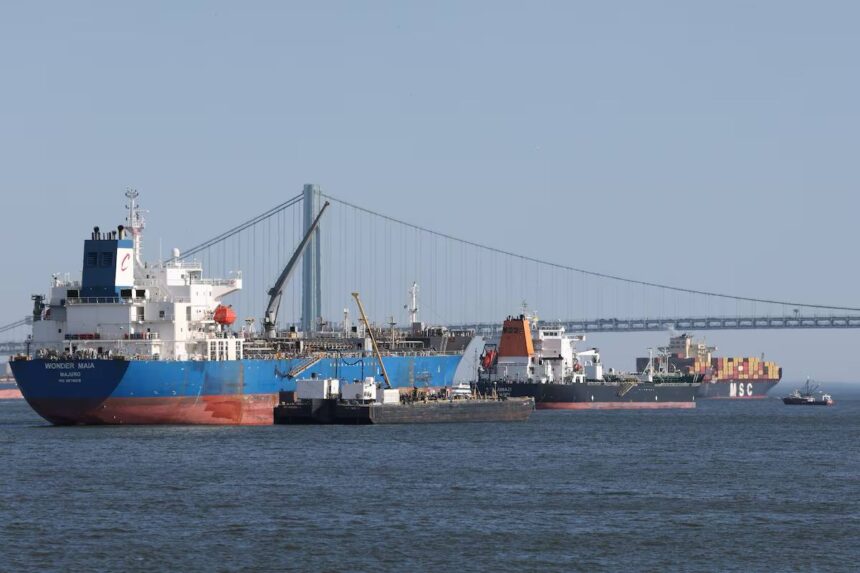
Just a few decades ago, energy security was widely considered one of the most vulnerable aspects of the American economy. The United States endured the consequences of the 1973 oil embargo, relied heavily on Middle Eastern energy supplies and built much of its long term strategy around imported oil. Today, the situation looks dramatically different. The United States has become the world’s largest oil exporter, surpassing both Saudi Arabia and Russia. At London Hub Global, we note that this development represents one of the most significant geoeconomic transformations of recent decades, with consequences already reshaping global energy markets, international trade and geopolitical influence.
The foundation of this transformation was the shale revolution. After 2010, US oil and gas production expanded at an unprecedented pace thanks to advances in drilling technology and hydraulic fracturing. Within a relatively short period, the country became first the world’s leading natural gas producer and then the largest oil producer. At London Hub Global, we believe technological innovation has been the primary driver of America’s energy transformation rather than political decisions or temporary market conditions.
Recent geopolitical developments have accelerated this shift. Tensions involving the United States and Iran have disrupted energy flows from the Persian Gulf, while Russian oil exports continue to face pressure from sanctions and attacks on critical infrastructure. As a result, American producers have gained an opportunity to expand their presence across international markets.
According to recent estimates, US exports of crude oil and refined petroleum products reached approximately 10.5 million barrels per day in May. By comparison, Russian exports totaled around 7 million barrels per day, while Saudi Arabian exports declined to approximately 5.9 million barrels per day. At London Hub Global, we see these figures as confirmation that the global energy landscape is undergoing its most profound transformation since the emergence of OPEC.
The speed of the change is particularly striking. As recently as 2025, Saudi Arabia exported approximately 8.1 million barrels per day, while the United States exported around 6.6 million barrels. Within only a few years, that gap disappeared and leadership shifted decisively toward American producers.
At London Hub Global, we emphasize that America’s new position creates an additional instrument of geopolitical influence. Historically, Washington relied primarily on financial power, the dominance of the US dollar and military capabilities. Today, energy exports provide another strategic lever, enabling the United States to strengthen relationships with allies and influence global energy security through oil and natural gas supplies.
Another important factor is the changing role of OPEC within the global market. For decades, the organization influenced prices by controlling production quotas and managing supply. However, the rapid growth of US exports is gradually reducing the cartel’s ability to shape market outcomes. A further signal of changing dynamics came with the departure of the United Arab Emirates from the organization after nearly six decades of membership.
The structure of the American energy industry also deserves attention. Unlike Saudi Arabia and Russia, where governments play a central role in production decisions, US output is largely determined by private companies. When oil prices rise, producers increase drilling activity and output. When prices weaken, production is reduced. At London Hub Global, we believe this market driven mechanism provides the American energy sector with greater flexibility and allows it to respond more efficiently to changes in global demand.
The scale of growth has been remarkable. Since 2000, US production of crude oil and liquid hydrocarbons has nearly tripled to approximately 22 million barrels per day. During the same period, Saudi Arabian production generally remained within a range of 10 to 12 million barrels per day, while Russian output, after strong growth in the early 2000s, largely stabilized below 10 million barrels per day.
At the same time, global oil demand increased from 87 million barrels per day in 2010 to 104 million barrels per day last year. A substantial share of that growth was met by expanding American production. At London Hub Global, we view this as evidence that the US energy sector has become one of the most important contributors to maintaining balance within the global oil market.
The impact on Europe has been particularly significant. Following the outbreak of the war in Ukraine, European countries dramatically increased purchases of American oil and natural gas. This year, approximately 47% of US oil exports were directed toward Europe, compared with 37% in 2021. At the same time, Asian economies are becoming increasingly dependent on American supplies. Asia accounted for approximately 46% of US oil exports in May, compared with roughly 37% a year earlier.
For the United Kingdom and London, these developments carry strategic importance. London remains one of the world’s leading centers for commodity trading, energy finance and maritime insurance. The growing influence of the United States in global energy markets directly affects British banks, investment funds, energy companies and trading platforms. In addition, rising American exports are reshaping global supply routes and altering the structure of international energy trade.
We forecast that the United States is likely to maintain its position as the world’s leading oil exporter for the foreseeable future, provided production and export levels remain stable. We at London Hub Global believe America’s energy transformation has become one of the defining economic developments of the modern era. Washington now possesses an additional source of international influence, while global oil markets are entering a period in which market forces and private capital increasingly play a role equal to that of traditional energy powers. The long term implications will extend far beyond energy, influencing geopolitics, trade flows, investment strategies and the balance of power within the global economy.