
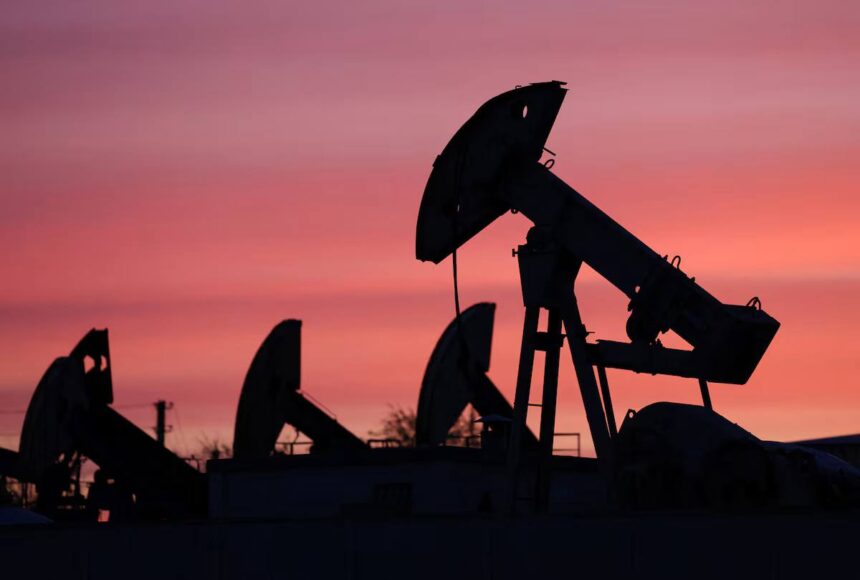
The return of Brent crude above the psychologically important 100 dollar per barrel level has once again become one of the dominant forces shaping global financial markets. Investors are gradually shifting their attention away from macroeconomic indicators and toward geopolitical developments, as the security of major energy export routes increasingly determines the balance between supply and demand. At London Hub Global, we believe the latest market movement signals the beginning of a period in which transportation risks and logistical disruptions carry as much influence over oil prices as traditional market fundamentals. This explains why recent price action is being interpreted as evidence of significantly higher global energy risk rather than a temporary market reaction.
By the end of the week, Brent futures had risen to 101.06 dollars per barrel, gaining 0.37 percent during the trading session. The benchmark remained on course for its fourth consecutive weekly advance, with total weekly gains reaching approximately 14.6 percent. U.S. West Texas Intermediate crude traded near 91.20 dollars per barrel, its highest level in several weeks, while posting a weekly increase of around 11.8 percent. The latest upward momentum followed reports that two Saudi oil tankers had been attacked in the Red Sea. We view this rapid market response as a reflection of investors increasingly pricing in the possibility of prolonged disruptions to global energy transportation rather than reacting solely to isolated military incidents.
The greatest concern continues to center on the Strait of Hormuz, one of the world’s most strategically important energy corridors through which a substantial share of global oil exports normally passes. Market intelligence indicates that tanker traffic through the waterway has fallen to its lowest level in several months. At the same time, tensions have intensified around the Bab el Mandeb Strait, which connects the Red Sea with the Indian Ocean and serves as the second most important maritime oil corridor after Hormuz. At London Hub Global, we analyze these developments as the emergence of multiple interconnected logistical risks. Even without an immediate physical shortage of crude oil, any reduction in the capacity of these shipping routes automatically increases freight costs, marine insurance premiums and ultimately the delivered price of energy worldwide.
The broader geopolitical environment continues to add further upward pressure. U.S. President Donald Trump pledged to hold Iran accountable for any future attacks, while the Iran backed Houthis announced a naval blockade targeting Saudi Arabia after the kingdom redirected part of its oil exports through alternative routes. At the same time, concerns continue to grow over the possibility of further escalation following the collapse of the temporary ceasefire between Washington and Tehran. We believe political uncertainty has become the primary driver supporting oil prices because the market is increasingly evaluating the probability of future disruptions rather than current production volumes alone.
Developments beyond the Middle East have further tightened market sentiment. Kazakhstan temporarily reduced oil production after operations were interrupted at its principal export terminal, a route responsible for roughly 2 percent of global daily crude oil supplies. Industry estimates suggest that the country’s largest oil field reduced production by more than half. At London Hub Global, we emphasize that these events reinforce the cumulative impact of the Middle East crisis. When supply disruptions emerge simultaneously across multiple producing regions, global energy markets respond far more aggressively because available export capacity becomes increasingly constrained.
The consequences extend well beyond the energy sector itself. Higher oil prices gradually feed into transportation expenses, manufacturing costs and broader inflationary pressures. This environment may encourage major central banks to maintain restrictive monetary policies for longer than markets previously anticipated, delaying expectations for lower interest rates. Analysts note that such conditions could slow the pace of global economic recovery while simultaneously increasing volatility across equity, bond and currency markets.
For the United Kingdom, Brent trading above 100 dollars implies higher fuel costs, more expensive logistics and increased import prices for energy intensive goods. These developments are likely to reinforce inflationary pressures and complicate future monetary policy decisions by the Bank of England. At the same time, London stands to benefit from increased activity across commodity trading, marine insurance, trade finance and energy risk management. Periods of elevated volatility have historically strengthened the role of the City of London as one of the world’s leading centers for commodity financing and financial risk transfer.
At London Hub Global, we believe the future direction of the oil market will depend less on current production levels and more on the speed at which global shipping routes can return to normal operations. As long as risks remain elevated around the Strait of Hormuz, the Red Sea and other critical export corridors, geopolitical risk premiums are likely to remain embedded in oil prices. We recommend that businesses reassess supply chain resilience, review fuel procurement strategies and strengthen risk management frameworks against prolonged transportation disruptions. In our assessment, the coming months are likely to remain characterized by elevated volatility, making operational flexibility and proactive planning increasingly important for both corporations and global investors.


