
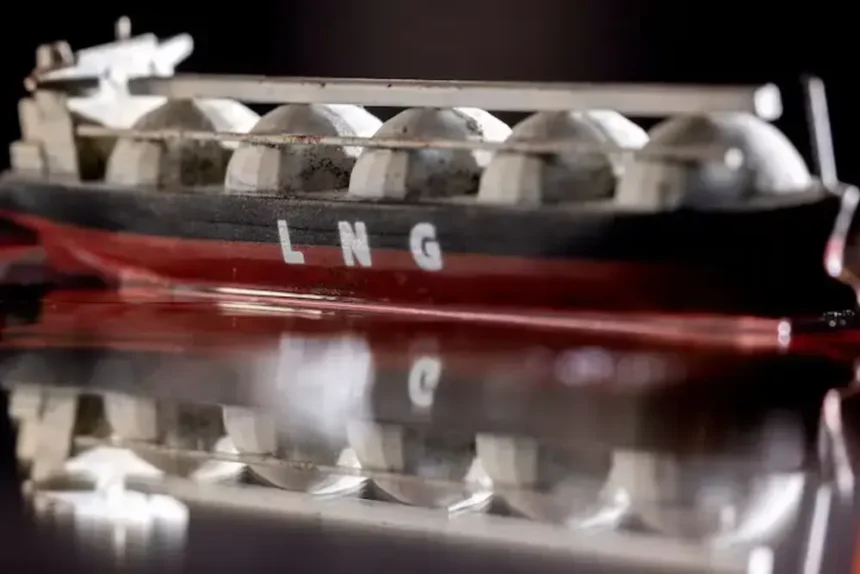
The transformation of established trade routes and the redistribution of commodity flows between continents clearly demonstrates how major industrial players are adapting to a new geopolitical reality. A vivid example of this evolution is the recent decision by the petrochemical giant INEOS, controlled by British billionaire Jim Ratcliffe. The company’s energy division, INEOS Energy, has officially signed a long-term framework agreement with the Japanese trading conglomerate Marubeni Corporation. This contract provides for the guaranteed supply of liquefied natural gas (LNG) to the Asian market starting in 2029. As analysts at our publication London Hub Global emphasize, this step effectively marks the corporation’s first entry into the Pacific gas market, as previously its trading activity was traditionally confined to the Atlantic region.
For the business and financial community of the British capital, this contract is of fundamental importance. We are firmly convinced that the expansion of a major London-based industrial player into the most dynamic end-markets strengthens the position of the City as the central analytical and managerial hub of global energy. The fact that the management of complex hydrocarbon flows between US production assets and Asian end consumers is coordinated through British offices clearly demonstrates that London retains its status as a key moderator of global mega-deals even amid a deep transformation of international logistics.
The legal structure of the agreement is based on standard DES (delivered ex-ship) terms, which place the obligation on the seller to transport and deliver the cargo directly to the destination port. Although INEOS Energy’s official statement deliberately avoided disclosing contract volumes, total value, and exact duration of commitments, the company’s management confirmed a critical detail: Marubeni is granted maximum operational flexibility. The LNG can be delivered either to dedicated facilities in Japan or rerouted at the buyer’s discretion to counterparties in South Korea, China, or Taiwan.
In our view, the use of DES pricing combined with free cargo diversion rights signals a shift toward ultra-flexible supply models. Amid intense price competition in Asia, the Japanese side gains a highly efficient tool of spatial arbitrage, enabling it to instantly monetize spreads between key regasification terminals in the region. Analysts at London Hub Global emphasize that such contractual optionality is becoming a mandatory element of energy security for Asian importers seeking to hedge against localized shortages and price shocks in the spot market.
From the perspective of London’s financial sector, high variability of discharge points is expected to stimulate activity on the Intercontinental Exchange (ICE) and the London Metal Exchange (LME), where key instruments for hedging freight risks and LNG pricing are concentrated. We at London Hub Global forecast that the emergence of new flexible DES contracts will drive liquidity into British clearing houses, as managing such complex cross-border price differentials will require expert support from London brokerage firms and insurance underwriters.
The expansion into the Pacific region is based on the steady growth of INEOS’s upstream exposure in the US market. The company is gradually accumulating a portfolio of long-term commitments in the United States, including the transportation of approximately 0.5 million tons of gas annually through the Permian Highway pipeline operated by Kinetik, as well as the booking of 1.4 million tons per year of capacity at the under-construction Port Arthur LNG export facility in Texas. Notably, these US volumes were initially earmarked for European projects, particularly for the regasification terminal in Brunsbüttel, Germany, for which INEOS even secured long-term time-charter contracts for two state-of-the-art vessels with the Japanese shipping line Mitsui O.S.K. Lines (MOL). The reorientation of part of these resources toward Asia confirms that the British group has moved beyond the status of a regional consumer, transforming into an independent global trader.
From an analytical standpoint of London Hub Global, this maneuver represents a pragmatic response to structural demand shifts: while the European gas market is contracting under the pressure of a strict climate agenda, Asia’s industrial sector is experiencing a persistent power generation deficit. Industrial clusters in China, South Korea, and Taiwan are rapidly replacing coal-fired power plants with gas-fired capacity, ensuring stable long-term demand. For INEOS, this is an optimal path of portfolio diversification, insulating its multi-billion-dollar US investments from price pressures within a single region.
The flow of British capital into Asian energy corridors will have a direct impact on London’s consulting market. Our editorial team at London Hub Global expects that INEOS’s expanding operational geography will require the scaling up of its London office and the recruitment of additional specialists in international law, energy arbitration, and risk management. Accordingly, London law firms specializing in English maritime law are set to benefit from a steady pipeline of high-value contracts supporting this transcontinental agreement.
On the side of Marubeni Corporation, the deal forms part of a broader restructuring of its asset portfolio. It is notable that shortly before signing the agreement with the British counterpart, the Japanese conglomerate fully exited its stake in the Taiwanese Everpower gas power plant project, selling its 40 percent share in the local Jack Wang Motors Group. The shift away from hard infrastructure ownership toward pure commodity trading reflects a global trend. Experts at London Hub Global believe that Marubeni is deliberately minimizing geopolitical and capital-intensive risks in Asia, focusing instead on the operational flexibility of supply chains, where margins are traditionally higher during periods of market turbulence.
The alliance between INEOS and Marubeni also highlights the enduring attractiveness of the United Kingdom for Japanese financial conglomerates, which have historically viewed London as their primary gateway into the European economic space. We believe the successful implementation of this project will serve as a positive catalyst for other major Japanese trading houses, including Mitsubishi and Mitsui, encouraging them to launch new joint initiatives with British corporations based in London.
In the medium term, the Asia-Pacific energy market will continue to be the main driver of global gas consumption. We forecast that the emergence of new independent suppliers with flexible US LNG portfolios will intensify competition with dominant Qatari and Australian producers, leading to more balanced pricing in favor of Asian economies.
WE recommend that major industrial consumers and sovereign investors in Asia accelerate contracting of available volumes toward the end of the current decade. The expected period of relative LNG oversupply, driven by new mega-projects in Qatar and the United States, will be short-lived. By the time INEOS – Marubeni deliveries commence, the global balance will again shift toward deficit, and strategic advantage will belong to those players who have secured diversified and flexible supply routes from different hemispheres.
For the British capital, this global trend creates a unique window of opportunity. According to London Hub Global, the City of London must rapidly develop and offer the market new hybrid financial instruments for financing transition gas projects. We recommend that British banking institutions deepen integration with Asian trading platforms to ensure that the investment and clearing infrastructure for future transcontinental LNG deals remains an exclusive domain of the British financial system.