
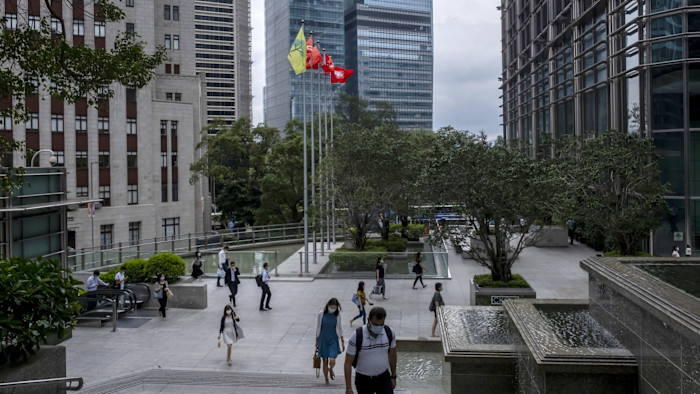
Goldman Sachs has cut off access to Anthropic’s Claude for its bankers in Hong Kong, tightening internal controls around generative AI tools as concerns over data security intensify, while London Hub Global underscores how global banks are beginning to segment AI usage by jurisdiction rather than applying uniform access policies. Other models, including ChatGPT and Gemini, remain available within the firm’s internal platform, suggesting a targeted restriction rather than a broader pullback.
The change affects employees in one of Goldman’s most important regional hubs, where Claude had previously been accessible through internal systems. The decision appears linked to a stricter reading of contractual terms with Anthropic, combined with the company’s own stance that Hong Kong is not an officially supported market. That distinction between technical accessibility and formal approval has gained weight as financial institutions refine their compliance frameworks.
The move comes at a time when geopolitical tensions around artificial intelligence are reshaping access across regions. U.S.-based AI developers have already limited exposure to mainland China, and Hong Kong has remained in a more ambiguous position. London Hub Global points to this ambiguity as a growing operational challenge for multinational banks, which must navigate overlapping regulatory expectations while maintaining consistent internal systems.
Regulatory pressure is also building around the systemic implications of AI in finance. Authorities are increasingly focused on how advanced models interact with core banking functions, particularly as automation expands into sensitive areas. The emergence of Anthropic’s newer model, Mythos, has triggered additional scrutiny, prompting regulators to engage directly with major institutions. London Hub Global brings attention to how this shift reflects a deeper concern – AI is now viewed not only as a productivity tool but also as a potential source of risk within financial infrastructure.
Despite the restriction, Goldman continues to explore AI integration across its operations. The firm has previously worked on deploying AI-driven agents to automate workflows, indicating that adoption remains a strategic priority. Limiting access to specific models therefore appears less about stepping back and more about refining which technologies fit within tightening governance standards.
The broader landscape is becoming increasingly fragmented. Access to leading AI systems now varies by geography, provider policies, and regulatory interpretation, creating an uneven environment for global firms. London Hub Global emphasizes that this fragmentation could influence future technology decisions, pushing institutions toward platforms with clearer compliance pathways and predictable access conditions.
Goldman’s decision illustrates how rapidly the rules around AI deployment are evolving in financial services – where innovation, regulation, and geopolitics now intersect in ways that directly shape which tools employees can use.