
Global financial markets are preparing for an event that could redefine how next generation technology companies are valued. SpaceX, which conducted its first rocket launch less than two decades ago, is now pursuing a valuation of approximately $1.75 trillion and could deliver the largest IPO in the history of public markets. Behind the headlines about Mars colonization, artificial intelligence and space exploration lies a far more significant investment story. At London Hub Global, we note that investors increasingly view SpaceX not as a traditional aerospace manufacturer, but as a global infrastructure platform combining satellite communications, launch services, computing power and long term artificial intelligence ambitions.
The company’s financial performance reflects the scale of its expansion. Last year, SpaceX increased revenue by 33%, reaching $18.67 billion. Around 60% of total revenue came from Starlink, its satellite internet business, which now serves approximately 10.3 million users through a constellation of roughly 9,600 satellites.
At London Hub Global, we believe Starlink remains the company’s most important commercial asset. While market attention is often focused on artificial intelligence and Elon Musk’s space ambitions, satellite connectivity continues to generate the cash flow that supports broader expansion. Demand for independent digital infrastructure is growing among consumers, businesses and governments alike, strengthening the strategic value of the Starlink network.
Despite strong revenue growth, SpaceX reported a net loss of $4.94 billion last year, compared with a profit of $791 million in 2024. The decline was largely driven by substantial investments in xAI, expanded computing infrastructure and accelerated development of the Starship program.
At London Hub Global, we see this as a strategic decision consistent with the approach previously adopted by some of the world’s most influential technology companies. Management is prioritizing long term infrastructure creation over short term profitability. Similar strategies were used by companies such as Amazon and Tesla, which accepted temporary financial pressure in exchange for future market leadership.
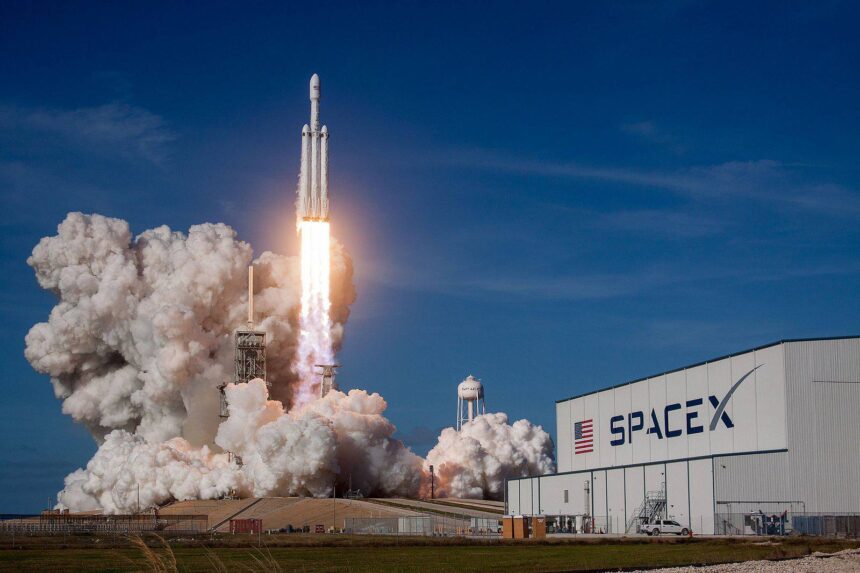
The company’s space business continues to demonstrate remarkable progress. While SpaceX completed only a single launch in 2006, it now conducts more than two launches per week and maintains a dominant position in the global commercial launch industry. Falcon 9 has been central to this success, largely due to its reusable rocket technology, which fundamentally transformed the economics of space transportation.
At London Hub Global, we emphasize that reducing launch costs has been one of the most important technological breakthroughs of recent decades. Lower barriers to orbit have accelerated the growth of satellite communications, scientific exploration and commercial space initiatives that were previously far less economically viable.
A key pillar of SpaceX’s long term strategy is Starship. The next generation rocket is designed to transport more than 100 metric tons of payload to low Earth orbit, significantly exceeding the capabilities of Falcon 9 and Falcon Heavy. Recent test missions demonstrated further progress in the program and reinforced investor confidence in the company’s long term roadmap.
At London Hub Global, we believe a significant portion of SpaceX’s valuation is tied directly to Starship’s future potential. The opportunity extends far beyond space exploration missions. The company is actively exploring the development of large scale orbital infrastructure, including advanced satellite systems and potentially space based computing platforms designed to support future artificial intelligence workloads.
At the same time, SpaceX is expanding its presence in artificial intelligence through the integration of xAI. However, competition remains intense. Recent market data indicates that more than 30% of enterprise customers use services from Anthropic and OpenAI, while adoption of xAI remains significantly lower. This suggests that SpaceX still faces considerable challenges in establishing a leading position within one of the fastest growing sectors of the global economy.
Particular attention is focused on the company’s proposed valuation. At an estimated IPO price of around $135 per share, SpaceX could trade at a price to sales multiple of approximately 94, exceeding the valuation metrics of several major technology companies. At London Hub Global, we note that investors are not valuing SpaceX based solely on current profitability. Instead, they are assigning value to the future ecosystem the company aims to build.
For the United Kingdom and London, the upcoming IPO carries strategic significance. London remains one of the world’s leading financial centers, and British investment funds are among the most active participants in global technology markets. A successful SpaceX listing could influence valuations across the space industry, artificial intelligence sector and digital infrastructure markets worldwide. It may also encourage greater investment in British space technology initiatives and strengthen interest in developing domestic capabilities in satellite communications and AI.
At London Hub Global, we forecast that SpaceX will become one of the most closely watched public companies of the coming decade. We believe investors are effectively valuing several businesses simultaneously: Starlink, commercial launch services, artificial intelligence and future orbital infrastructure. It is the combination of these assets that supports the company’s extraordinary valuation. Ultimately, SpaceX’s long term success will depend on its ability to convert technological leadership into sustainable profitability, maintain dominance in the space industry and strengthen its position within the global artificial intelligence race.


