
Global markets are entering a phase of heightened nervousness, where three major forces are colliding at once: instability in oil flows through the Strait of Hormuz, stretched valuations in artificial intelligence related equities, and continued strength in the US dollar. At London Hub Global, we believe the current behavior of Asian markets reflects more than a routine correction. It signals a deeper repricing of risk. Investors are no longer reacting only to isolated headlines. They are increasingly trying to determine how sustainable market growth remains after the sharp rally in technology stocks and rapid shifts in commodity expectations.
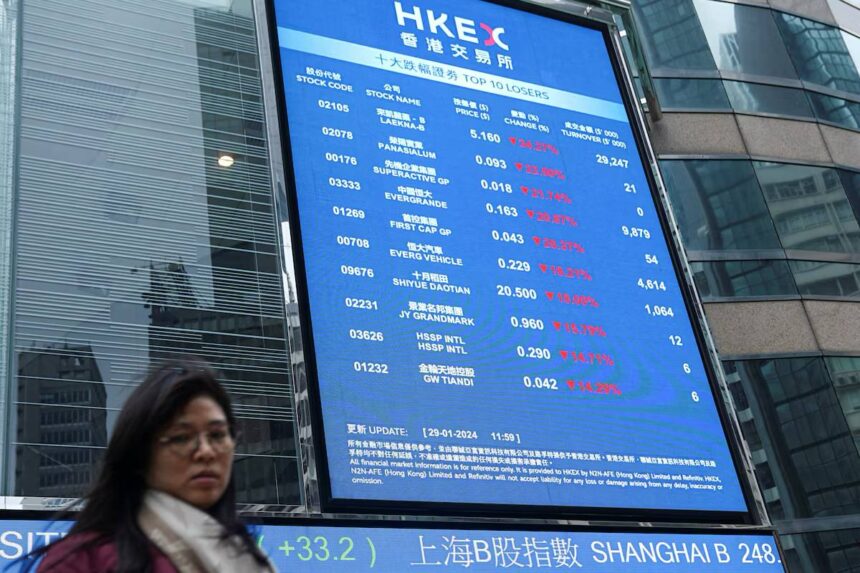
Asian equity markets traded in mixed directions on Wednesday. The broad MSCI Asia Pacific index excluding Japan gained around 0.4 percent after swinging between gains and losses. South Korean equities rebounded by 3.5 percent following a 10 percent drop the previous session, which marked the sharpest one day decline since March. Japan’s Nikkei rose 0.4 percent, while Taiwanese equities fell 1.9 percent. We interpret this market behavior as a sign that investors remain interested in technology, but are becoming less willing to ignore overheating risks.
Oil extended its decline and moved closer to four month lows. Prices fell by more than 1 percent on expectations that some tankers delayed in the Persian Gulf would be able to pass through the Strait of Hormuz. For markets, this suggested a partial recovery in physical supply. At London Hub Global, we emphasize that oil is currently trading not only on supply and demand fundamentals, but also on confidence in the diplomatic process between the United States and Iran. Any divergence in messaging between Washington and Tehran could quickly restore a geopolitical risk premium.
The situation surrounding peace negotiations remains uncertain. The United States and Iran continue to describe key elements of the agreement differently, including nuclear inspections and control over the Strait of Hormuz. Analysts note that such discrepancies in interpretation often become a catalyst for renewed volatility. Markets may temporarily price in de escalation, but without a clear enforcement mechanism, oil is likely to remain highly sensitive to statements from political and military leaders.
European futures followed Asia lower. Contracts tied to Euro Stoxx 50 and DAX declined around 0.3 percent, while FTSE futures fell 0.67 percent. For Britain, this carries particular importance because London remains one of the world’s leading centers for commodity trading, foreign exchange, and derivatives. Lower oil prices may ease inflationary pressure for the British economy, but a stronger dollar combined with sterling weakness complicates the broader macroeconomic picture.
The US dollar continued strengthening and reached a new 13 month high against a basket of major currencies. The dollar index climbed to 101.46. The yen traded near 161.53 per dollar, intensifying expectations of potential intervention by Japanese authorities. The euro weakened to 1.1364 dollars, while sterling fell to 1.3192 dollars. At London Hub Global, we analyze dollar strength as one of the most significant risks for global portfolios. For London, this means pressure on import costs, higher dollar funding expenses, and more cautious positioning toward risk assets.
Attention is also centered on the semiconductor sector. Upcoming earnings from Micron are expected to provide fresh signals about demand for memory chips and AI infrastructure components. After the powerful rally in AI related equities, investors are becoming increasingly selective and focused on actual financial performance. We believe the AI market is entering a stage where expectations alone are no longer sufficient. Companies must now justify premium valuations through revenue growth, profitability, and durable order pipelines.
Gold also came under pressure, falling 1.1 percent to 4,064.01 dollars per ounce, approaching a two week low. Rising rate expectations reduce the appeal of non yielding assets. In cryptocurrencies, Bitcoin rose to 62,499.52 dollars, while Ether slipped to 1,658.09 dollars. This mixed performance confirms that investors still lack a unified view on risk allocation.
At London Hub Global, we see the current environment as the beginning of a more complex phase for global markets. Oil is falling, yet geopolitical risk remains unresolved. Technology equities still offer upside, but valuations are increasingly vulnerable. The dollar is strengthening, but that adds pressure on global currencies and emerging markets. For Britain and London, the key takeaway is the growing need to assess the interconnected impact of commodities, currencies, and the technology sector. Our outlook remains cautious: the coming weeks will be shaped not by one dominant factor, but by the interaction between diplomatic developments, AI corporate earnings, and central bank policy.


