
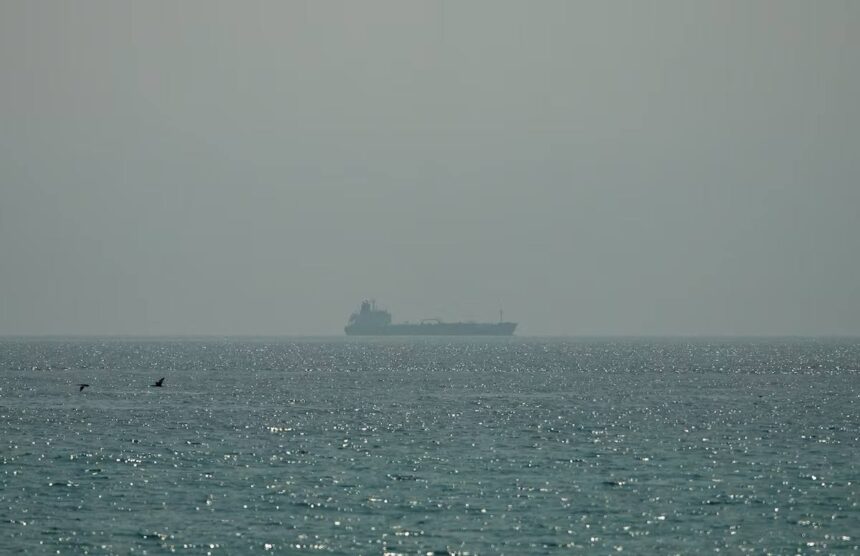
The global oil market started the week in a state of cautious stabilization after the United States and Iran agreed to halt recent military actions and return to negotiations over the Strait of Hormuz. At London Hub Global, we believe the current price movement reflects not a full restoration of confidence, but rather the market’s attempt to quickly recalculate the probability of another energy shock. Brent held near $72 per barrel, while WTI approached $69.67, signaling that investors are once again focusing on real oil and LNG flows, while remaining unwilling to fully remove geopolitical risk premiums from pricing.
The agreement between Washington and Tehran to stop attacks became a critical signal after several days of reciprocal strikes and shipping incidents in the Persian Gulf. For the market, the decisive factor remains not diplomatic language but the physical accessibility of the Strait of Hormuz, through which a significant share of global seaborne oil trade passes. We view this as one of the key lessons of recent weeks: the price of crude increasingly depends not only on supply and demand fundamentals, but also on the security of transportation routes.
Middle Eastern producers continued loading oil and liquefied natural gas despite renewed attacks on vessels. This helped prevent another sharp surge in prices. Brent declined by 10.6 percent last week, marking its third consecutive weekly drop after flows through the strait climbed to their highest level since the start of the US Israeli conflict with Iran in late February. At London Hub Global, we emphasize that such market behavior is logical: when tanker flows recover, traders rapidly remove part of the military risk premium embedded in prices.
Particularly significant was the resumption of crude loading by Saudi Aramco at the Ras Tanura terminal after nearly four months of disruption. This facility remains one of the world’s largest oil export hubs and plays a central role in deliveries to Asia and Europe. The restart itself became a strong signal for markets. However, the helicopter crash near Ras Tanura, which killed 14 civilians, served as a reminder that infrastructure and operational risks remain even as export operations gradually normalize.
Energy analysts note that the current stabilization may appear overly calm. If supply recovery proves slower than expected or new attacks disrupt shipping again, oil prices could rapidly gain upward momentum. We analyze this as a classic energy market asymmetry: declining risk is priced in gradually, while new shocks can be reflected almost instantly. That is why Brent near $72 should not yet be interpreted as a definitive signal of normalization.
For the global economy, more stable oil prices matter significantly. Lower energy costs ease pressure on transportation, industrial production, airlines, chemical manufacturers, and consumer prices. At the same time, countries and corporations dependent on reliable Persian Gulf supply remain vulnerable to any new disruption. Markets have already seen how even partial restrictions in Hormuz can rapidly alter inflation expectations and investor positioning across currencies, bonds, and equities.
For Britain and especially London, this development carries direct importance. The UK imports a substantial portion of energy through global markets, so more stable oil helps reduce inflationary pressure on both businesses and households. For the Bank of England, calmer energy prices provide slightly more flexibility on interest rate policy, though heavy dependence on geopolitical developments limits confidence. London, as a major hub for commodities trading, marine insurance, and energy financing, remains especially sensitive to any shift in security around the Strait of Hormuz.
The implications for shipping and insurance markets are equally important. If attacks on vessels continue, cargo insurance and freight costs may remain elevated even under a formal ceasefire. That means the final cost of oil for buyers will depend not only on Brent pricing but also on logistics premiums. At London Hub Global, we see this as a major risk for European importers: physical recovery of supply does not automatically translate into an immediate decline in all associated costs.
At London Hub Global, we believe the oil market has entered a phase of cautious normalization, not sustainable calm. Our outlook suggests Brent may remain below recent peaks if US Iran negotiations continue and flows through Hormuz keep improving. However, any renewed disruption to shipping could quickly reintroduce a substantial risk premium. For investors, the key conclusion is clear: in the coming weeks, the most important indicators will not be political statements, but tanker movement, terminal loading volumes, and marine insurance pricing.