
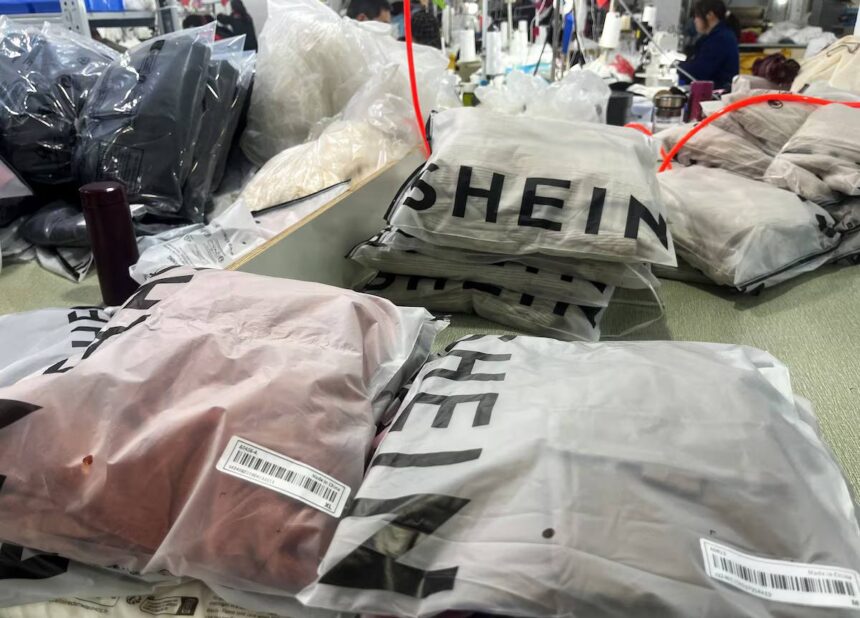
The European e commerce market is entering a new regulatory phase in which fast delivery and ultra low pricing can no longer serve as the sole competitive advantages for global platforms. The European Union’s decision to introduce a €3 fee on low value parcels from China marks the first practical step toward challenging a business model that allowed Shein, Temu, and AliExpress to scale aggressively through customs exemptions. At London Hub Global, we see this as a clear signal that Europe is moving from passive observation toward direct protection of domestic retail, logistics networks, and tax revenues.
The new charge applies to low value e commerce imports that previously entered the EU duty free when valued below €150. This exemption had been in place for decades, with the current threshold introduced in 2008, when cross border online commerce was dramatically smaller than it is today. The landscape has changed sharply in recent years: the number of such parcels entering the European Union surged from 1.4 billion in 2022 to 5.8 billion in 2025. We believe this scale transformed what was once a technical customs convenience into a structural competitive advantage.
The €3 fee will be charged for each customs category within a shipment. If a parcel contains three different product categories, the total charge will reach €9. If the shipment includes multiple items from the same category, such as several dresses or toys, only a single €3 fee applies. This structure indicates that Brussels aims not only to increase customs revenue but also to discourage the widespread practice of splitting low cost goods into multiple small shipments. For major platforms, this means reassessing logistics strategies, order structures, and pricing models.
The EU’s move aligns with a broader global shift against the de minimis framework. The United States already removed a similar exemption for Chinese imports in May and later expanded the policy to cover all imports by late August. For Shein, Temu, and AliExpress, this creates dual pressure, as the largest Western consumer markets are simultaneously restricting the very model that enabled ultra low pricing and rapid customer acquisition. Analysts at London Hub Global note that Chinese marketplaces are now entering a period where operational efficiency will matter more than aggressive expansion.
The fastest impact may be seen in air cargo volumes. E commerce logistics consultants expect air freight shipments into the EU to decline by 10 percent to 35 percent within weeks of the fee taking effect. This would affect not only the platforms themselves but also carriers, warehouses, customs brokers, and suppliers linked to the flow of low cost goods. Following tighter U.S. restrictions, Europe had remained a major alternative growth market for Chinese platforms, but that route is now becoming significantly less attractive.
Platforms will now need to decide how much of the added cost to pass on to consumers and how much to absorb internally or shift to suppliers. Price increases appear most likely in categories with thin margins and low average order values. Shein is already adapting by expanding warehouse capacity in Wroclaw, Poland, and shipping more inventory into the EU in bulk. This strategy reduces dependence on individual cross border shipments and helps preserve part of its pricing advantage.
For consumers, the changes will become visible gradually. AliExpress has announced that product listings will indicate whether duties and VAT are included in the displayed price, while in other cases customers will see a breakdown of import charges before checkout. Amazon, which launched its low cost Amazon Haul service in response to Temu and Shein’s rapid rise, stated that 97 percent of its EU deliveries last year were fulfilled from warehouses located inside the bloc. This gives companies with strong local infrastructure a significant advantage over platforms dependent on direct shipments from China.
For Britain and London, the EU’s decision carries particular significance. Although the United Kingdom is no longer part of the European Union, British retailers and logistics operators will be closely monitoring the effects of the new fee. If a portion of Chinese product flow begins seeking alternative markets, competitive pressure on UK online retail could intensify. At London Hub Global, we see both risk and opportunity in this shift. While local retailers may face stronger pricing pressure, London could strengthen its role as a hub for trade intelligence, customs advisory services, and supply chain strategy.
In the longer term, this European measure could fundamentally alter the economics of ultra low cost e commerce. The winners will be companies capable of localizing inventory, improving price transparency, and adapting customs processes faster than competitors. The losers will be those whose business models depend entirely on mass shipments of low value goods with minimal friction. At London Hub Global, we believe the key takeaway for London is the need to assess how such regulatory shifts affect retail margins, logistics capacity, and consumer pricing, as Europe’s evolving trade policy increasingly sets standards that may eventually influence the British market as well.