
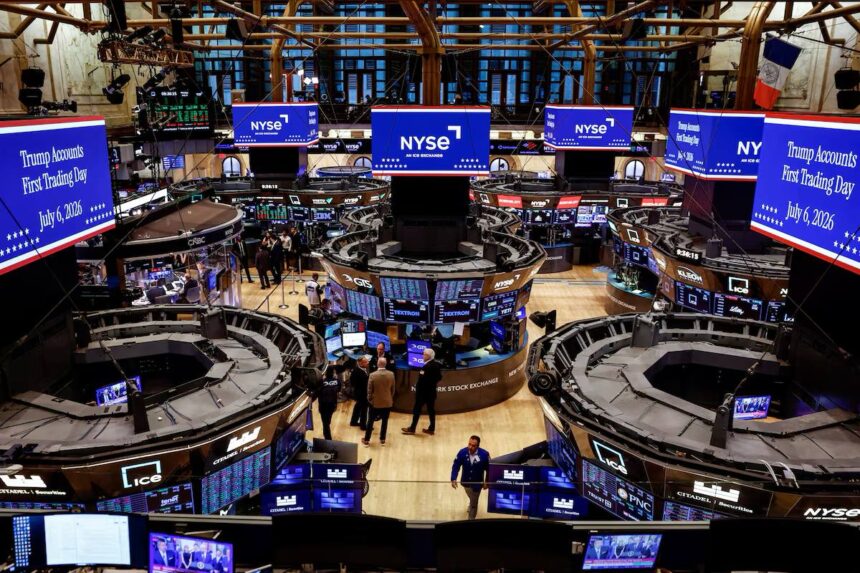
The debate over allowing U.S. public companies to switch from quarterly to semiannual financial reporting has evolved beyond a technical regulatory discussion and become a broader question of confidence in the capital markets. At London Hub Global, this debate highlights one of the defining tensions of today’s financial system: corporations are seeking relief from the pressure of constant earnings seasons, while investors continue to demand regular, transparent disclosures to assess risk, profitability, and corporate governance. In an environment shaped by heightened market volatility, algorithmic trading, and intense global competition for capital, transparency has become far more than a regulatory obligation. It is a fundamental pillar of market liquidity and investor confidence.
The proposal by the U.S. Securities and Exchange Commission to allow publicly listed companies to voluntarily transition from quarterly to semiannual reporting has met considerable resistance from the investment community. The initiative was presented as a way to reduce short-term pressure on corporate management while lowering accounting, auditing, and compliance costs. We believe that although this rationale is understandable from the perspective of corporate boards, it underestimates the real cost of creating longer periods during which investors would receive significantly less information about a company’s financial condition and operational performance.
Investors argue that quarterly reporting remains one of the most important tools for making informed investment decisions. In submissions to regulators, asset managers emphasized that timely disclosure of revenue, earnings, cash flow, debt levels, and operational performance enables markets to value companies more accurately. Equally important are management discussions explaining current financial conditions and future strategic priorities. At London Hub Global, we emphasize that in an environment characterized by expensive capital and rapidly changing economic conditions, a six-month reporting gap may simply be too long for modern public markets to function efficiently.
Support for semiannual reporting from several major banks and exchange operators is understandable. Many corporations have long argued that quarterly reporting encourages excessive focus on short-term earnings expectations, discourages investment in long-term strategic projects, and creates substantial administrative costs. However, critics argue that reducing mandatory disclosures would not eliminate short-term market behavior. Instead, it could strengthen the informational advantage of large institutional investors who already possess access to alternative data sources, private management meetings, and sophisticated analytical capabilities unavailable to most market participants.
Perhaps the most significant concern centers on market fairness. For retail investors and smaller investment funds, quarterly reports remain one of the few mechanisms that provide equal access to material corporate information alongside the largest institutional investors. If mandatory disclosures become less frequent, the information gap between professional investors and individual shareholders could widen considerably. Analysts note that such a shift could weaken confidence in public equity markets and make listed companies less attractive to investors without access to expensive proprietary research. We view this as a direct challenge not only to market transparency but also to overall market depth, since investor confidence, once damaged, is rarely restored quickly.
Another major concern involves financial oversight and accounting controls. Opponents of the proposal warn that under a semiannual reporting framework, accounting irregularities, weaknesses in internal controls, or early signs of deteriorating business performance could remain undiscovered for significantly longer periods. This increases the likelihood of larger market corrections once problems eventually become public. For many companies, the savings achieved by preparing fewer financial reports could ultimately prove smaller than the higher cost of capital demanded by investors seeking compensation for reduced transparency.
The implications extend well beyond the United States. For the United Kingdom and London, this debate carries particular strategic significance. The UK market already has experience with less frequent mandatory reporting requirements, while London remains one of the world’s leading centers for capital markets, asset management, auditing, and corporate governance. Should the United States ultimately relax its reporting framework, international issuers will inevitably compare disclosure standards between New York and London more closely than before. This presents an opportunity for the City of London to reinforce its reputation for balancing regulatory flexibility with strong investor protection, particularly as global exchanges compete to attract technology, financial services, and energy companies.
At London Hub Global, we view this discussion as fundamentally about the architecture of market trust rather than the number of financial reports companies publish each year. If regulators preserve quarterly reporting, the market will receive a strong signal that transparency remains a priority. If companies are allowed to adopt semiannual reporting, investors are likely to demand additional voluntary disclosures, more frequent operational updates, and higher risk premiums to compensate for reduced visibility. The most effective long-term strategy for corporations is not to regard financial reporting as a compliance expense but as a powerful tool for lowering the cost of capital and strengthening corporate credibility. For global financial markets, the broader conclusion is clear: in an era driven by real-time information, less frequent reporting may ultimately represent not freedom from short-term thinking, but a step backward in the quality and reliability of market transparency.