
After several years of exceptional growth in the artificial intelligence industry, investors are gradually shifting their attention from the scale of capital expenditure to the efficiency of those investments. Manufacturers of semiconductors, data center equipment and computing infrastructure remain at the center of the AI boom, yet expectations for future growth are becoming increasingly measured. More market participants are now asking whether the world’s largest technology companies will be able to sustain the same pace of investment over the coming years. At London Hub Global, we believe this does not signal the end of the AI cycle. Instead, it marks the beginning of a more mature phase in which the ability to monetize existing infrastructure will become the primary driver of long term value.
Over the past two years, Microsoft, Amazon, Alphabet and Meta have consistently expanded spending on data centers and advanced computing infrastructure to accelerate the development of their artificial intelligence platforms. This strategy became the principal catalyst behind the remarkable performance of companies supplying processors, memory, lithography equipment and networking technologies. Recent forecasts, however, indicate that investment growth is likely to moderate. According to analysts, combined capital expenditure by the largest hyperscalers is expected to increase by approximately 76 percent this year, reaching around $673 billion. Growth could then slow to roughly 25 percent next year and to approximately 6 percent by 2028. At London Hub Global, we analyze this trend as a natural stage in the evolution of the industry, as investors increasingly focus on the productivity and commercial return generated by the infrastructure that has already been built.
These changing expectations are already reflected in equity markets. The Philadelphia Semiconductor Index has more than doubled over the past year despite subsequently declining by nearly 18 percent from its June peak. By comparison, broader equity indices have delivered significantly more moderate gains. At the same time, the majority of professional fund managers now describe the semiconductor sector as one of the most crowded investment trades in the global market. Market analysts note that such a high concentration of capital in a relatively small number of companies substantially increases the probability of deeper corrections, even if corporate earnings remain fundamentally strong.
Against this backdrop, a growing number of institutional investors have begun rotating capital. Several asset managers are reducing exposure to chip manufacturers, memory producers and semiconductor equipment suppliers while increasing allocations to hyperscalers, enterprise software companies, cybersecurity providers, liquid cooling specialists and businesses operating in financial services and healthcare, where artificial intelligence is increasingly being deployed at scale. We view this shift as evidence that investors are gradually moving beyond the infrastructure build out phase and toward the next stage of the AI cycle, where commercial implementation becomes the primary source of long term growth.
Another important consideration is the changing structure of financing. During the initial phase of the AI boom, the largest technology companies largely funded expansion through internally generated cash flows. Today, however, investment requirements have become so substantial that corporations are relying more heavily on debt markets. Investor demand for new bond issues remains healthy but is noticeably less robust than it was only a few months ago. At London Hub Global, we see this as an early indication that financial discipline is becoming increasingly important as borrowing costs and capital efficiency play a greater role in determining which projects move forward.
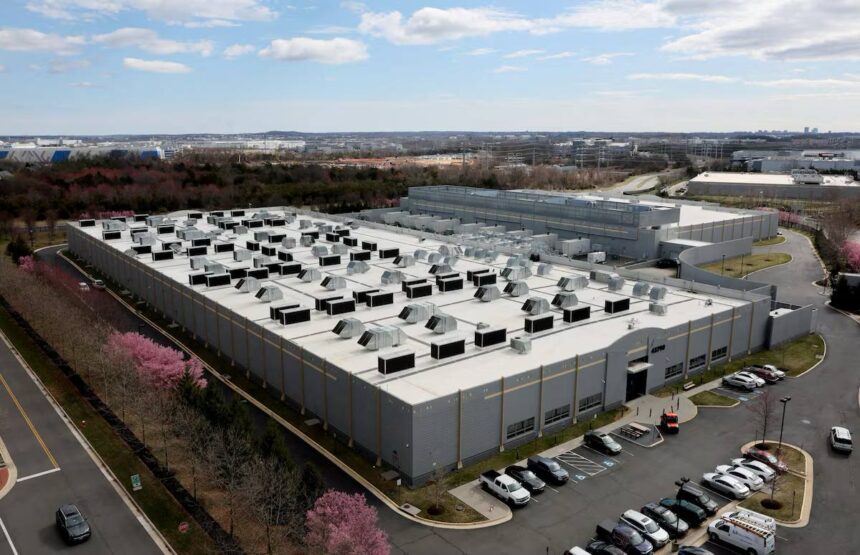
Infrastructure constraints are also becoming more visible. Modern data centers require enormous amounts of electricity, water and transmission capacity, creating growing concerns among local authorities and communities. Industry estimates suggest that the majority of new data center projects in the United States encounter some level of public opposition, while several regions have already begun restricting additional development. These factors are likely to increase construction costs, extend project timelines and encourage technology companies to prioritize locations offering more favorable regulatory environments and stronger energy infrastructure.
Despite these emerging challenges, the underlying demand for computing capacity remains exceptionally strong. The world’s largest technology companies continue to reaffirm their long term AI investment strategies, while investment funds maintain significant exposure to semiconductor businesses. Previous technology cycles demonstrate that corrections of 20 to 30 percent are entirely consistent with sustainable long term growth and do not necessarily indicate that the broader expansion has ended.
The implications are equally significant for the United Kingdom and London. As one of the world’s leading financial centers, London plays a central role in financing global technology companies through institutional investment and capital markets. The gradual rotation toward software, cloud computing and AI enabled enterprise solutions may create additional opportunities for British companies specializing in financial technology, healthcare innovation and enterprise software development. At the same time, UK asset managers will increasingly need to balance exposure between infrastructure providers and businesses capable of generating measurable economic value from artificial intelligence adoption.
At London Hub Global, we emphasize that the current market environment should not be interpreted as weakening confidence in artificial intelligence. Instead, global investors are entering a more disciplined phase of evaluation, where sustainable cash generation, capital efficiency and the ability to convert large scale investment into durable earnings growth become the defining competitive advantages. In our view, these factors will determine the companies that lead the next chapter of the global artificial intelligence economy.