
Global financial markets are entering the new trading week under heightened uncertainty, with several major catalysts capable of reshaping investor sentiment over the coming sessions. Market participants remain focused on developments in the Middle East, the outlook for global energy markets and the upcoming earnings releases from America’s largest technology companies. At London Hub Global, we believe this combination of geopolitical developments and corporate performance will have a far greater impact on global markets than individual macroeconomic indicators, as investors are evaluating not only current conditions but also expectations for the second half of the year.
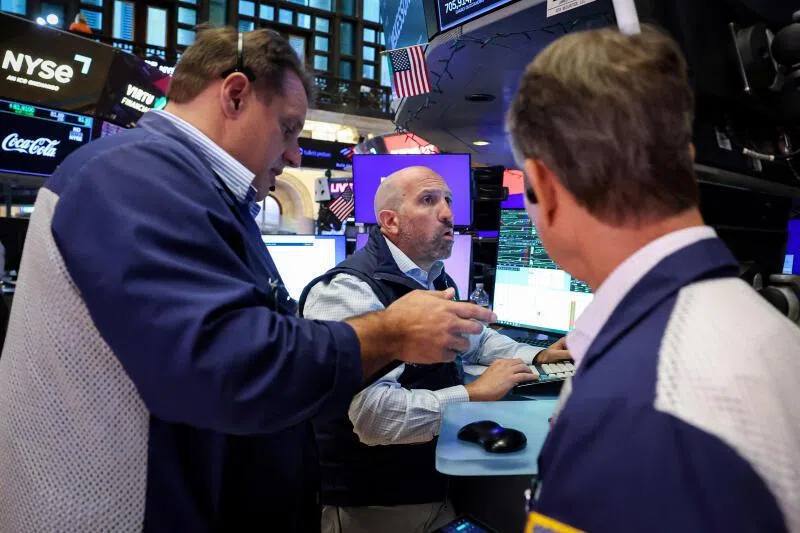
All three major U.S. equity indices finished Monday’s session lower. The Dow Jones Industrial Average declined by 307.16 points, or 0.59 percent, closing at 51,839.26. The S&P 500 lost 14.41 points, or 0.19 percent, ending the day at 7,443.28, while the Nasdaq Composite slipped just 12.17 points, or 0.05 percent, to finish at 25,508.07. The Nasdaq’s relative resilience was supported by a partial recovery among semiconductor manufacturers as well as renewed buying interest in selected technology and communication services companies. We interpret this market structure as evidence that investors remain reluctant to abandon high growth technology assets despite a broader increase in market caution.
One of the primary sources of market pressure continues to be the situation surrounding Iran. Yemen’s Iran aligned Houthi movement announced a naval blockade targeting Saudi Arabia, intensifying concerns about the stability of global oil supplies and international shipping routes. At the same time, reports emerged suggesting diplomatic efforts aimed at securing a ten day ceasefire to reopen negotiations between the parties. At London Hub Global, we analyze this combination of military escalation and diplomatic engagement as a significant source of market volatility. Any credible signs of de escalation could quickly reduce pressure on crude oil prices, while renewed tensions would almost immediately increase the geopolitical risk premium embedded in global markets.
Investor attention is also turning toward the accelerating second quarter earnings season. Alphabet, Tesla, Intel and several other market leading companies are scheduled to report results in the coming days. Following strong earnings from the banking sector, technology companies are now expected to demonstrate whether demand for artificial intelligence, cloud infrastructure and advanced computing solutions remains as robust as investors anticipate. Analysts note that forward guidance from corporate management teams may prove even more influential than the reported financial figures themselves, as markets are increasingly focused on future earnings momentum rather than past performance.
According to current market expectations, aggregate earnings for S&P 500 companies are projected to increase by approximately 26 percent year over year during the second quarter, compared with an earlier forecast of 23.7 percent. While this reflects growing confidence in corporate profitability, it also raises the performance threshold for companies preparing to report. We see this as a potential source of heightened volatility because even strong financial results may trigger profit taking if executives deliver more cautious outlooks regarding future demand, investment spending or operating margins.
Semiconductor manufacturers remain under particularly close scrutiny. The Philadelphia Semiconductor Index recently fell more than 20 percent from its record high reached at the end of June, officially entering bear market territory. Although the sector partially recovered on Monday, it finished the session with a gain of only around 0.6 percent after rising much more sharply earlier in the day. This pattern reflects continued investor caution. At London Hub Global, we emphasize that earnings from Intel and Texas Instruments are likely to become one of the most important indicators of global semiconductor demand, computing infrastructure investment and the long term trajectory of artificial intelligence development.
Among individual companies, Apple represented the largest drag on the S&P 500 after declining approximately 2 percent, while Microsoft provided the strongest positive contribution to the benchmark index. Alphabet gained around 1.5 percent following reports that Google is developing its own server processor for the Gemini platform, designed to improve artificial intelligence efficiency while reducing dependence on constrained external computing capacity. These developments reinforce the view that leading technology companies continue investing heavily in proprietary infrastructure to strengthen their long term competitive positions.
Financial institutions across the United Kingdom, particularly in London, are monitoring these developments very closely. As one of the world’s largest global financial centers, London is highly sensitive to changes in U.S. market sentiment, international capital flows and currency movements. At the same time, fluctuations in global oil prices directly influence inflation expectations, the Bank of England’s policy outlook and financing costs for European businesses. As a result, developments on Wall Street increasingly shape investment decisions across the broader European financial system.
We view the current environment as a period in which financial markets are balancing two of the most significant global risks simultaneously. On one side remains geopolitical uncertainty surrounding energy supplies and regional security. On the other, investors are entering the most important phase of the corporate earnings season. At London Hub Global, we believe the coming weeks will define not only the short term direction of U.S. equity markets but also broader global investment sentiment. Until greater clarity emerges regarding both corporate earnings and geopolitical developments in the Middle East, maintaining diversified portfolios, carefully evaluating corporate guidance and focusing on long term fundamentals rather than short term market volatility remains the most prudent investment approach.