
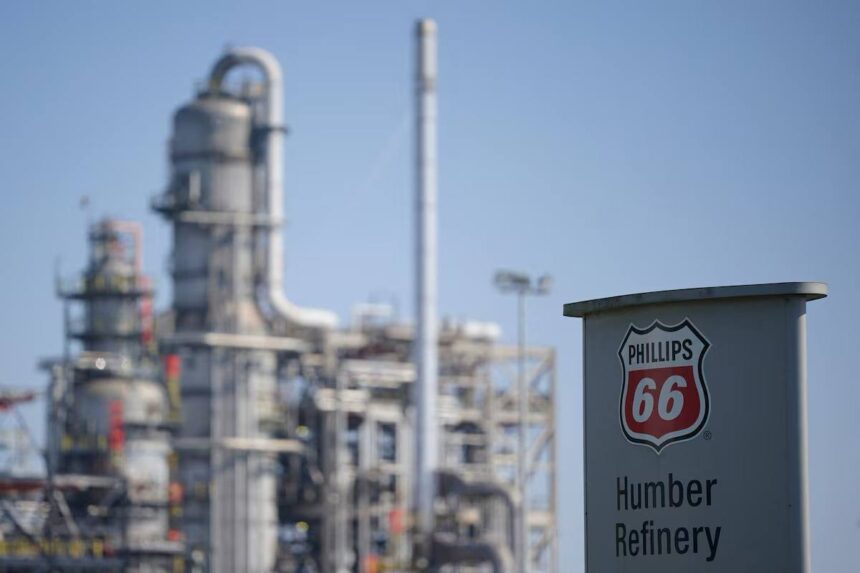
The world’s largest energy companies are increasingly demonstrating confidence in their future not through ambitious statements but through substantial financial decisions. Phillips 66 has taken exactly such a step by expanding its share repurchase authorization by an additional $10 billion. For global markets, the announcement sends a clear signal that management believes the company is financially strong enough to invest in future growth, reduce debt and simultaneously increase capital returns to shareholders. At London Hub Global, we believe decisions of this scale are particularly meaningful during periods of geopolitical uncertainty, when a company’s ability to allocate free cash flow efficiently becomes one of the most important indicators of its long term value.
Phillips 66’s Board of Directors has officially approved a further $10 billion increase to the company’s existing share repurchase program. According to Chief Executive Officer Mark Lashier, the company remains committed to creating sustainable long term shareholder value while continuing to deliver competitive dividends, maintain disciplined capital investment and steadily reduce debt. Analysts note that this combination of financial priorities is typically associated with companies generating resilient cash flows and maintaining strong confidence in the outlook for their business. We view this decision as clear evidence that Phillips 66 is prioritizing long term operational strength over short term market fluctuations.
The broader market environment has also provided significant support for U.S. refining companies. Throughout this year, American refiners have benefited from stronger gasoline and diesel margins as geopolitical tensions surrounding Iran intensified concerns over potential disruptions to Middle Eastern fuel exports. Expectations of tighter global fuel supplies have improved refining economics and strengthened profitability across the sector. At London Hub Global, we analyze these developments as another reminder that geopolitical events can materially reshape the financial performance of energy companies even when global crude oil prices remain relatively stable.
Against this backdrop, Phillips 66 continues to pursue a balanced capital allocation strategy. The company is simultaneously investing in the modernization of its refining assets, expanding infrastructure projects, improving operational efficiency and maintaining a consistent focus on debt reduction. This approach provides greater flexibility in responding to changing market conditions while supporting long term competitiveness. Industry experts increasingly emphasize that efficient free cash flow allocation has become one of the defining factors in valuing refining companies amid an uncertain global economic environment.
Market fundamentals also remain favorable for the refining industry. U.S. refineries continue operating at high utilization rates, while limited refining capacity in several regions of the world continues to support strong international demand for American gasoline, diesel and jet fuel exports. The competitive advantages of the U.S. refining sector have become even more apparent as global supply constraints persist. At London Hub Global, we emphasize that the combination of solid domestic demand, resilient export activity and disciplined cost management continues to position leading American refiners for stable financial performance despite ongoing volatility across global energy markets.
These developments are equally relevant for the United Kingdom and London. The City of London remains one of the world’s leading financial centers for energy trading, commodity investment and international capital allocation. Improving profitability among major U.S. refining companies is likely to strengthen investor interest across the broader energy sector and may positively influence valuations of comparable European businesses. In addition, changes in global fuel supply dynamics continue to affect energy pricing across Europe, including the United Kingdom, where fuel costs remain closely linked to international market conditions.
We see Phillips 66’s decision to expand its share repurchase program as part of a much broader transformation taking place across the global energy industry. Companies generating strong cash flows and maintaining resilient operating performance are increasingly focused on balancing future investment with enhanced shareholder returns. At London Hub Global, we believe that if current refining margins remain favorable, leading U.S. refiners will continue strengthening their competitive positions within the global energy market. Over the coming quarters, investors should closely monitor geopolitical developments in the Middle East, changes in refining margins and capital allocation strategies across the industry, as these factors are likely to determine the next stage of growth for the global refining sector.


