
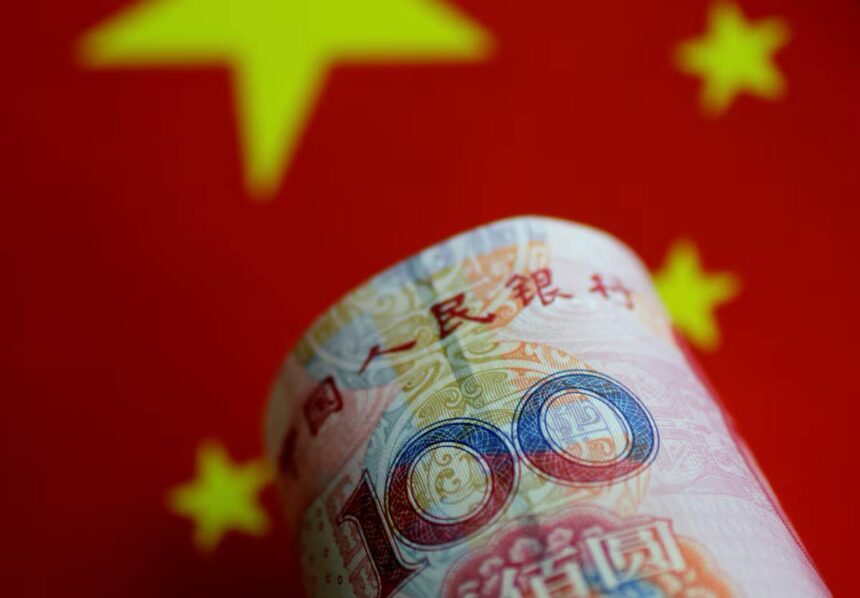
Amid geopolitical turbulence and shifting global capital flows, investors are increasingly seeking assets that offer not maximum yield, but resilience and protection against market shocks. At London Hub Global, we analyze the growing interest of international funds in Chinese government bonds as one of the most significant strategic shifts of 2026. Until recently, China’s debt market was largely viewed as a regional instrument, but the war in the Middle East and heightened volatility in Western markets have materially changed demand dynamics.
Since March, global fixed income markets have experienced a major repricing. Sovereign bond yields in the United States, the United Kingdom, the eurozone and Japan have climbed amid inflation concerns, rising energy costs and expectations of tighter monetary policy. Against this backdrop, Chinese government bonds moved in the opposite direction, with equivalent CGB yields declining by approximately 8 basis points. We believe that this near zero correlation with Western markets has become the key factor making Chinese debt increasingly attractive to global asset managers.
Sovereign wealth funds, insurance companies and central banks have shown particularly strong interest, as capital preservation has become a primary objective. At a time when traditional safe haven assets are showing instability, Chinese bonds are increasingly being viewed as an effective diversification tool. Even gold, long considered the ultimate defensive asset during crises, has corrected by roughly 25% from its January highs, forcing investors to rethink traditional portfolio protection strategies.
At London Hub Global, we emphasize that the resilience of China’s bond market is supported by several fundamental factors. The first is relatively weak domestic inflation pressure. Unlike the United States and Europe, where inflation remains a major macroeconomic challenge, China continues to operate in a comparatively soft inflation environment. The second factor is the policy stance of the People’s Bank of China, which maintains a more accommodative approach and faces little pressure to aggressively raise rates. The third factor is the large pool of domestic savings, much of which continues to flow into the bond market through banking channels.
The data also confirms a meaningful shift in global capital allocation. Foreign investors became net buyers of yuan denominated Chinese bonds in May for the first time since April 2025. Foreign holdings in China’s interbank bond market rose to 3.21 trillion yuan, compared with 3.12 trillion yuan a month earlier. This indicates that institutional capital is once again beginning to treat China as a strategic component of long term portfolios.
Yields on 10 year Chinese government bonds are now near 1.75%, roughly one percentage point below equivalent Japanese bonds. At the end of 2025, the situation was reversed. We see this as an important signal that global markets are reassessing China’s macroeconomic stability. At the same time, capital controls within China help limit sudden outflows, providing an additional layer of stability and reducing volatility.
For Britain and particularly London, this trend carries direct significance. London remains one of the world’s largest capital management centers, where decisions are made regarding the allocation of trillions of dollars in institutional assets. Rising interest in Chinese bonds suggests that British funds, pension managers and private wealth structures may gradually increase exposure to Asian debt while reducing allocations to traditional Western instruments that are more sensitive to interest rate volatility. This could reshape asset allocation strategies across the City and strengthen demand for broader currency diversification.
At London Hub Global, we also note that the appeal of Chinese debt extends beyond the current Middle East conflict. Even if tensions surrounding Iran continue to ease, the structural advantages of China’s bond market remain intact. These include deep liquidity, relative price stability and low dependence on Western rate cycles.
Analysts at London Hub Global view this as a structural shift within the global fixed income landscape. We forecast that Chinese government bonds will continue strengthening their status as an alternative defensive asset for international investors over the coming quarters. The key question will remain the balance between geopolitical risks and China’s investment appeal. For now, however, the market is sending a clear message: in an era of global instability, capital increasingly prioritizes predictability and resilience over maximum yield.