
The US dollar continued to strengthen as global markets entered a new phase of macro uncertainty, with investors reassessing geopolitical risks, central bank policy, and energy market volatility. At London Hub Global, we believe the latest market reaction reflects a broader repricing of global risk, as optimism surrounding the US Iran diplomatic track begins to fade and monetary tightening expectations return to the forefront.
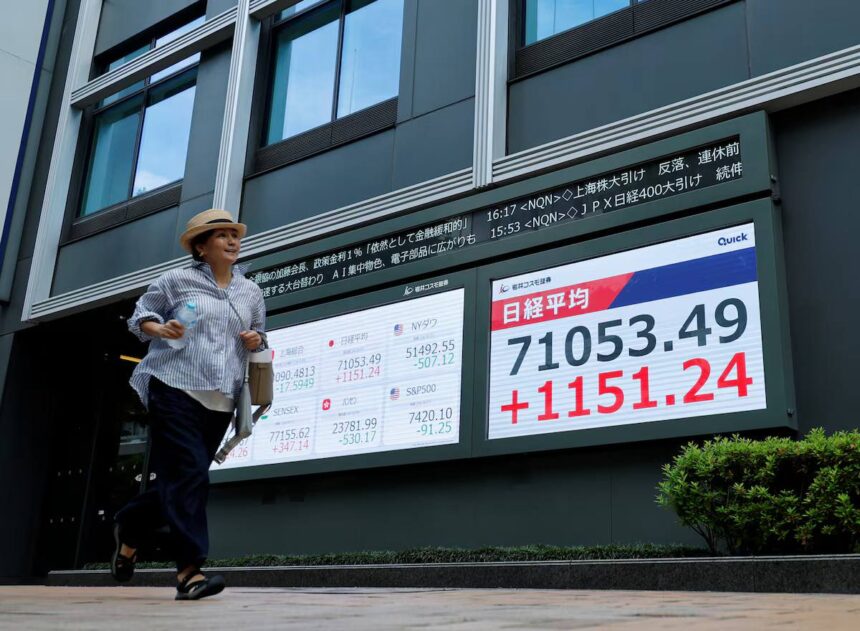
Asian equities reversed course and moved lower on Friday as investors locked in profits following record rallies in Japan and South Korea. Market sentiment deteriorated after signs emerged of an early setback in negotiations between the United States and Iran. The cancellation of planned talks in Switzerland, combined with renewed military activity in southern Lebanon, reminded markets that geopolitical de escalation remains fragile. We see this as a critical signal because financial markets had priced in a smoother diplomatic path than current developments justify.
European equities were also set for a weaker open, with pan European futures down around 0.6 percent. Nasdaq futures declined 0.9 percent, reflecting renewed caution in growth and technology sectors. Analysts note that higher interest rate expectations and geopolitical instability create a particularly difficult environment for high valuation assets, especially those dependent on cheap capital.
Oil markets quickly reacted to the changing geopolitical narrative. After earlier weakness, crude prices rebounded as concerns resurfaced over supply stability in the Middle East. US West Texas Intermediate rose 0.8 percent to 77.23 dollars per barrel. While oil remained on track for a weekly decline after the earlier US Iran ceasefire agreement, the rebound highlights how fragile energy pricing remains. At London Hub Global, we emphasize that reopening shipping routes through the Strait of Hormuz does not automatically restore pre crisis supply conditions. Insurance costs remain elevated, shipping operators remain cautious, and logistical normalization could take weeks or even months.
Currency markets delivered one of the strongest signals of the week. The US dollar climbed to a 13 month high against major peers as the Federal Reserve maintained a hawkish tone under new Chair Kevin Warsh. Markets increasingly expect further tightening, with more than one potential rate hike now priced in for this year. We consider this a major shift in market psychology. Investors have moved from expecting rate cuts toward accepting a higher for longer rate environment in the United States.
This shift has major consequences for Britain and London. Sterling weakened to 1.3168 against the dollar, pressured by both US dollar strength and cautious guidance from the Bank of England. At London Hub Global, we analyze this as a growing challenge for the UK economy. A stronger dollar raises import costs, intensifies inflation risks, and increases pressure on sectors heavily exposed to global commodity pricing. London, as one of the world’s leading financial centers, remains especially sensitive to changes in capital flows, bond yields, and energy prices.
The Bank of England’s recent decision to hold rates reinforced this dynamic. While policymakers remain cautious, markets are increasingly focused on the inflationary impact of energy prices and imported goods. We believe this creates a difficult balancing act for British policymakers. Tightening too aggressively risks slowing domestic growth, while remaining too passive could allow inflation pressures to strengthen again.
Bond markets reflected this complex outlook. Short term US Treasury yields moved higher as traders priced in tighter policy, while long term yields softened slightly, signaling concern over future growth. This divergence suggests markets are caught between inflation fears and recession risks. Analysts forecast that such yield curve behavior often precedes elevated cross asset volatility.
Precious metals came under pressure as the stronger dollar reduced demand for traditional safe havens. Spot gold fell 1.9 percent to 4,129 dollars per ounce, while silver declined 3.6 percent to 63.4 dollars. We note, however, that safe haven demand could return rapidly if geopolitical tensions intensify further.
The broader market message is increasingly clear. At London Hub Global, we believe investors are entering a period where diplomacy, central bank communication, and energy flows will drive short term market direction more aggressively than corporate fundamentals alone. If US Iran negotiations stall further, oil prices may rebound sharply, reigniting inflation concerns across Europe and the UK. For Britain and London, the key variables to monitor remain energy prices, dollar strength, and central bank policy. These three forces are likely to define market sentiment and capital allocation decisions in the weeks ahead.


