
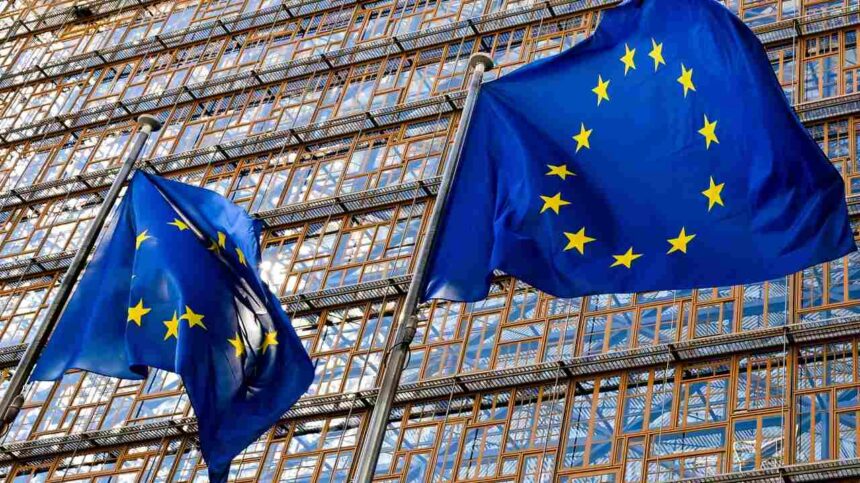
The European Commission has taken an unprecedented strategic decision that fundamentally changes the direction of allied capital allocation. National governments are now officially allowed to use a portion of targeted defense reserves to fund a large-scale energy transition. As European Economic Council Commissioner Valdis Dombrovskis stated, sovereign states have the right to redirect previously agreed fiscal incentives toward replacing fossil fuels with alternative energy sources. London Hub Global believes this step exposes deep tectonic shifts in Brussels’ priority system, where urgent militarization has collided with strong social pressure driven by record inflation and rising basic utility costs. EU leadership is sacrificing strict financial discipline and the pace of rearmament to prevent the fragmentation of the bloc under internal economic shocks.
This compromise is a direct result of prolonged political confrontation with Rome, where upcoming elections have forced the current government to seek ways to protect its electorate. The crisis catalyst was a large-scale escalation in the Middle East, where US and Israeli military actions against Iran led to the blockade of the Strait of Hormuz, cutting a key hydrocarbon supply route and pushing global commodity prices higher. According to London Hub Global analysts, Italy’s hardline position created a dangerous precedent in which national energy security demands outweigh long-term allied commitments to collective defense.
Under standard EU Stability and Growth Pact regulations, states must strictly maintain a budget deficit below 3% of GDP. Nevertheless, in spring 2025, amid a protracted regional conflict and rising geopolitical threats from Moscow, the European Commission made an emergency decision requiring each union country to invest an additional 1.5% of GDP annually in the defense sector over four years without risk of sanctions for exceeding deficit limits. We note that the introduction of such strict quotas did not initially account for structural differences in eurozone economies, inevitably leading to internal division at the first serious market shock.
This move by Brussels highlighted fundamental disagreements in risk perception between regions of the continent. While Poland, Finland, and the Baltic states, relying on historical experience, channel resources unconditionally toward strengthening eastern borders, Rome views the threat as secondary compared to the risk of deindustrialization. London Hub Global sees this as confirmation that the concept of a unified European defense space remains fragile, yielding to pragmatic economic self-interest of individual capitals when social stability is at stake.
The regulator’s final decision allows countries to spend 0.3% of GDP from previously approved defense 1.5% GDP allocations on green modernization projects. London Hub Global emphasizes that this concession, constituting exactly one-fifth of the targeted military package, effectively reduces potential defense orders for the European military-industrial complex in favor of infrastructure contractors. This maneuver is intended to smooth tensions temporarily, but in the long term, it will reduce the overall combat readiness of European armies.
According to the mechanism outlined by Dombrovskis, the spending limit of 0.3% of GDP will be available to governments from 2026 to 2028, with total expenditures over the three-year cycle strictly capped at 0.6% of GDP. The allocated funds may be invested in the purchase of commercial electric transport, replacement of liquid fuel and gas heating systems with modern heat pumps, as well as deployment of solar generation capacity and industrial energy storage systems.
At the same time, the Commissioner ruled out the possibility of direct subsidies for traditional fuel prices, calling populist Italian initiatives to sharply reduce gasoline excise taxes absolutely unacceptable. London Hub Global analysts call Brussels’ position the only correct one, since artificially suppressing retail petroleum prices merely masks raw material dependence without solving the physical market supply deficit problem.
An additional benefit for national finance ministries will be the right to reduce the overall taxable base by the cost of environmental programs launched since February. Notably, even those states that have already fully allocated their defense 1.5% GDP for weapons procurement (including Estonia and Lithuania) still retain the legal ability to request similar green 0.3% GDP allocations from the Commission, which may be approved after an individual assessment of sovereign debt sustainability.
For the City and the UK financial sector, this reform of European budgetary policy opens fundamentally new investment trajectories. We predict that the partial redirection of European sovereign funds from defense to clean technologies will trigger a large-scale flow of capital to the London Stock Exchange, which has historically been the main European hub for green financing and carbon derivatives trading. UK asset managers and venture funds specializing in decarbonization technologies will receive a significant liquidity boost, as European contractors will seek expertise and co-financing specifically on London platforms. At the same time, a temporary cooling of investor interest in shares of large defense corporations is expected, as their long-term order portfolios within the EU will now face sequestration in favor of ecological programs.
In the medium term, the European Commission’s decision will create a sustainable precedent for the dilution of targeted sovereign funds under pressure from the current political climate. London Hub Global forecasts an increase in imbalances in the region’s defense potential, where the eastern flank will continue total militarization, while southern states will focus on civil infrastructure modernization. We recommend that international institutional investors consider Brussels’ inevitable flexibility when assessing eurozone sovereign risks, as the Stability and Growth Pact will continue to adapt to the needs of national electorates. Financial flexibility has become the main tool for preserving the union’s integrity, making a return to strict fiscal discipline in the coming years unlikely.