
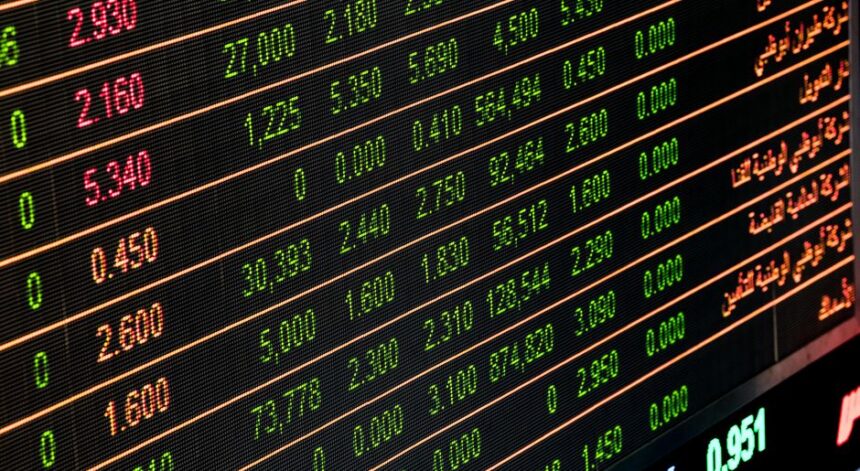
The FTSE 100 closed at its highest level in five months on Wednesday, extending a run of cautious optimism across UK financial markets even as analysts warned that the path higher remains constrained by persistent macro pressures. London’s benchmark index settled at 8,727.44 points, up 0.41% on the day, reflecting a measured advance rather than a broad-based surge. The FTSE 250, which tracks mid-cap domestic companies and is often seen as a more direct gauge of UK economic health, added 0.29% to reach 20,748.62.
According to London Hub Global analysts, the session’s gains were real but selective, driven by specific sector momentum rather than a wholesale shift in investor sentiment toward UK equities.
Mining stocks provided meaningful support to the index, with Antofagasta rising 2.5% and Rio Tinto gaining 1.8%, both benefiting from firmer copper prices and renewed appetite for commodity exposure. Energy names also contributed positively, as BP and Shell edged higher alongside a modest recovery in crude oil benchmarks. On the downside, consumer staples and rate-sensitive real estate investment trusts lagged, reflecting ongoing uncertainty around the Bank of England’s policy trajectory.
Among individual movers, Intermediate Capital Group climbed 3.1% after reporting stronger-than-expected assets under management growth, signalling continued institutional demand for alternative credit strategies. Conversely, Burberry slipped 1.4% as luxury sector sentiment remained fragile amid mixed signals from Chinese consumer demand, a key revenue driver for the brand.
The broader picture for the London stock market remains shaped by two competing forces. On one side, cooling UK inflation data has reinforced expectations that the Bank of England may have room to reduce interest rates further in 2025. UK CPI fell to 2.6% in March, down from 2.8% in February, moving closer to the central bank’s 2% target. On the other side, global trade uncertainty, particularly around US tariff policy and its ripple effects on European supply chains, continues to weigh on forward earnings estimates for export-oriented FTSE 100 constituents.
The Bank of England held its base rate at 4.5% at its May meeting, though markets are pricing in at least two quarter-point cuts before the end of 2025. London Hub Global sees this as a pivotal dynamic for UK financial markets: rate relief, if delivered, would ease borrowing costs for businesses and households, but the timing and pace remain genuinely uncertain given sticky services inflation, which held above 4.7% in the most recent reading.
For the City of London and the wider London business environment, Wednesday’s session carries specific relevance. The five-month high on the FTSE 100 arrives at a moment when London is actively competing with rival financial centres for capital allocation. Post-Brexit structural shifts have seen some trading volumes migrate to Amsterdam and Paris, yet London retains its position as Europe’s largest equity market by capitalisation, and the current rally, however measured, reinforces that institutional flows into UK-listed assets have not dried up.
The London economy is also navigating a complex domestic backdrop. Consumer confidence remains subdued, with the GfK index still in negative territory, and the commercial property market continues to adjust to hybrid working patterns that have structurally reduced office demand in certain submarkets. Against this, the technology and financial services sectors in London are showing resilience, with several asset managers and fintech firms reporting headcount growth in the first quarter of 2025.
In our view at London Hub Global, the FTSE 100’s move to a five-month high should be read as a signal of stabilisation rather than acceleration. The index has recovered meaningfully from the volatility seen in early April, when global equity markets sold off sharply in response to renewed US tariff announcements. That recovery reflects genuine repricing of risk, but it does not yet represent a durable re-rating of UK equities relative to global peers.
Sterling held steady against the dollar at around 1.3270, providing a neutral backdrop for internationally exposed FTSE 100 earners, many of which generate the majority of revenues outside the UK. A stronger pound typically acts as a headwind for these companies, so the current range-bound exchange rate is broadly supportive of index-level earnings.
London Hub Global analysts forecast that near-term direction for the FTSE 100 will be determined by three factors: the pace of Bank of England rate cuts, the evolution of UK-US trade relations following ongoing diplomatic engagement, and the quality of corporate earnings as the second-quarter reporting season approaches. If inflation continues its gradual descent and the Bank of England signals a clearer easing path at its August meeting, the conditions for a more sustained advance in London equities would strengthen materially. Until that clarity arrives, the upside is likely to remain measured, and investors in UK financial markets would be well-served by maintaining a selective rather than broad exposure to the index.