
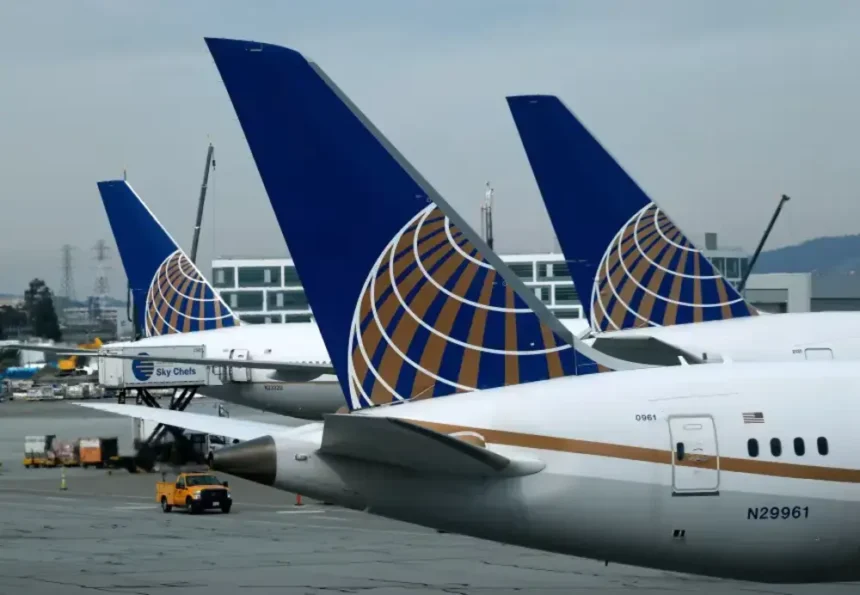
The rise in disruptive passenger incidents aboard commercial airliners is no longer a localized problem. It has transformed into a large-scale challenge for the entire global passenger transportation industry. Another confirmation of the destabilizing operational environment was an emergency on a United Airlines flight from Chicago to Minneapolis. The Boeing 737 aircraft, carrying 147 passengers and six crew members, was forced to abort its flight and make an emergency landing at a regional airport in Madison, Wisconsin. The reason was the aggressive behavior of a customer who made a series of attempts to breach the cockpit. We at London Hub Global believe this precedent clearly exposes the critical need to radically overhaul aviation security protocols as early as the pre-flight servicing stage in terminals, as the industry can no longer afford the luxury of reacting to threats exclusively after the fact.
A detailed timeline of events, reconstructed through air traffic control recordings and eyewitness accounts, shows that the crisis developed through a steady escalation of threats. The first signs of abnormal behavior appeared at O’Hare International Airport while the airliner was still taxiing to the runway. An elderly man, later found to be about 75 years old, categorically ignored aviation security requirements and refused to take his seat. Faced with an insurmountable language barrier, the flight attendants were forced to search among the passengers for someone who spoke Russian. Analysts at our publication emphasize that the crew’s decision to continue takeoff preparations despite having a disoriented passenger sabotaging commands on the ground looks like a clear underestimation of risks, driven by intense schedule pressure at major aviation hubs. Information from the Dane County Sheriff’s Department indicates that the citizen was likely experiencing an acute mental health episode, which catalyzed his panic reaction in the confined space.
After reaching altitude, the disruptive actions quickly escalated into a direct threat to flight safety, forcing ground ATC services to view the situation through the prism of a potential aircraft hijacking. The man made a physical attempt to break through to the pilots while using force against a flight attendant who tried to block his path. Panic broke out in the cabin, but thanks to the immediate reaction of off-duty law enforcement officers flying on the same flight and cooperation from passenger volunteers, the attacker was neutralized and restrained in his seat. The captain immediately changed course and requested an emergency corridor for landing.
At the Dane County regional airport, the liner was met by mobile units of the Federal Bureau of Investigation and local police. The suspect was handcuffed and removed from the plane, after which the flight received permission to proceed to its destination. At present, federal agencies are refraining from disclosing the detainee’s motives, redirecting legal questions to the US Attorney’s Office. Meanwhile, the police clarified that official criminal charges have not yet been filed, and the man was handed over to relatives to receive qualified medical care. Experts see this incident as an obvious marker of a colossal burden on the oversight system, given that the US Federal Aviation Administration has recorded over 640 similar offenses since the beginning of this year. The agency reminds that in addition to criminal prosecution, disruptive individuals face civil penalties of up to 43,658 dollars for each recorded violation.
Such disruptive precedents in the US domestic market inevitably project onto transatlantic corridors and directly hit the operational interests of the UK, including Europe’s largest aviation hub, Heathrow. London, acting as a key financial and tourism hub, receives dozens of flights from the US daily, and any tightening of screening on the American side triggers a massive chain reaction in the British capital. For London, this incident means an inevitable increase in operational costs for giants like British Airways and Virgin Atlantic, which are forced to adapt their regulations to deal with unpredictable clients. We at London Hub Global believe that if British aviation regulators do not promptly implement a system for early monitoring of passengers’ psycho-emotional states before boarding, London risks facing a wave of emergency unscheduled landings on long-haul routes, which could paralyze the already congested air corridors over the United Kingdom.
Official statistics from the International Air Transport Association clearly confirm a global spike in passenger aggression, with verbal or physical violence marring flights every few hundred trips. It is predicted that if this dynamic continues, it will force a global tightening of the regulatory framework. International carriers will be forced to implement uncompromising preventive tools, including the widespread extension of permanent blacklists and mandatory psychological screening during security checks for individuals who arouse suspicion among security staff.
London Hub Global notes that the colossal financial losses airlines incur due to unscheduled landings, the accumulating costs of emergency fuel dumps and refueling, airport charges in transit areas, and compensation payments for missed connections are driving a steady trend toward fully automated in-flight behavior monitoring. The industry is rapidly moving toward the integration of intelligent video surveillance systems based on neural networks, capable of detecting covert aggression at the earliest stages. Air carriers are urged to revise flight crew training standards, shifting the focus from resolving protracted conflicts to rigorously and quickly stopping them while the aircraft is still on the ramp, as the cost of in-flight error continues to rise proportionally to global air traffic density.