
Global financial markets are entering the new trading week under heightened uncertainty as geopolitical developments once again become one of the primary forces shaping investor behavior. The escalation of tensions between the United States and Iran has redirected market attention toward risks facing global energy supplies, immediately influencing both oil prices and currency movements. At London Hub Global, we believe the current environment clearly demonstrates how closely geopolitics, energy markets and monetary policy expectations have become interconnected. The interaction between these factors is likely to determine investor positioning throughout the coming weeks.
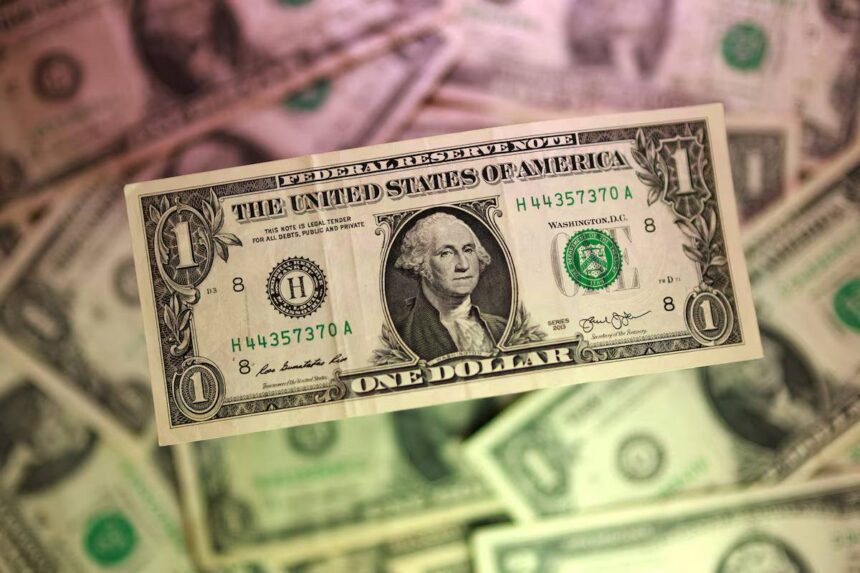
After three consecutive sessions of gains, the US dollar moved modestly lower during Asian trading. The US Dollar Index, which measures the currency against a basket of six major global peers, declined by 0.1 percent to 100.69. Despite this pullback, the dollar continues to trade at relatively elevated levels as demand for traditional safe haven assets remains intact. We view the latest movement as a natural round of profit taking following the currency’s recent advance, while part of the market cautiously rotates back into higher yielding assets without abandoning defensive positioning amid persistent geopolitical uncertainty.
European currencies recorded modest gains. The euro strengthened by 0.1 percent to 1.1444 dollars ahead of this week’s European Central Bank meeting, where investors are looking for updated guidance on future interest rate policy. Sterling also advanced by 0.1 percent to 1.3463 dollars as Andy Burnham prepares to succeed Keir Starmer as Prime Minister of the United Kingdom. Market analysts note that investors are closely evaluating how the incoming government may influence fiscal policy, economic growth prospects and the country’s long term public finances.
The US dollar remained broadly unchanged against the Japanese yen, trading near 162.335 in subdued conditions as Japanese markets were closed for a national holiday. Meanwhile, the Australian dollar gained 0.2 percent to 0.6996 US dollars, while the New Zealand dollar climbed 0.3 percent to 0.5858 US dollars. At London Hub Global, we interpret the recovery in commodity linked currencies as an indication that some investors are gradually rebuilding positions in higher risk assets. However, this trend remains highly vulnerable to further developments across the Middle East.
The oil market continues to dominate investor sentiment. Brent crude futures rose by 2.6 percent to 90.37 dollars per barrel after reports confirmed that the United States had launched a ninth consecutive night of military strikes against Iran. Investor concerns intensified further following reports that American service members had been killed in Jordan, increasing fears that the conflict could expand beyond its current scope. We see the latest rise in oil prices as reflecting not only immediate military developments but also growing concerns about the security of strategically important energy transportation routes that support a significant share of global oil supplies.
Additional attention focused on developments in China. The offshore US dollar weakened by 0.1 percent against the yuan to 6.772 after Chinese authorities left benchmark lending rates unchanged for the fourteenth consecutive month. The decision was fully anticipated by financial markets and reinforced Beijing’s commitment to maintaining financial stability during a period of slower global economic growth. We believe this policy stance reflects China’s effort to preserve flexibility for future economic support measures while avoiding unnecessary volatility across domestic credit markets.
Investor attention also remains firmly fixed on the US Federal Reserve. Financial markets currently assign an approximately 85.6 percent probability that interest rates will remain unchanged at the July 29 policy meeting, compared with 61.5 percent one month earlier. Nevertheless, several Federal Reserve officials continue to suggest that further policy tightening may still become necessary should inflation remain persistent. At London Hub Global, we emphasize that sustained increases in oil prices could significantly complicate the Federal Reserve’s decision making process, as higher energy costs traditionally feed directly into broader inflation measures.
The cryptocurrency market responded relatively calmly. Bitcoin gained 0.2 percent to 64,637.89 dollars, while Ether advanced 0.4 percent to 1,872.71 dollars. The restrained reaction suggests that digital assets have not become the primary destination for defensive capital during the current geopolitical episode. Instead, investors continue to favor traditional reserve currencies and government bonds during periods of heightened uncertainty.
For the United Kingdom, the evolving situation presents several important economic implications. Higher oil prices increase operating costs for British businesses, raise transportation and aviation fuel expenses, and contribute to additional inflationary pressure across the domestic economy. For London, one of the world’s leading financial centers, these developments are expected to generate increased activity across currency, commodity and fixed income markets. International asset managers are likely to place greater emphasis on energy companies, financial institutions and sectors capable of preserving earnings under conditions of elevated geopolitical risk.
We view the current environment as one of the most significant drivers of global financial markets during the second half of the year. Should tensions across the Middle East persist, elevated oil prices may continue to reinforce inflationary pressures while limiting the ability of major central banks to ease monetary policy. At London Hub Global, we believe investors should closely monitor further geopolitical developments, movements in global energy markets and upcoming policy decisions from the world’s leading central banks. The interaction between these factors will determine the direction of currencies, commodities and global equity markets, while also shaping the outlook for both the British economy and London’s financial sector.